Categories
All Project Categories Office Refurbishments Partitioning Projects

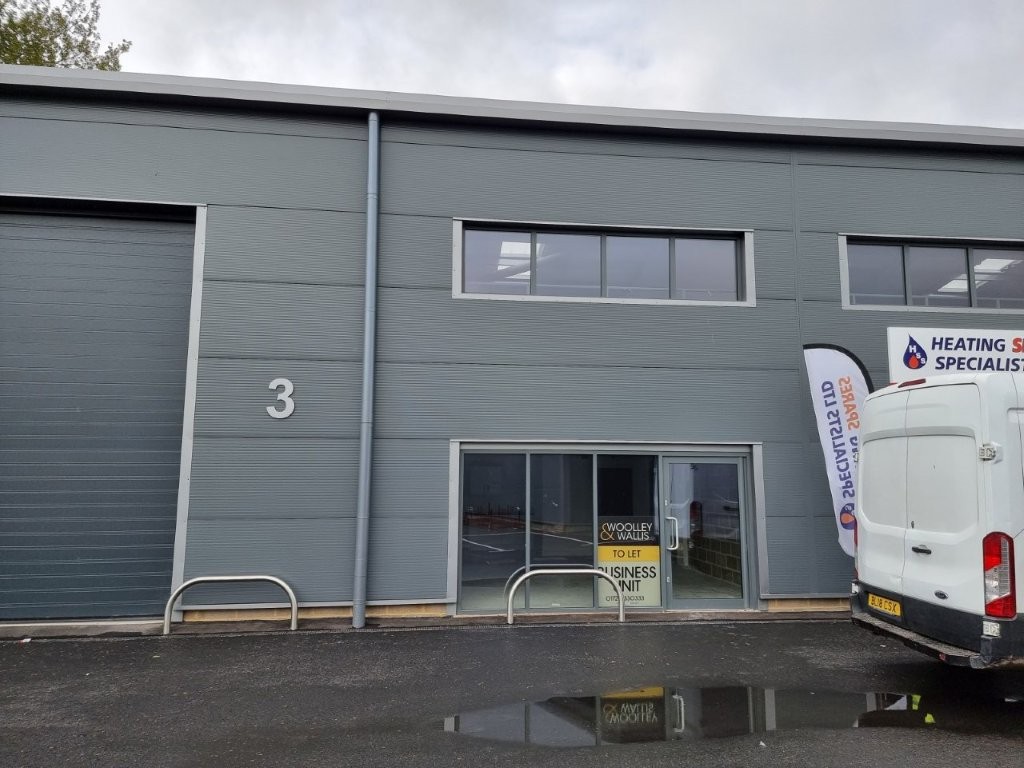
Fitting out of a brand new unit in Salisbury

Client: Dauwalders
Value: £72k

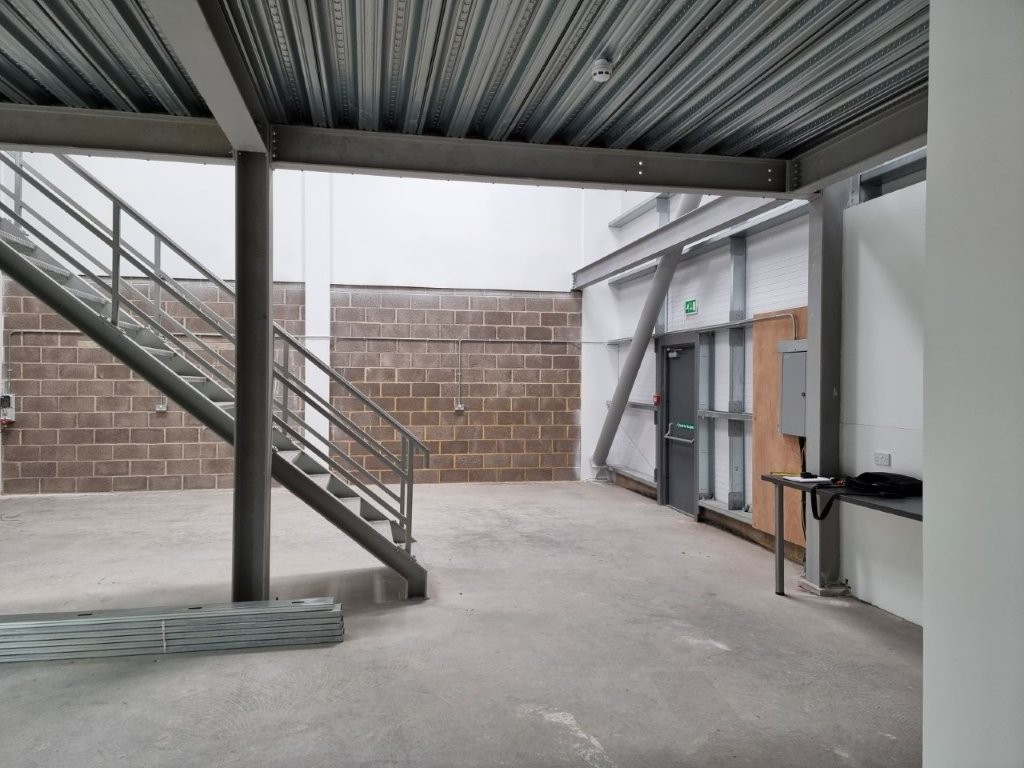
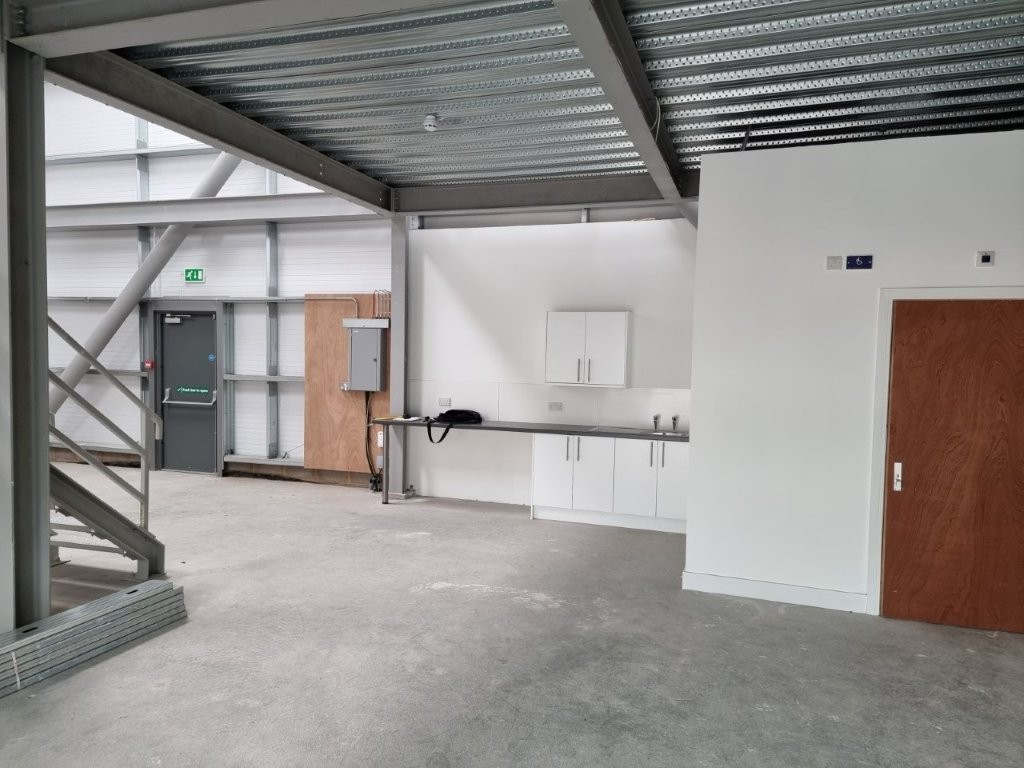
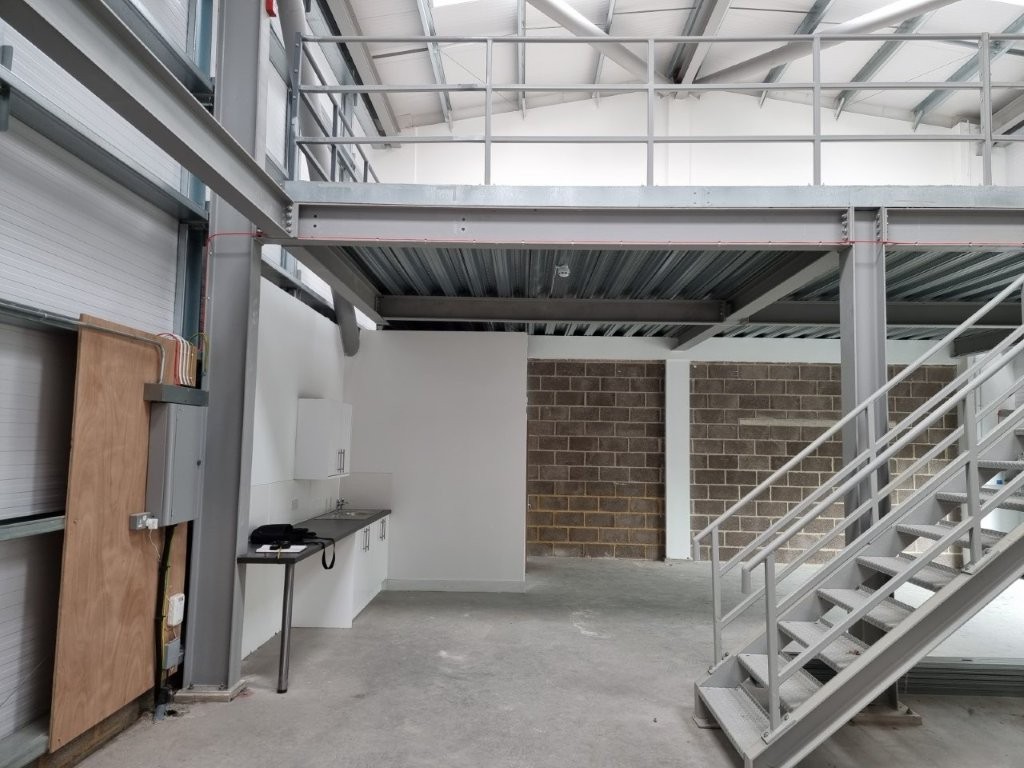
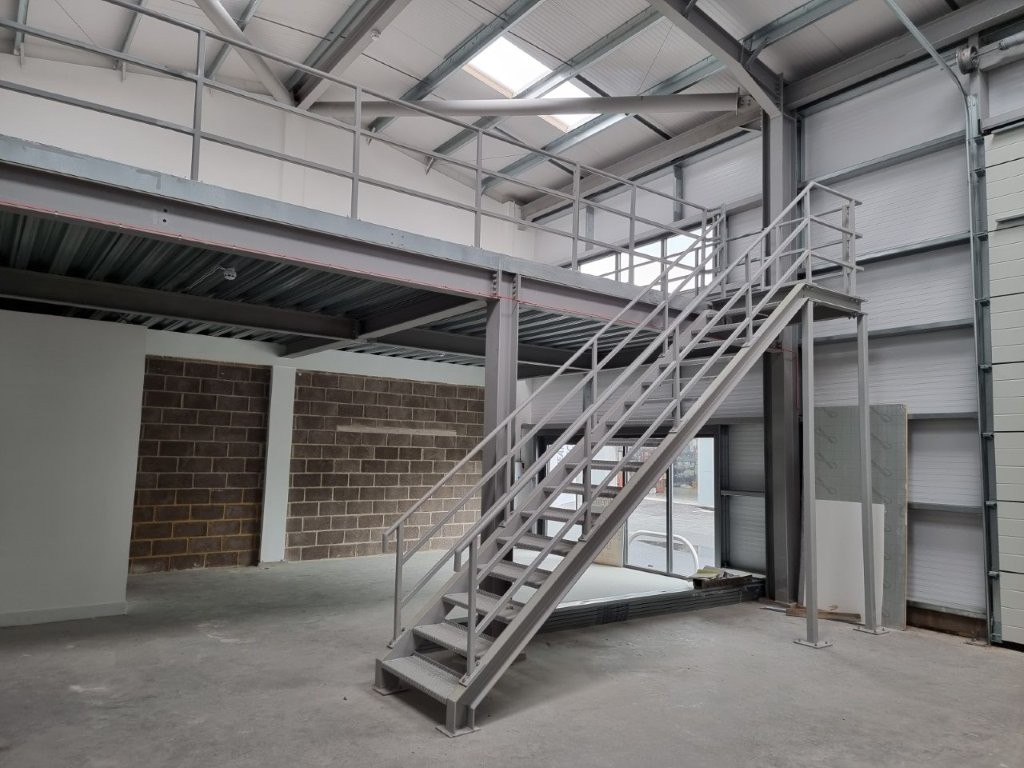
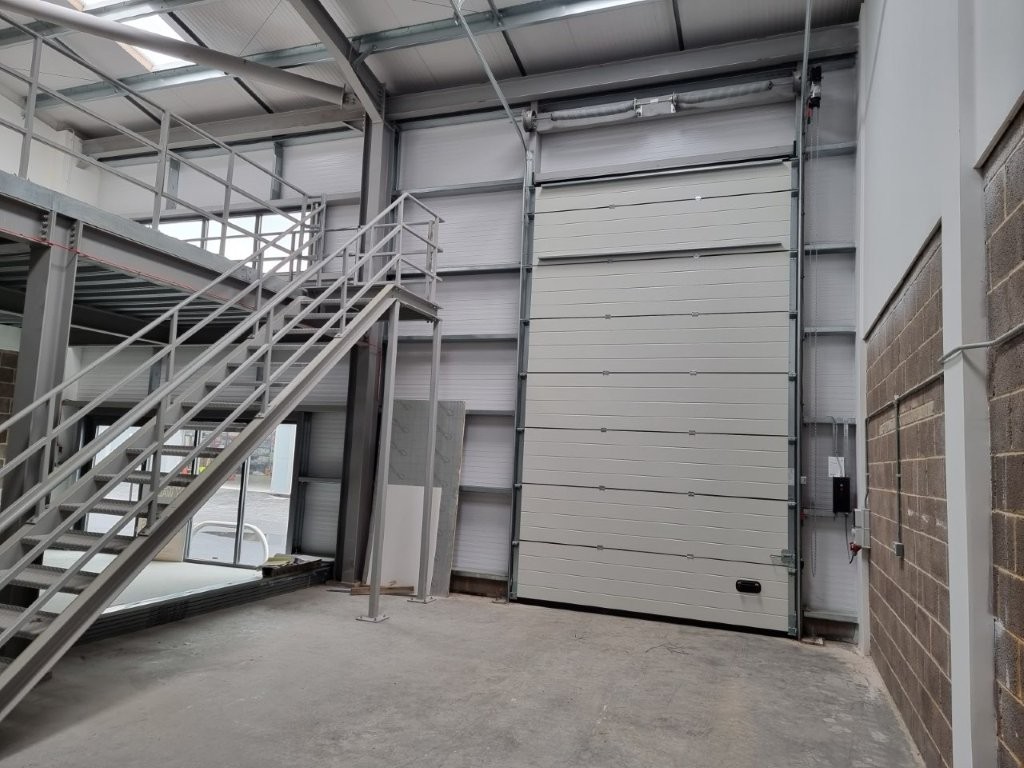
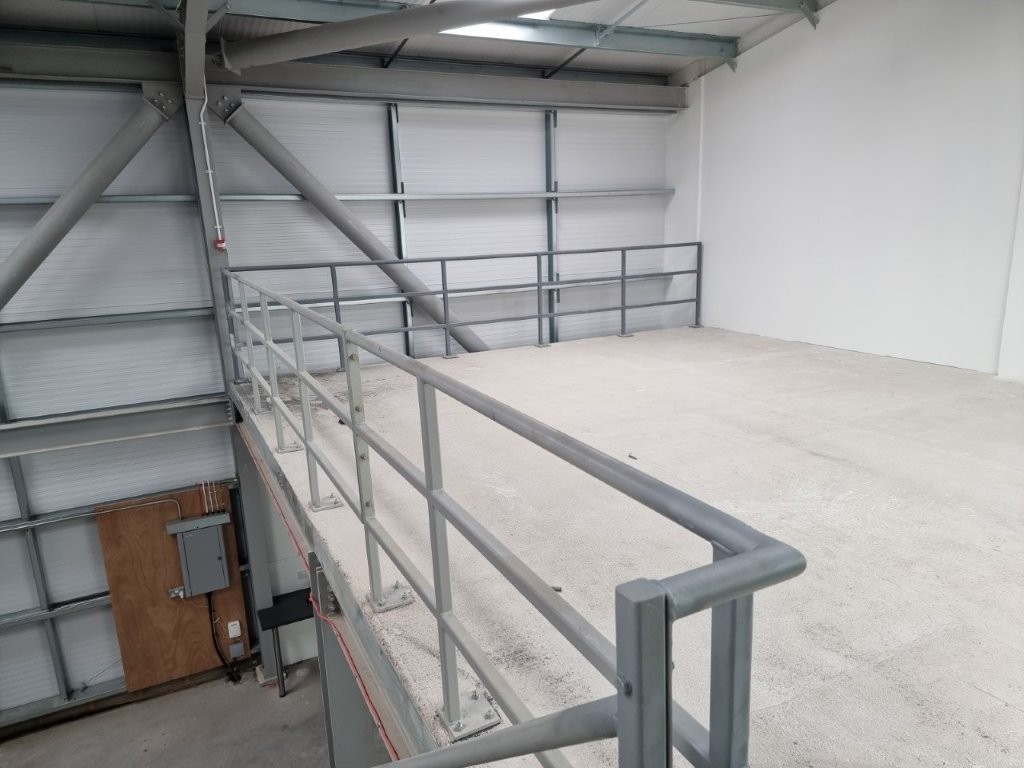
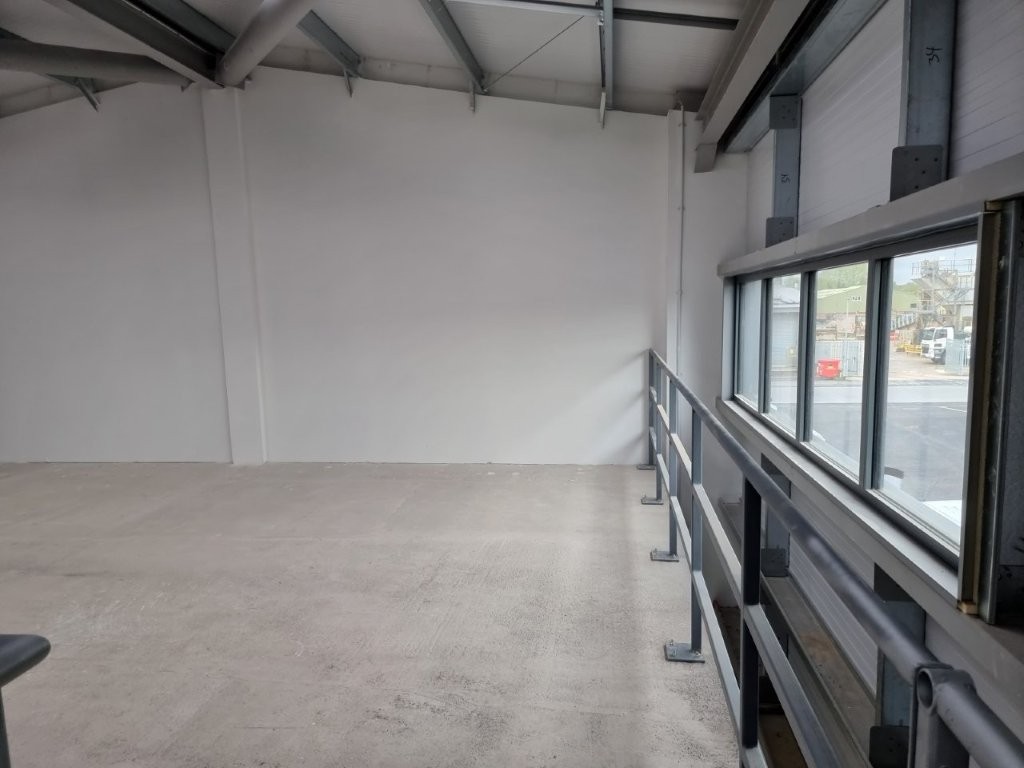
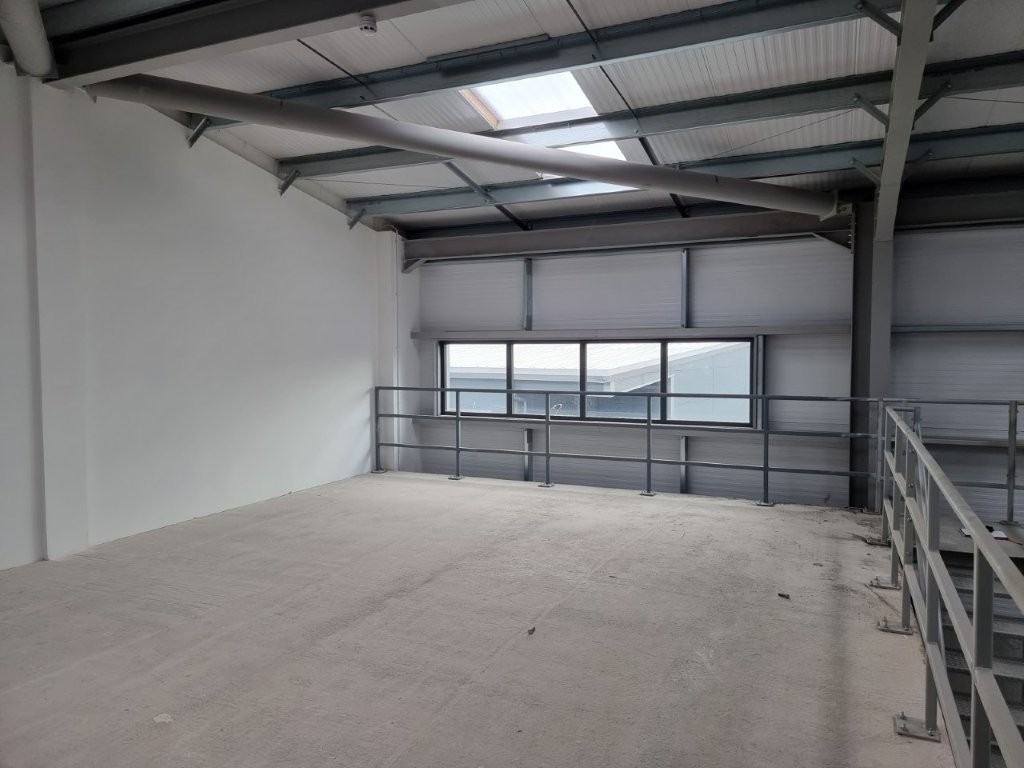
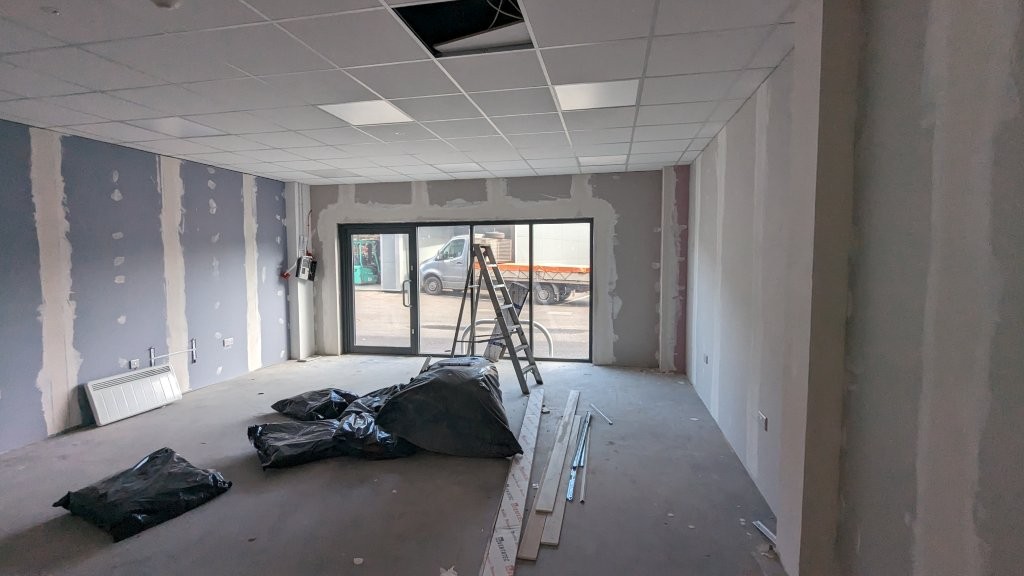
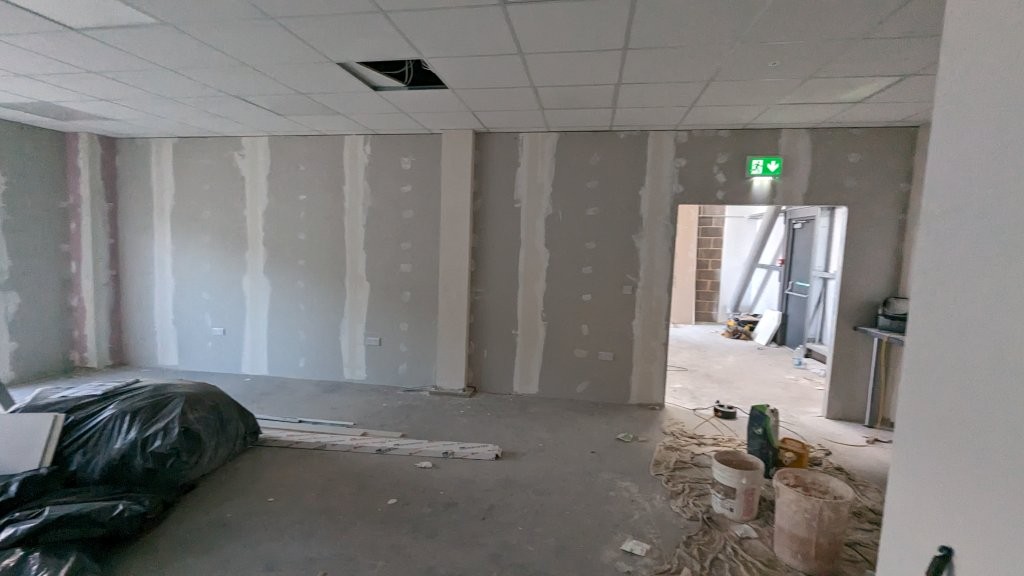
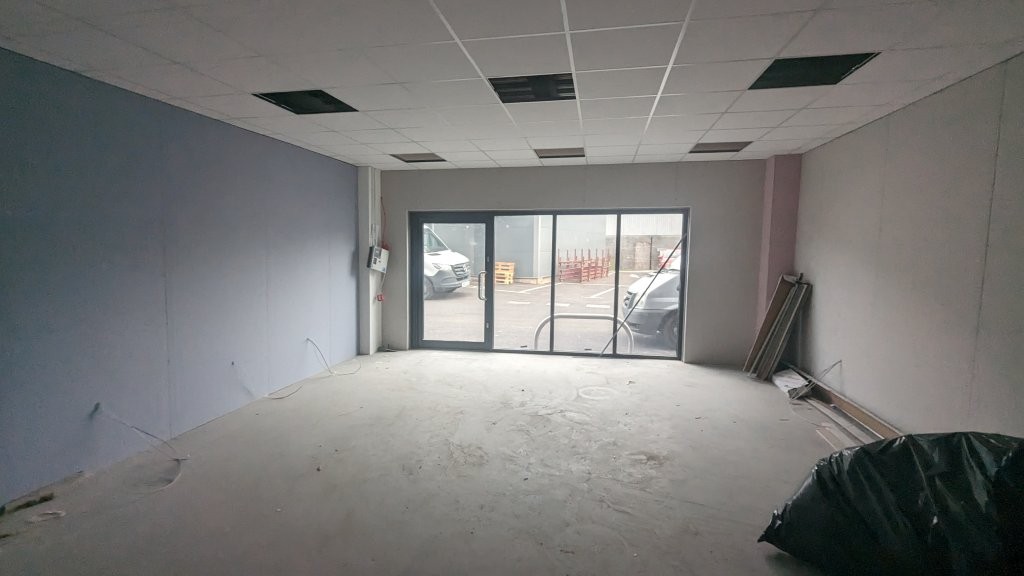
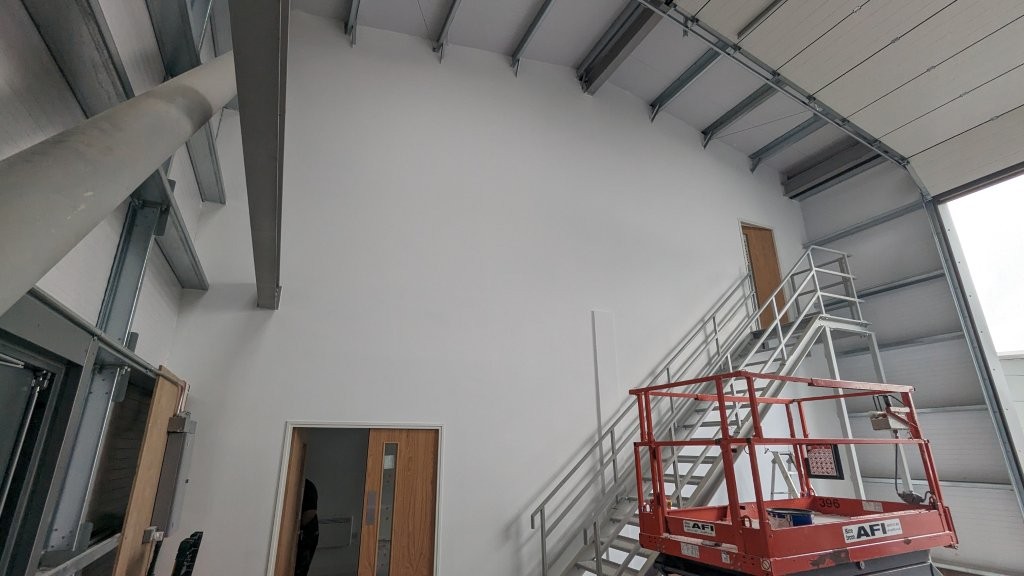
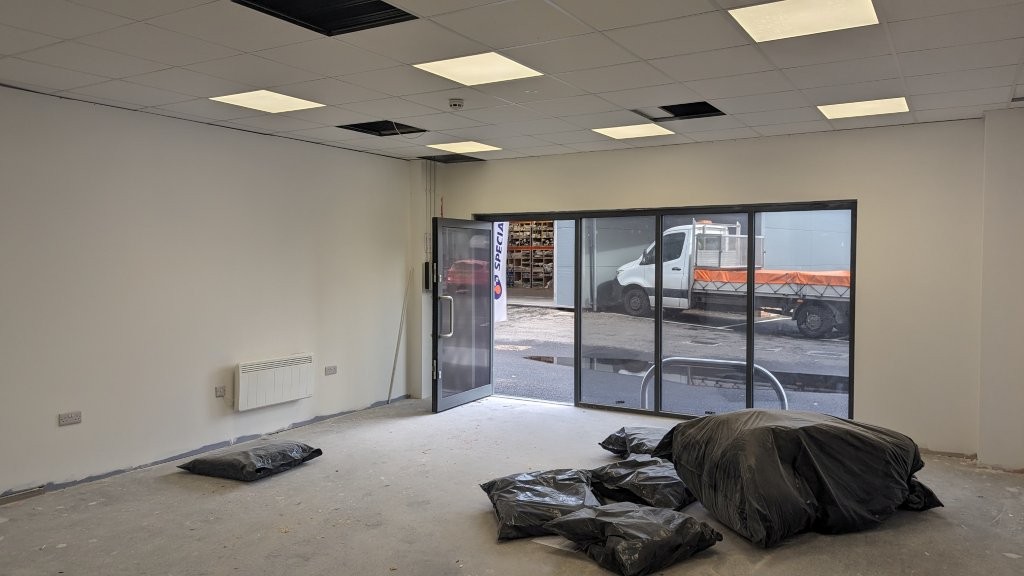
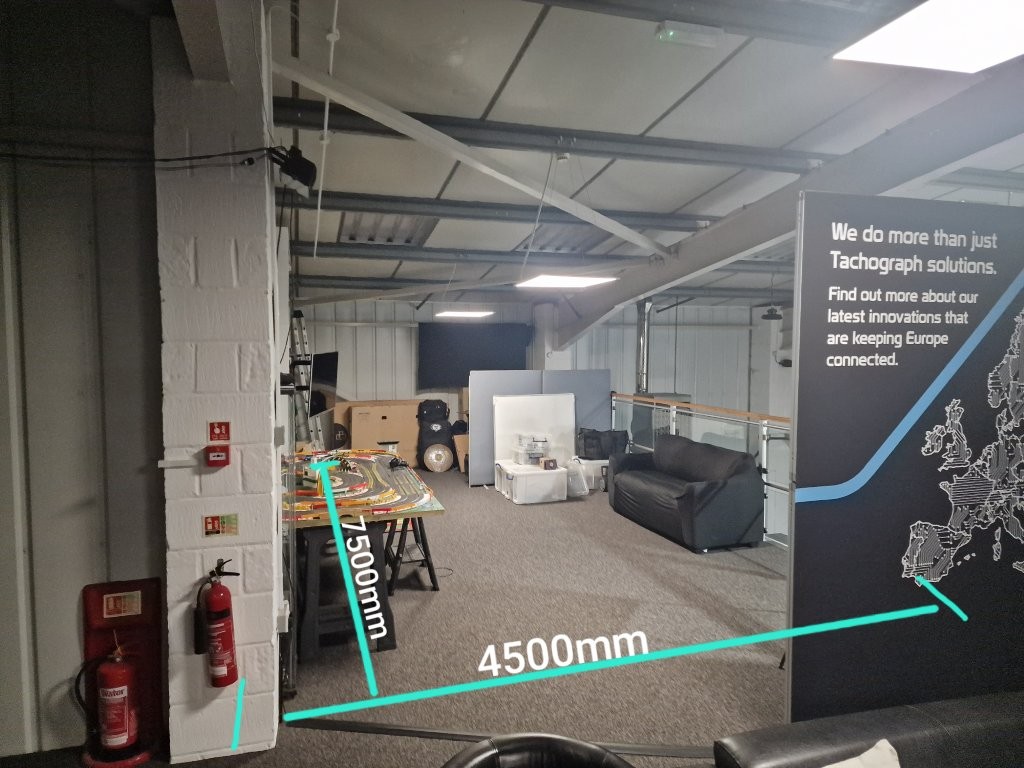
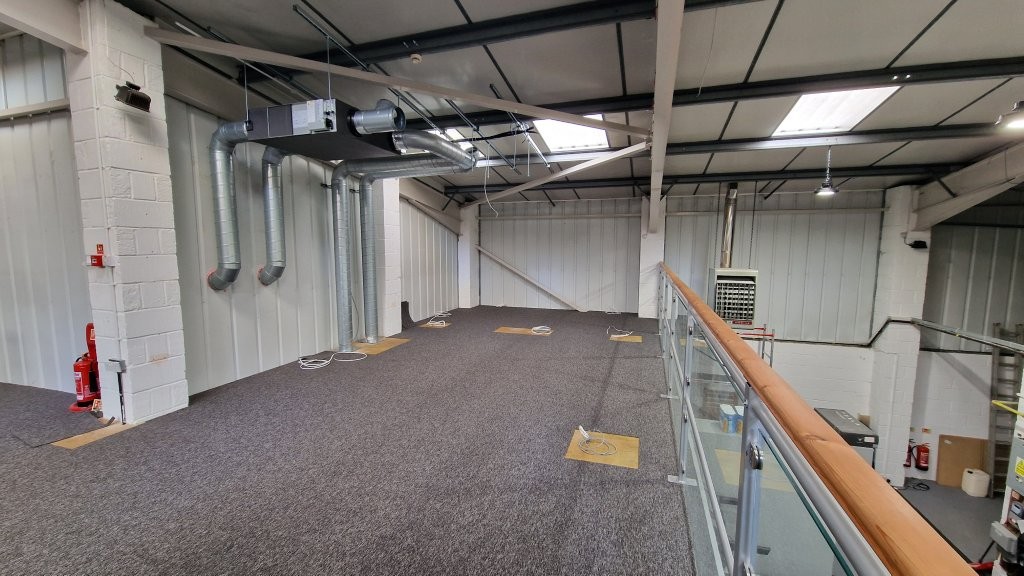
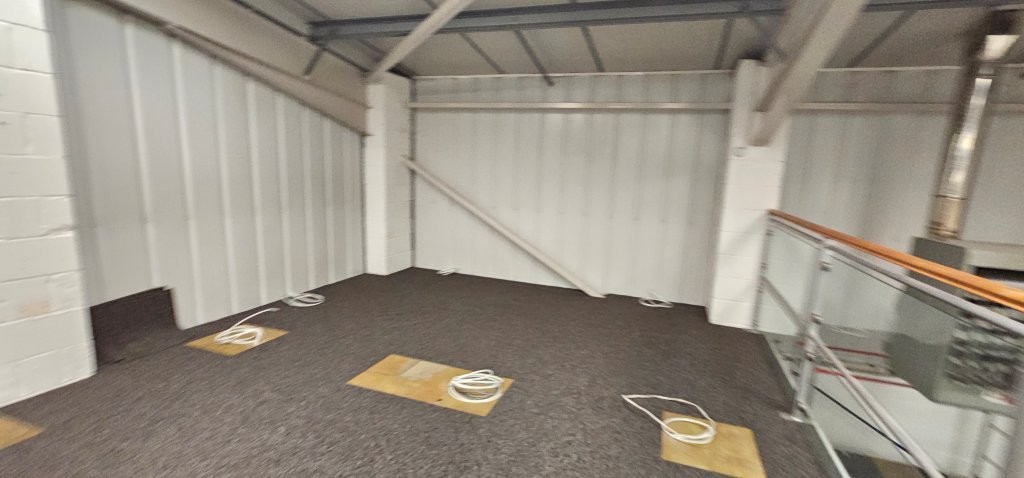
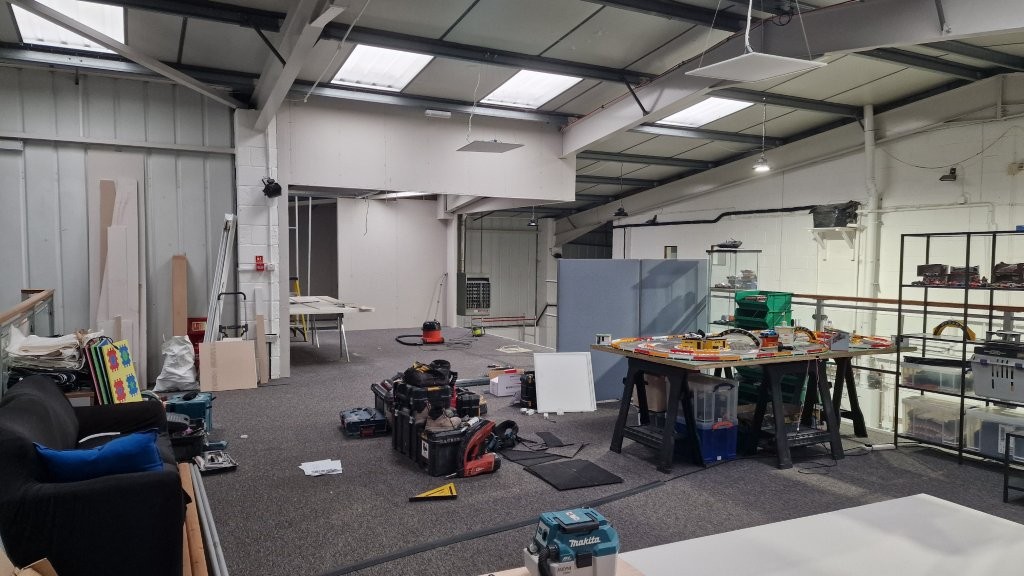
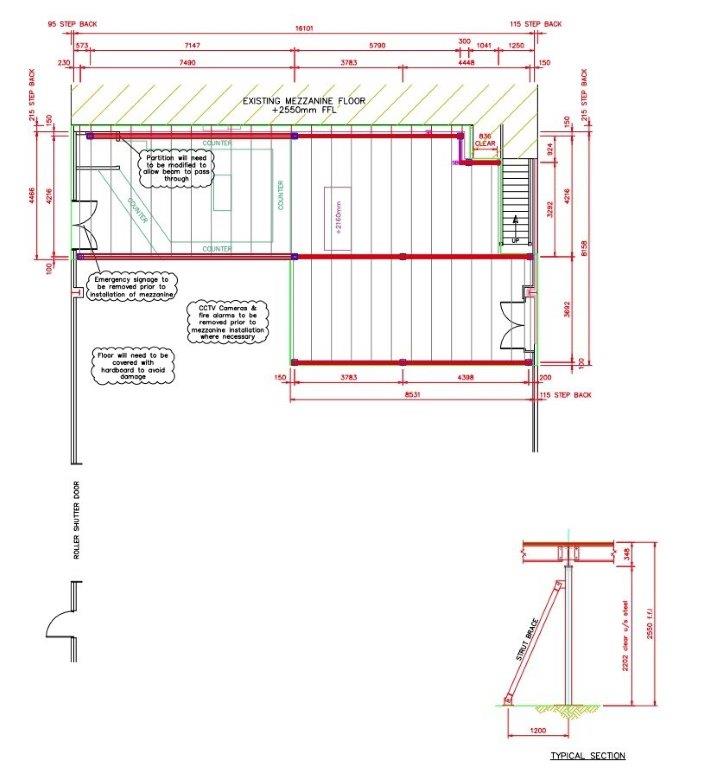
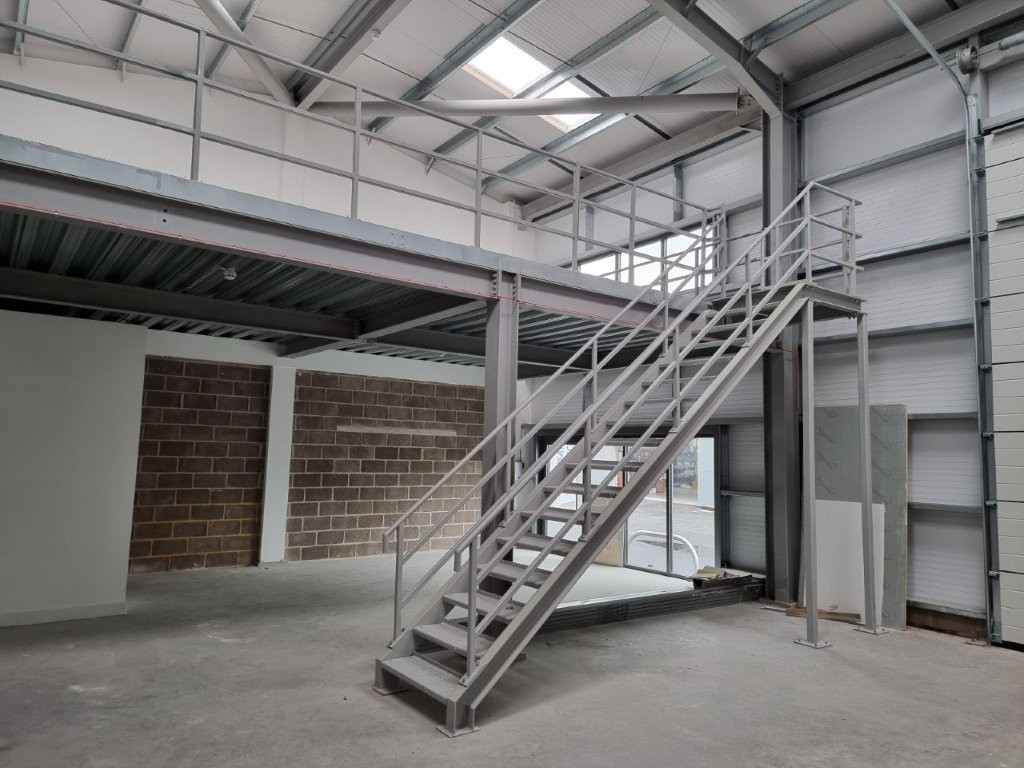
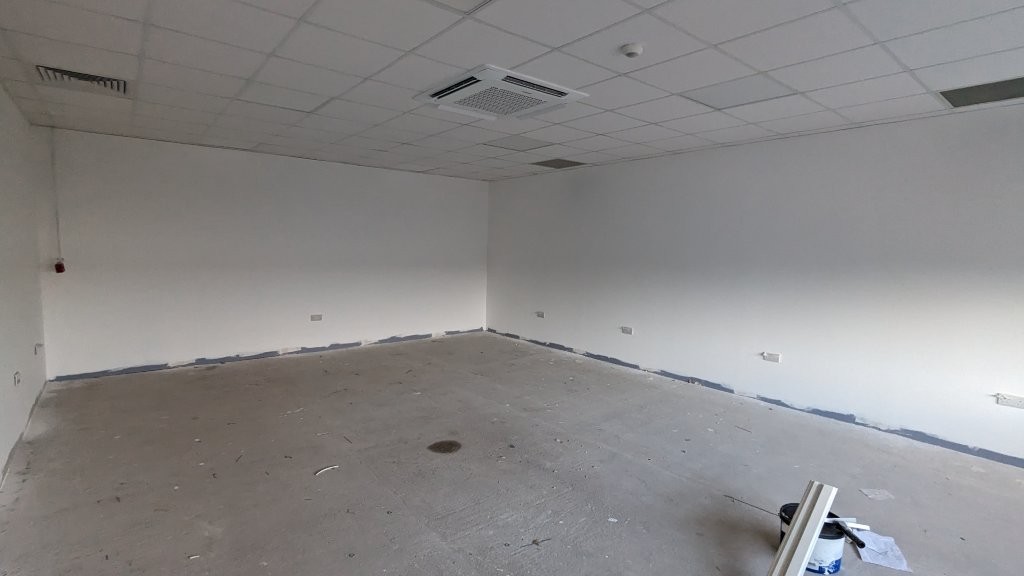
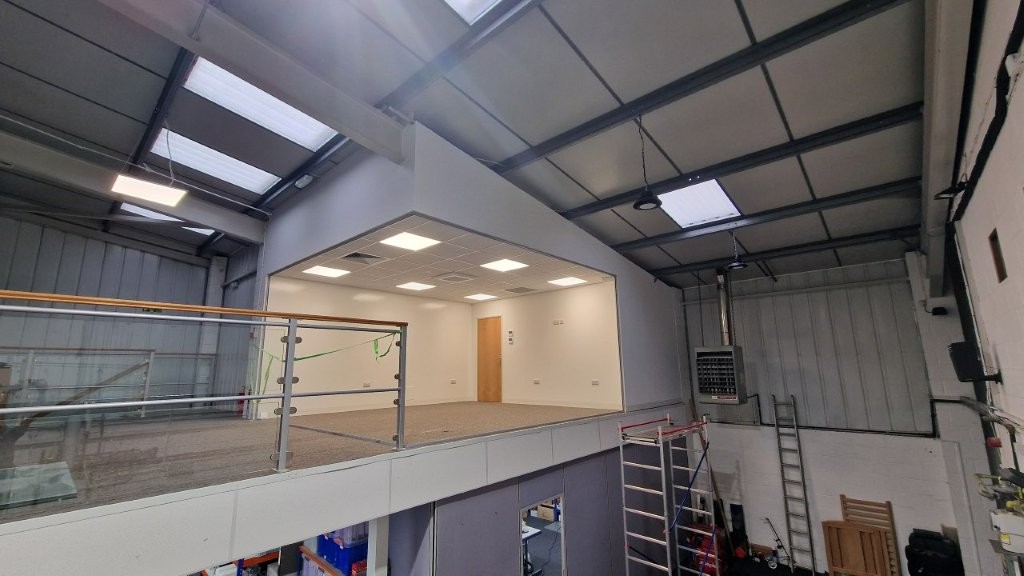
We were asked to look at this project in Salisbury for Dauwalders. They were looking to take on two units next to each other, but one needed to be an office. The obvious location for an office was on an existing mezzanine floor, which would allow a work area underneath, and separation from the main warehouse floor.

A nice new unit, nothing had ever been built in it, however we could hear absolutely everything from next door due to the way the mezzanine floor had been built. We certainly needed to minimise this as much as we could without going over board with it.

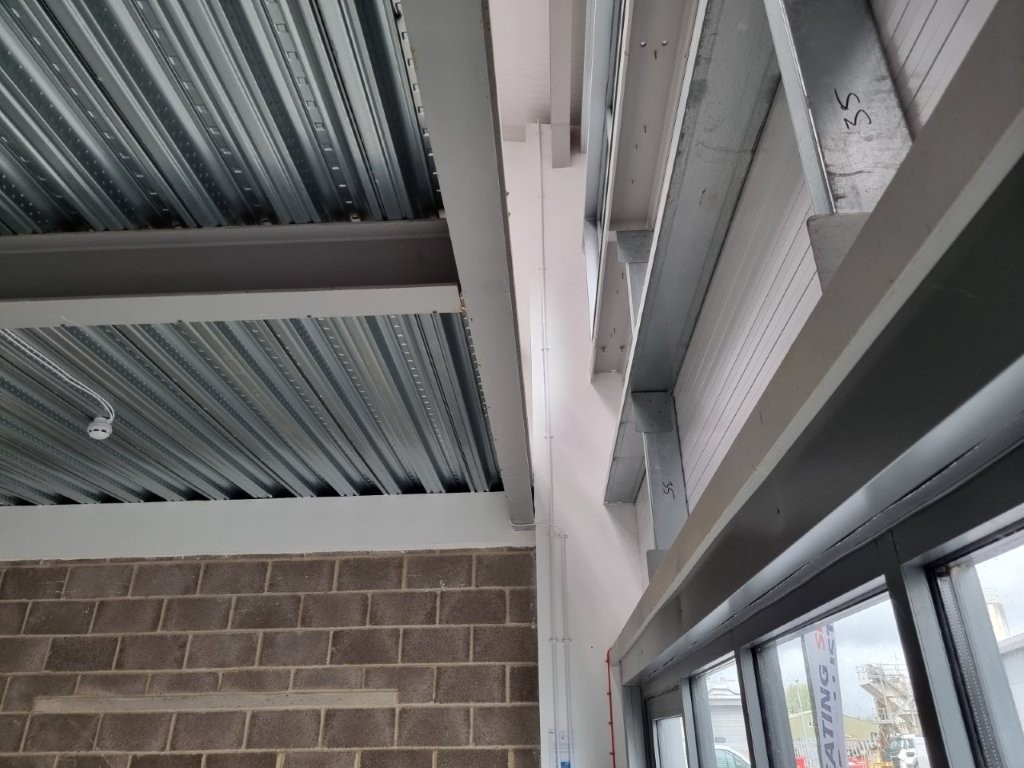
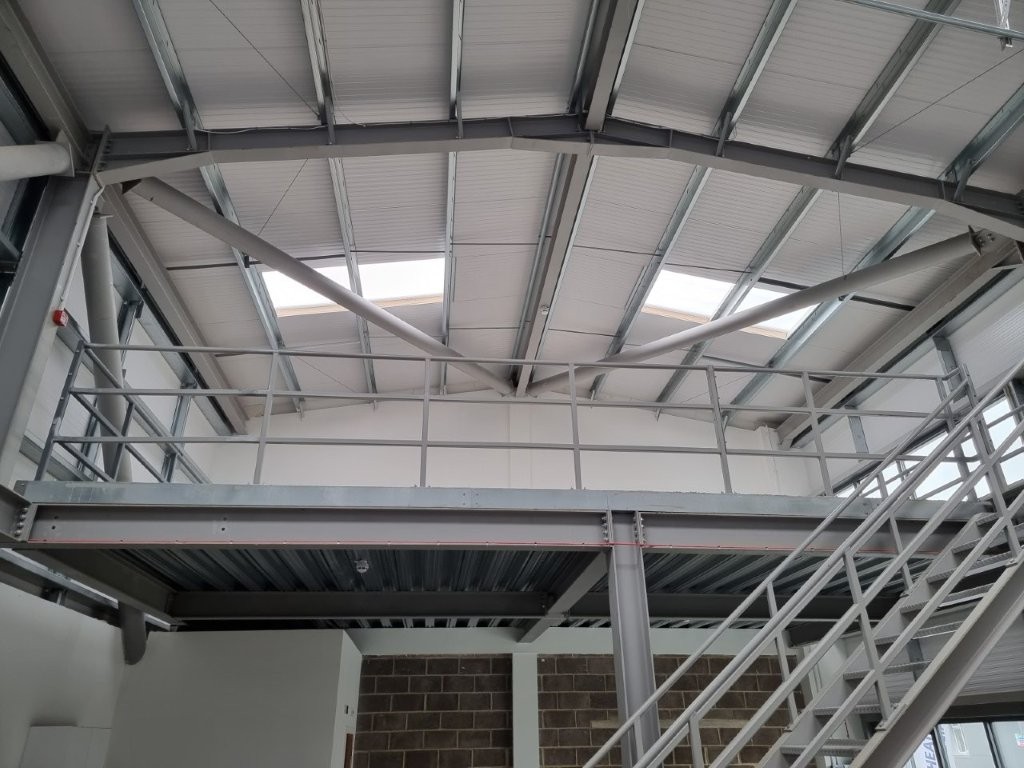
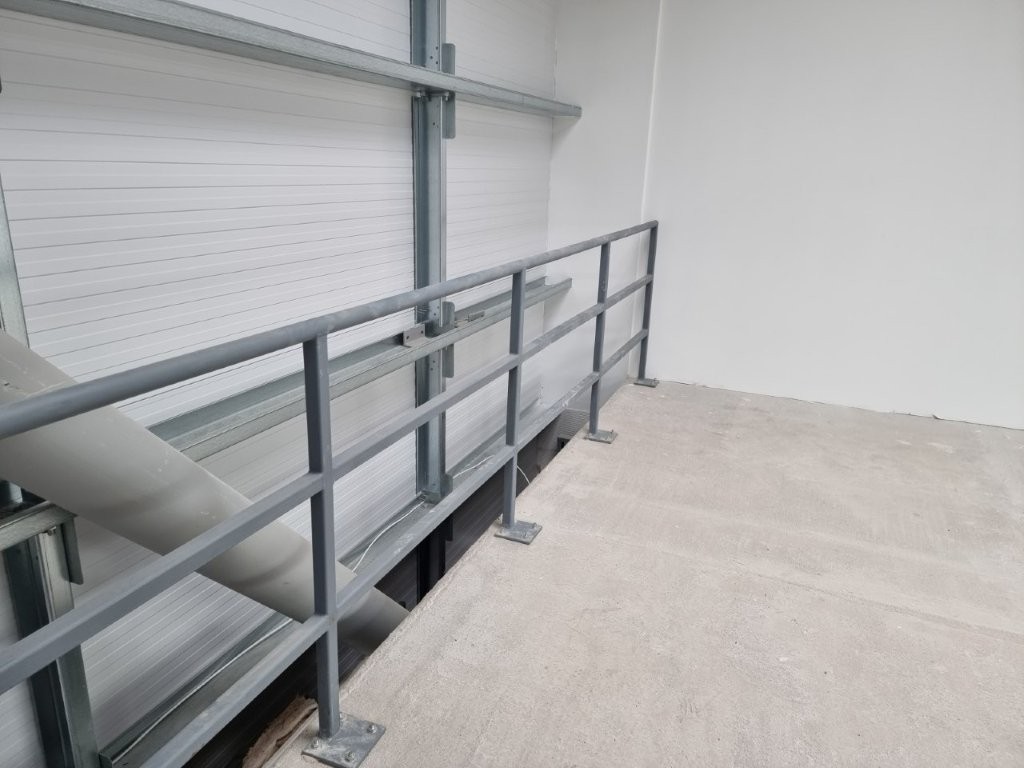
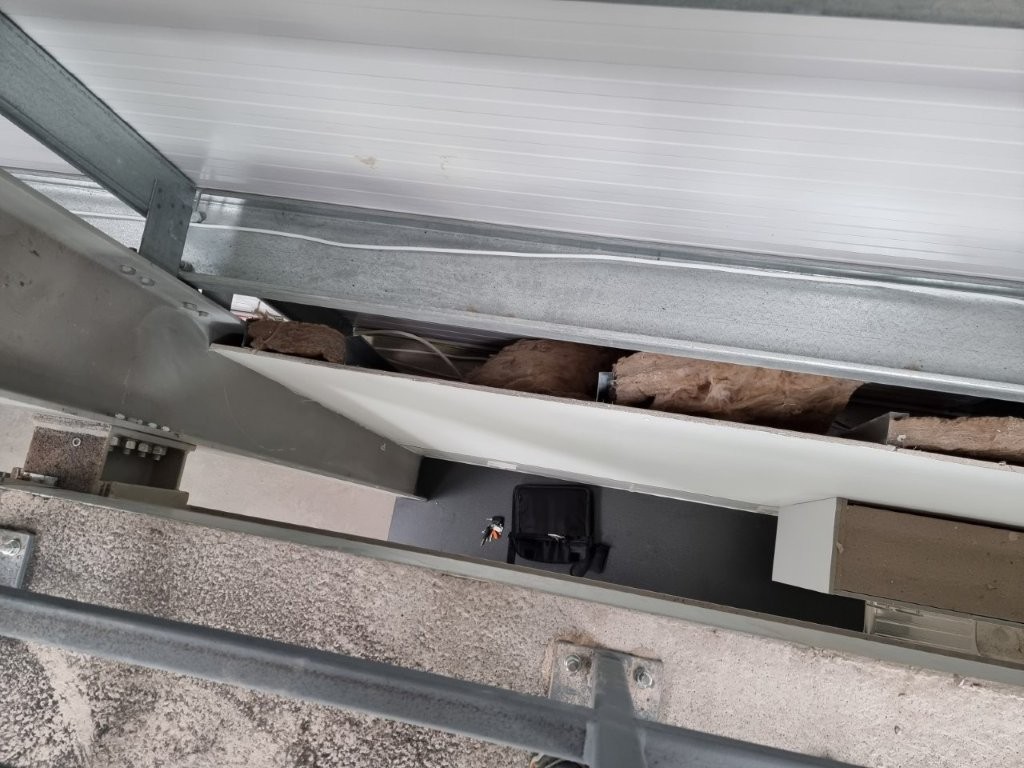
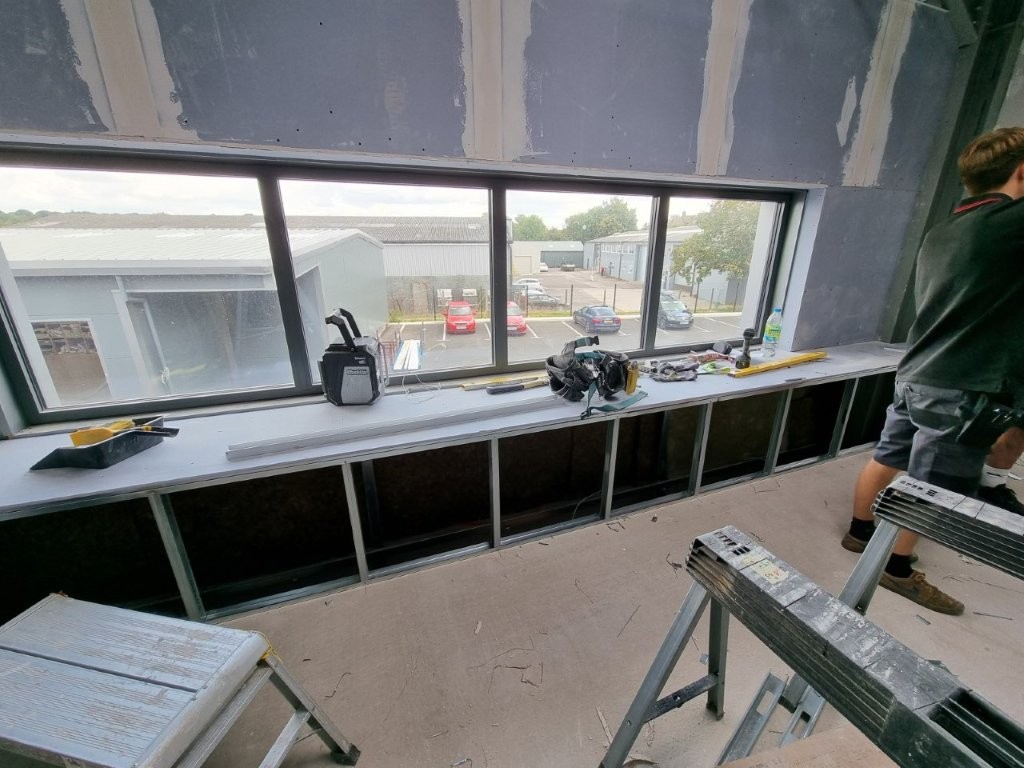
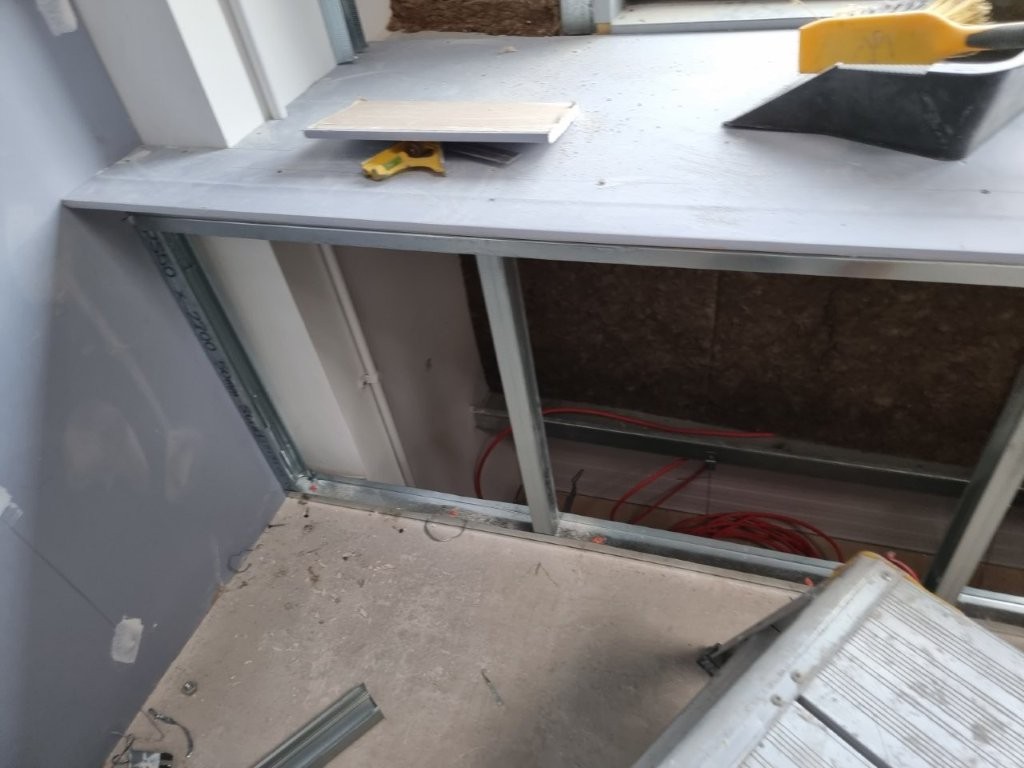
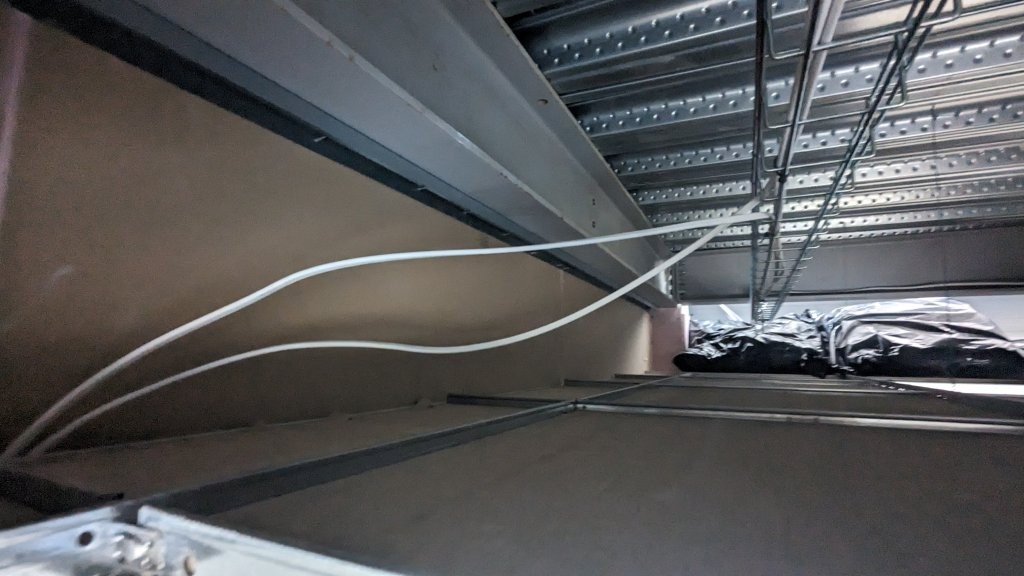
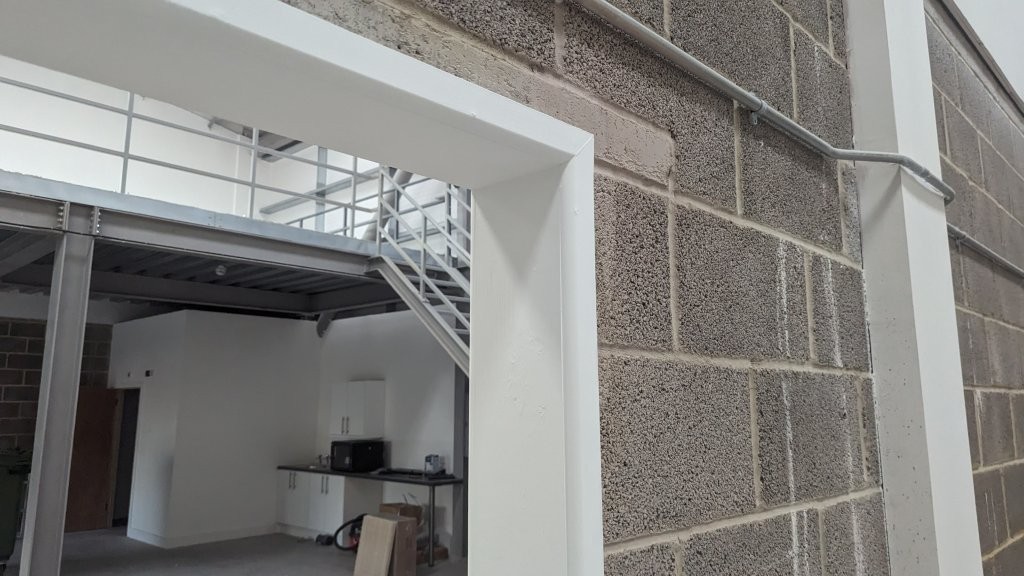
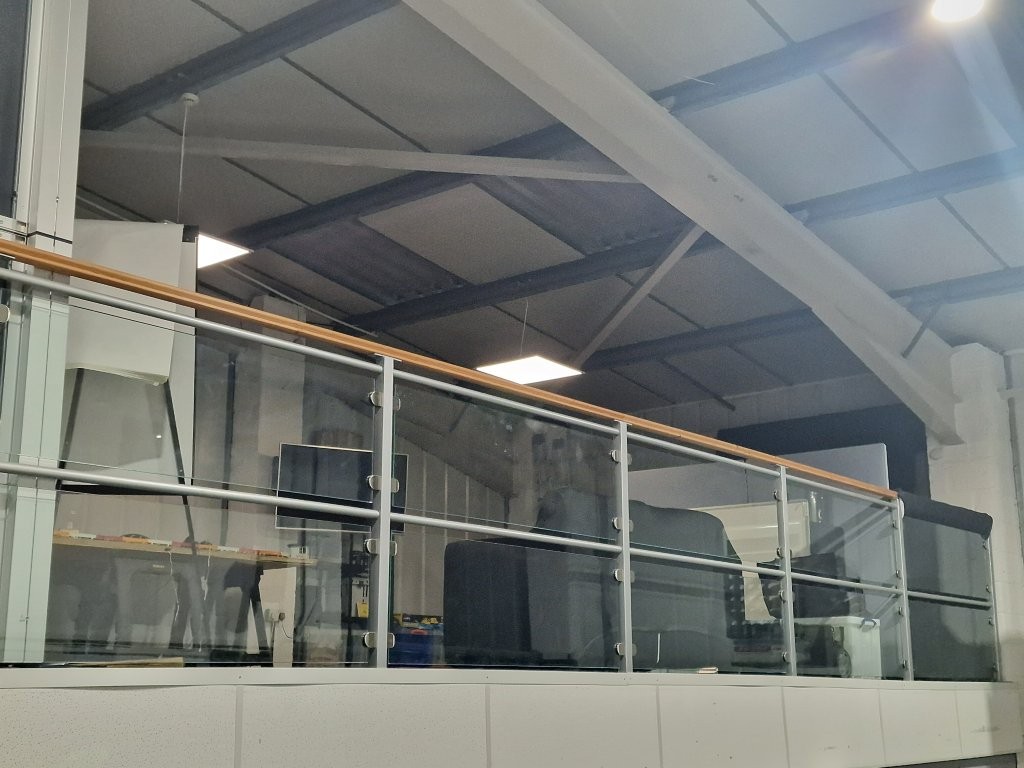
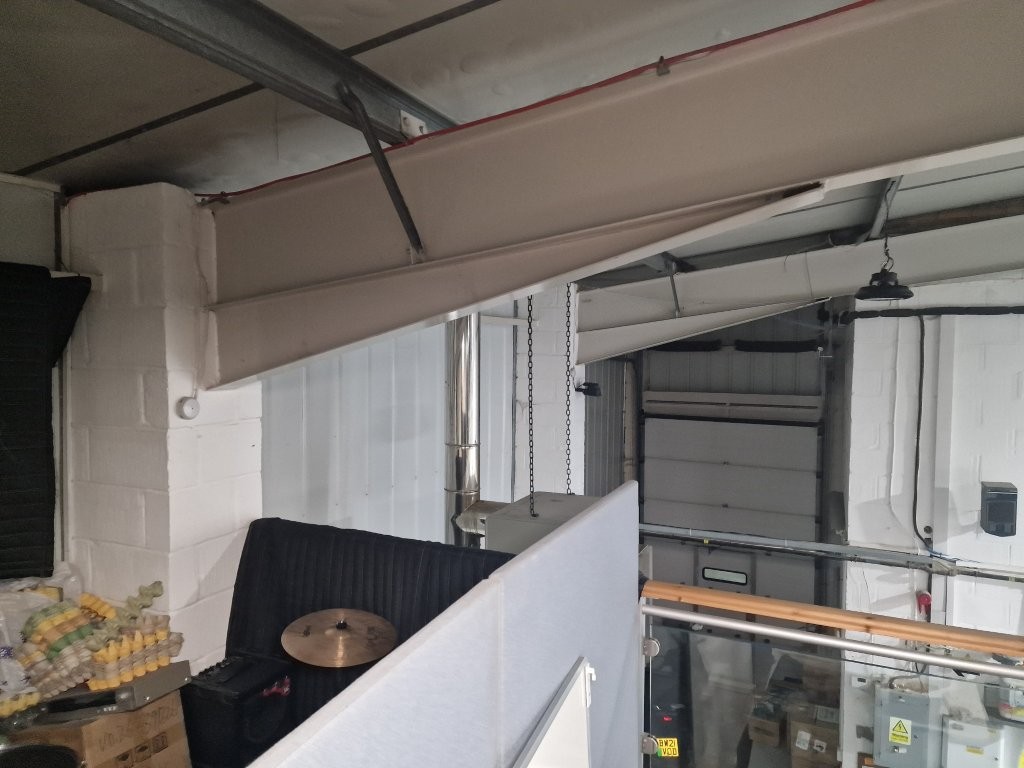
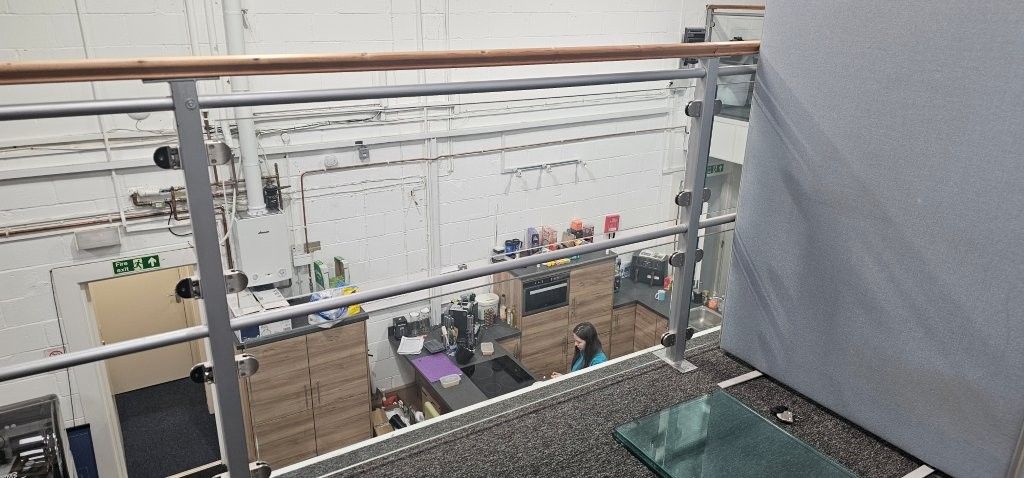
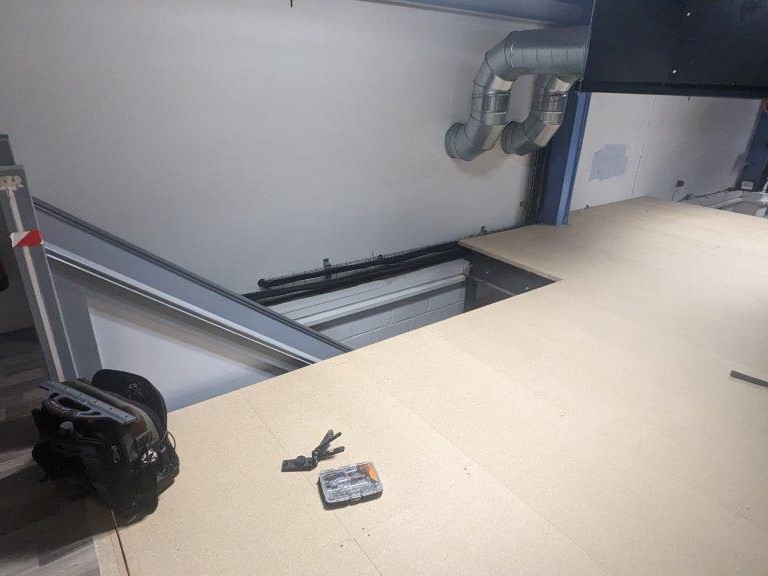
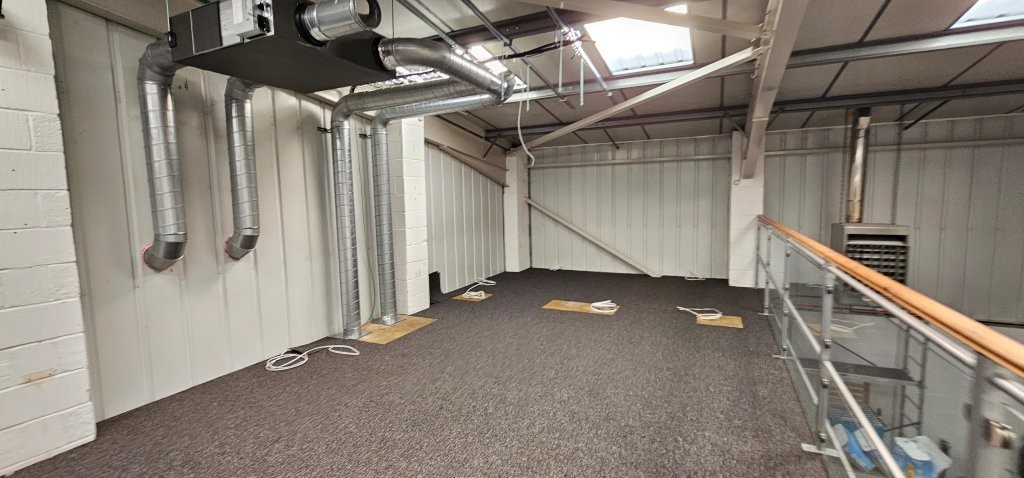
The unusual way the mezzanine floor had been built, was that the floor did not actually go right up to each of the walls leaving a gap. Clearly we had to box this, and make it safe for the people working in the space.

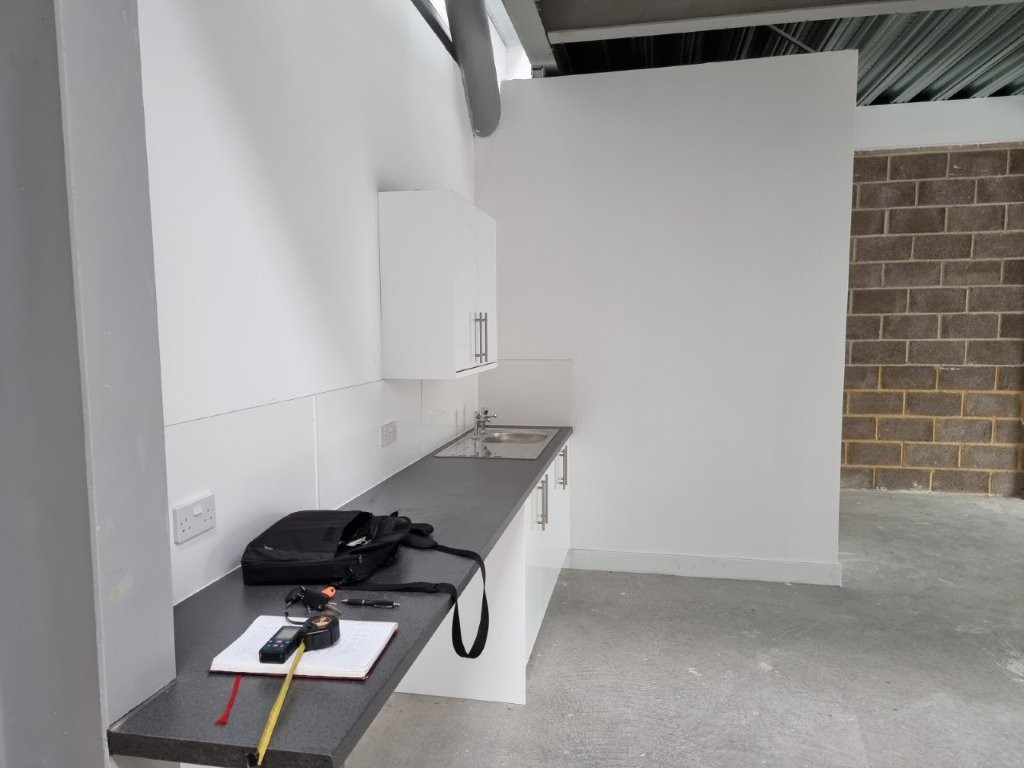
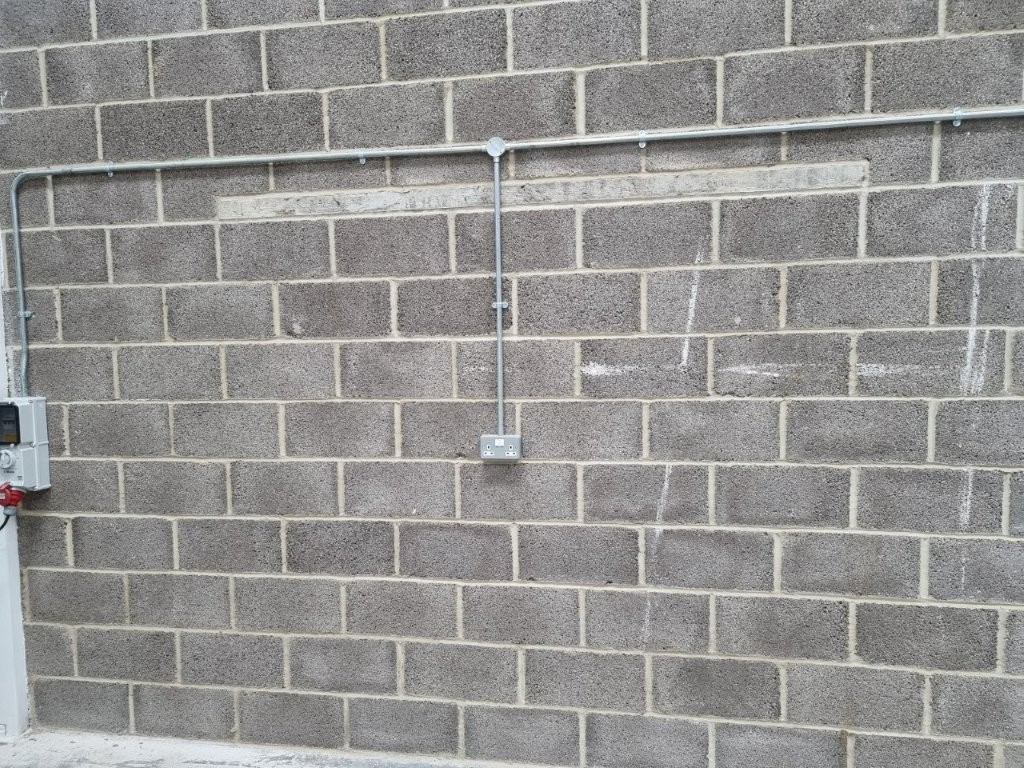
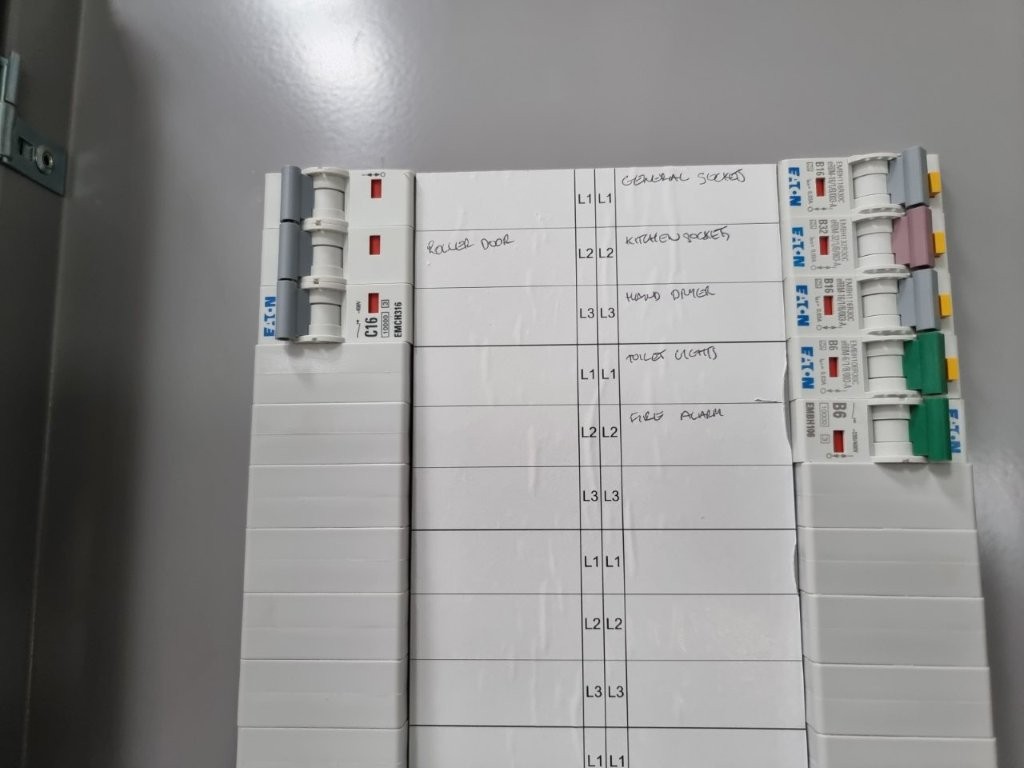
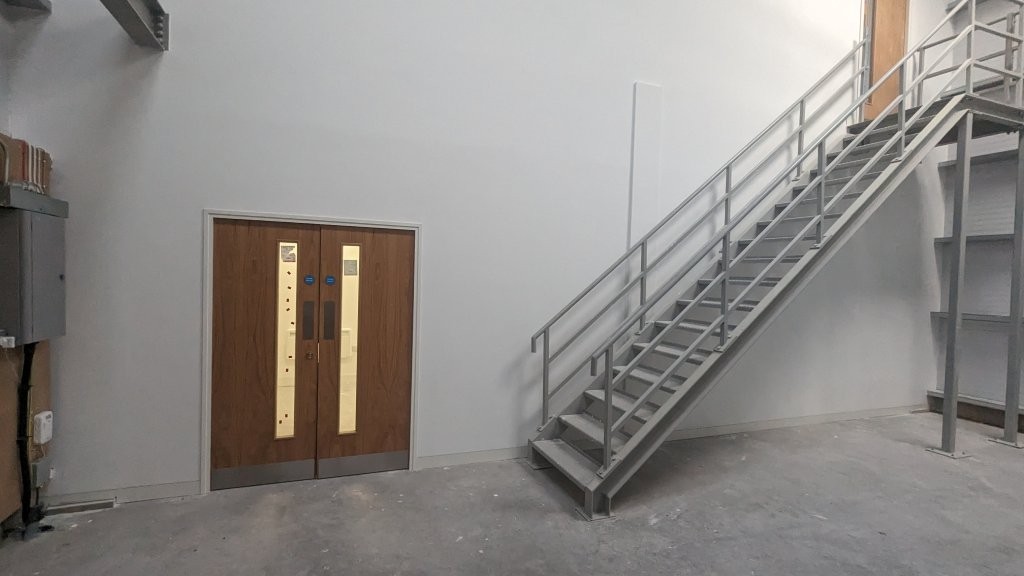
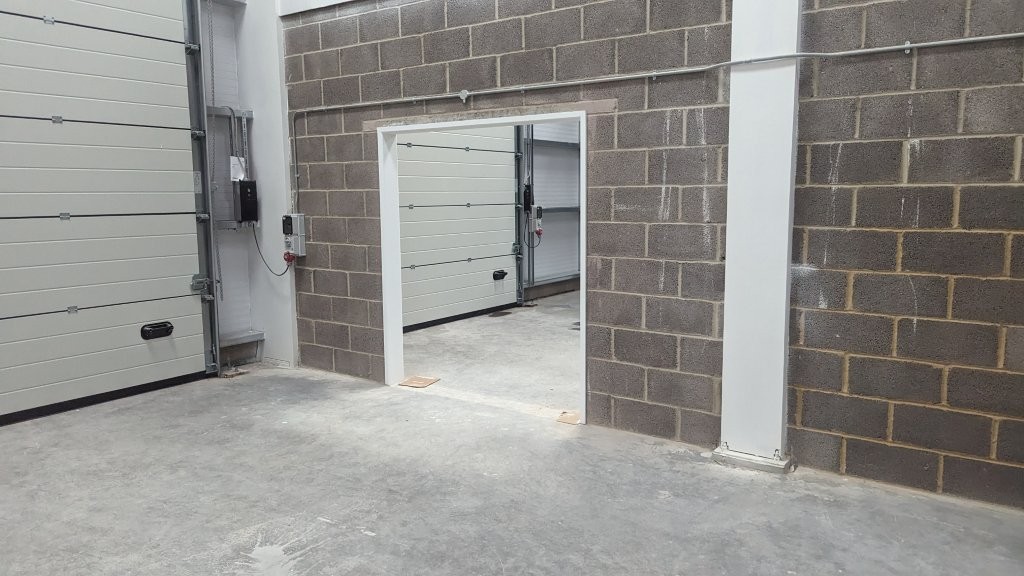
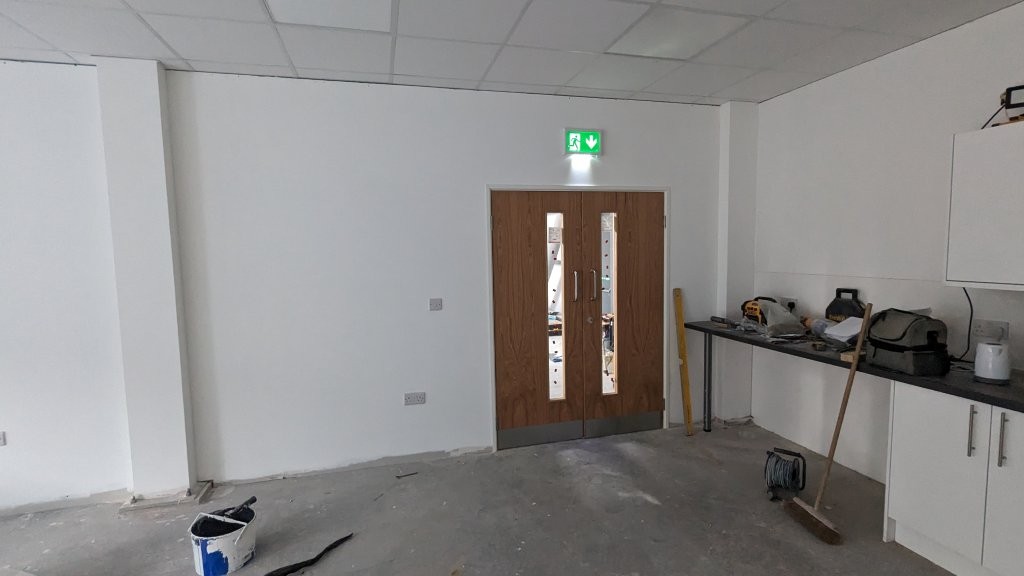
The requirements were around 4 people in the office upstairs, with power points downstairs for benches, and the downstairs space needed a pair of double doors on it. The next door unit had to be knocked into, with a fire alarm fitted to cover both units, and this was fitted for us by the Fire Alarm Consultancy, which we recommend on all our projects.

There was some stipulation with dates, and that allowed Dauwalders to plan on what to move where and all of that was fine.
Building Regulations

The other fairly obvious item that needed to be considered was Building Regulations, particularly as there are people working on a mezzanine floor. The rules are that if people are working on a mezzanine, they need to have enough time to get out of the building in the event of a problem. The structure therefore has to be fire rated, to ensure it does not collapse, and the escape routes need to be clear, protected if required, with emergency lighting, fire alarm detection etc.

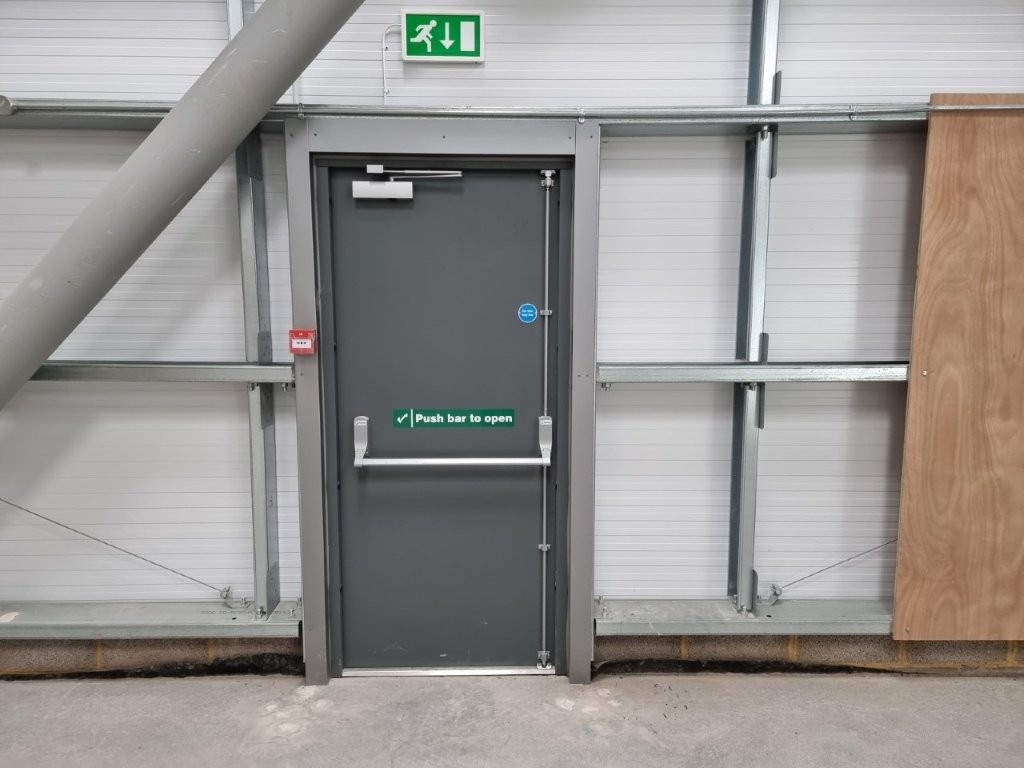
In this particular case, the travel distances to get out were not massive, and if we positioned the stairs where required, the exit is straight to a fire exit, as well as into a protected space underneath with an exit, as well as the roller shutter, and potentially into the other unit. Plenty of ways to get out.

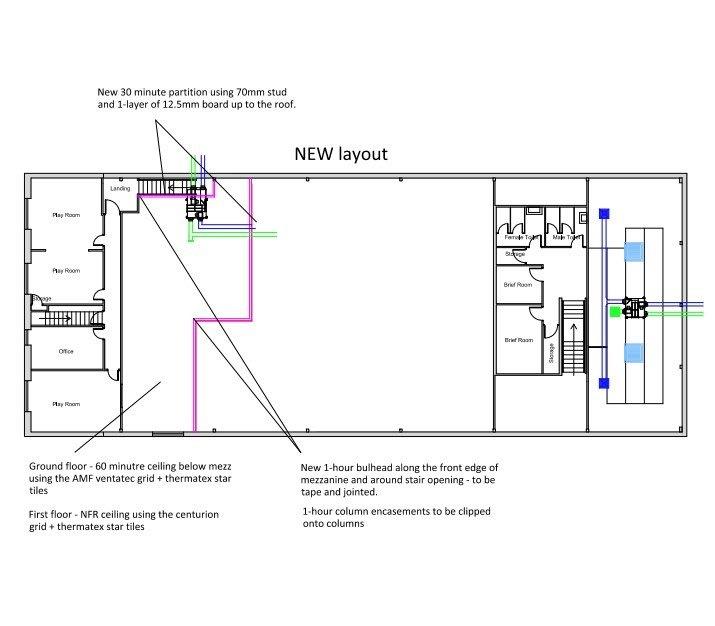
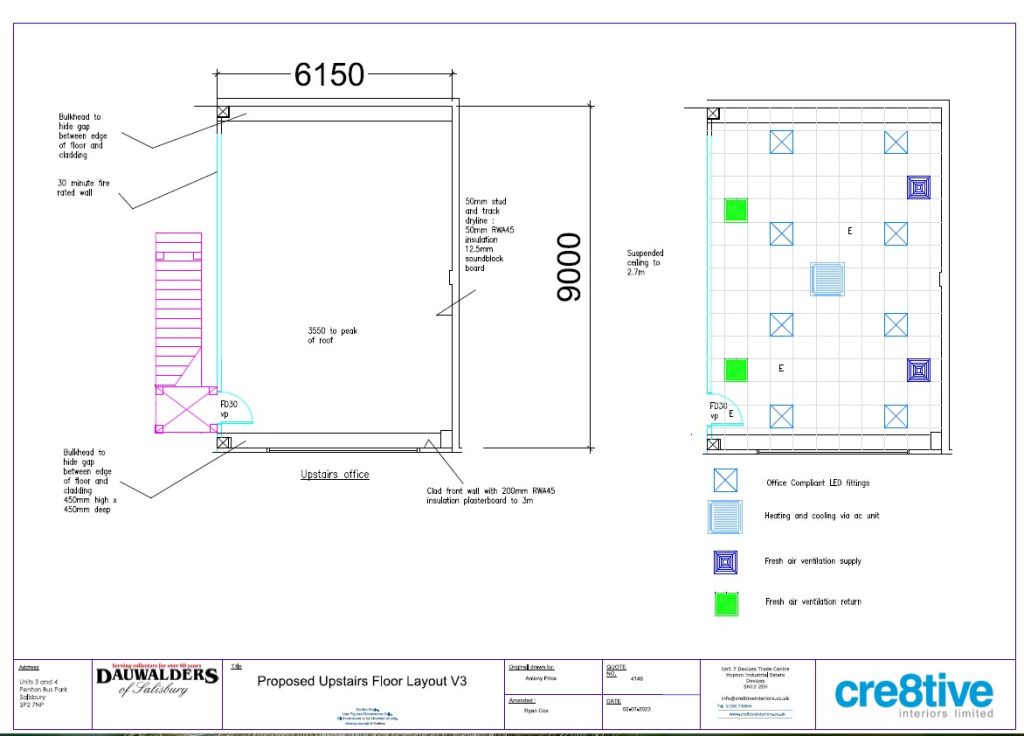
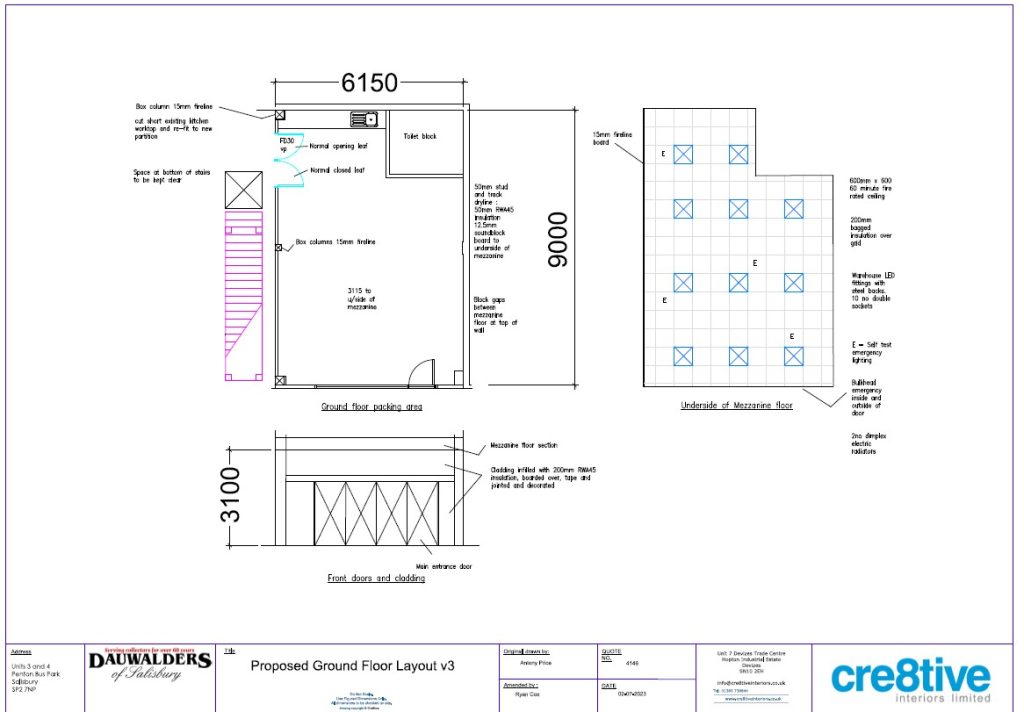
The main stipulation from the Fire Inspector is to make sure that the mezzanine floor itself is fully 60 minutes protected. There was no stipulation on the walls, but we would normally fit 30 minutes anyway, and the Inspector was happy with that.

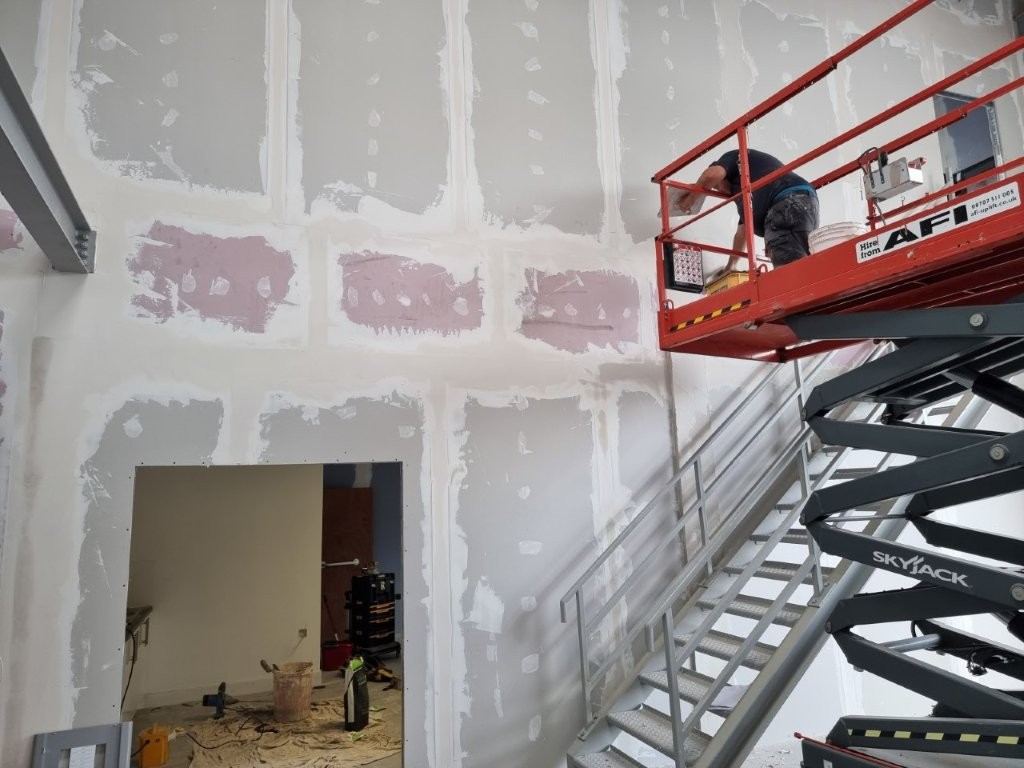
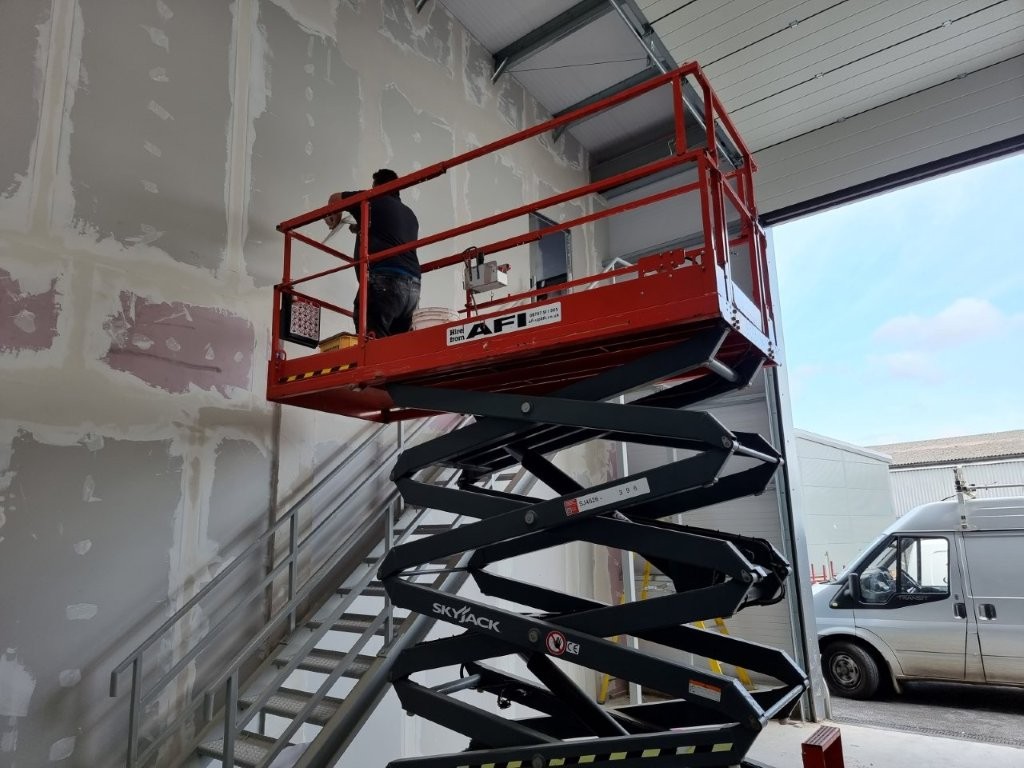
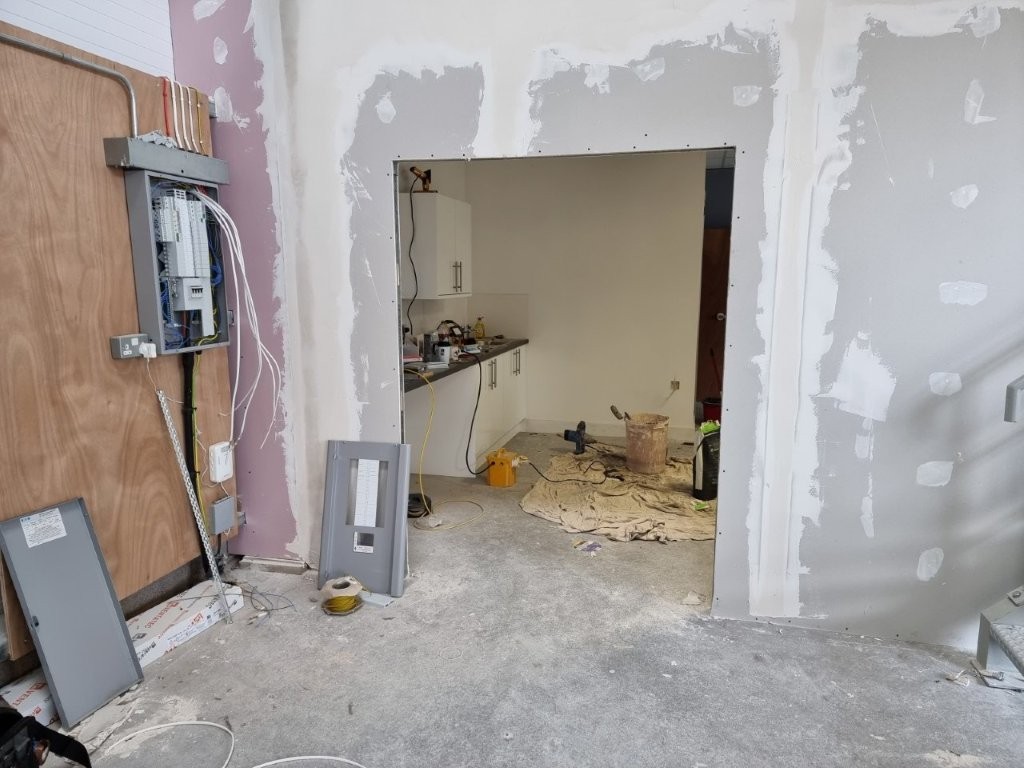
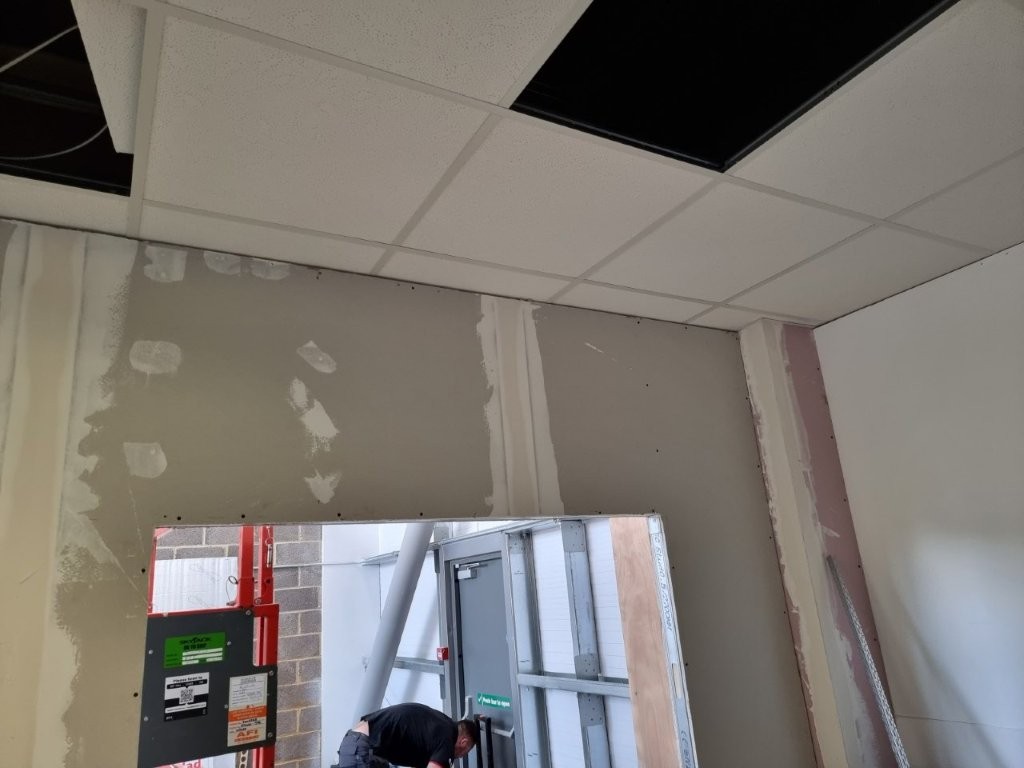
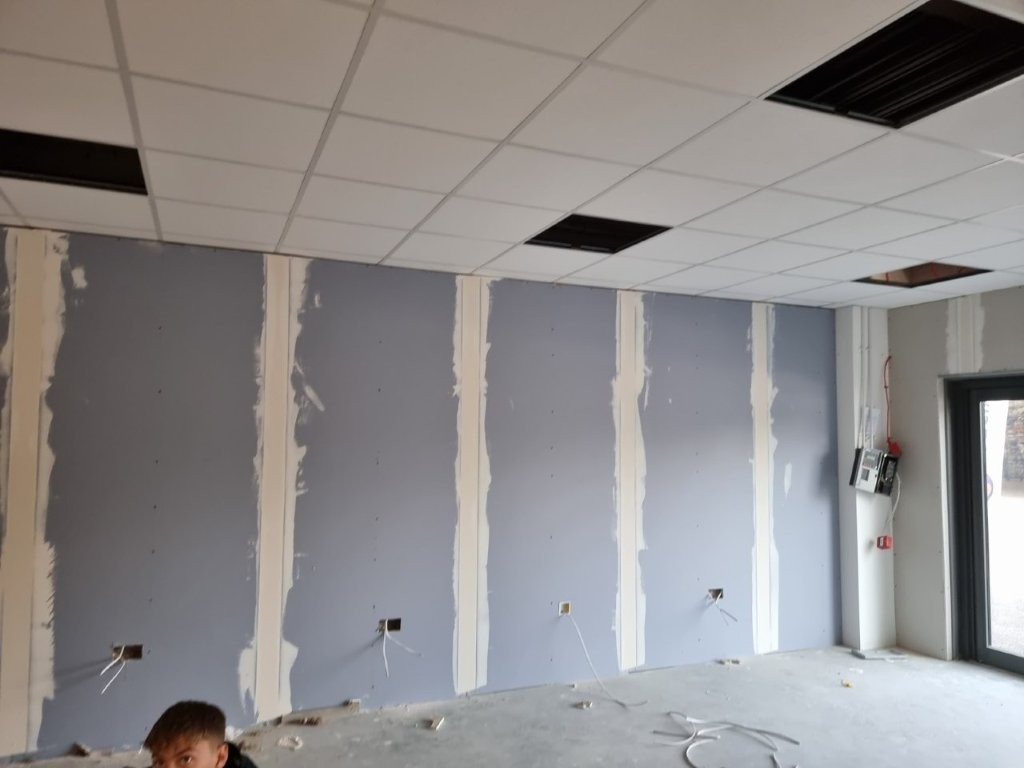
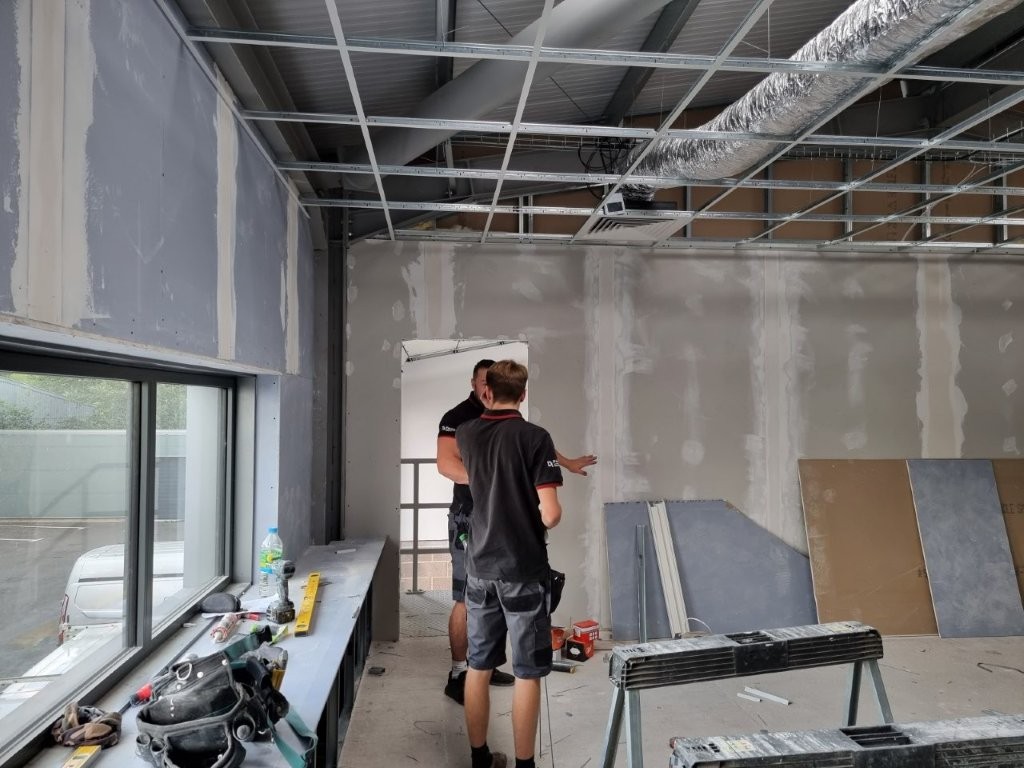
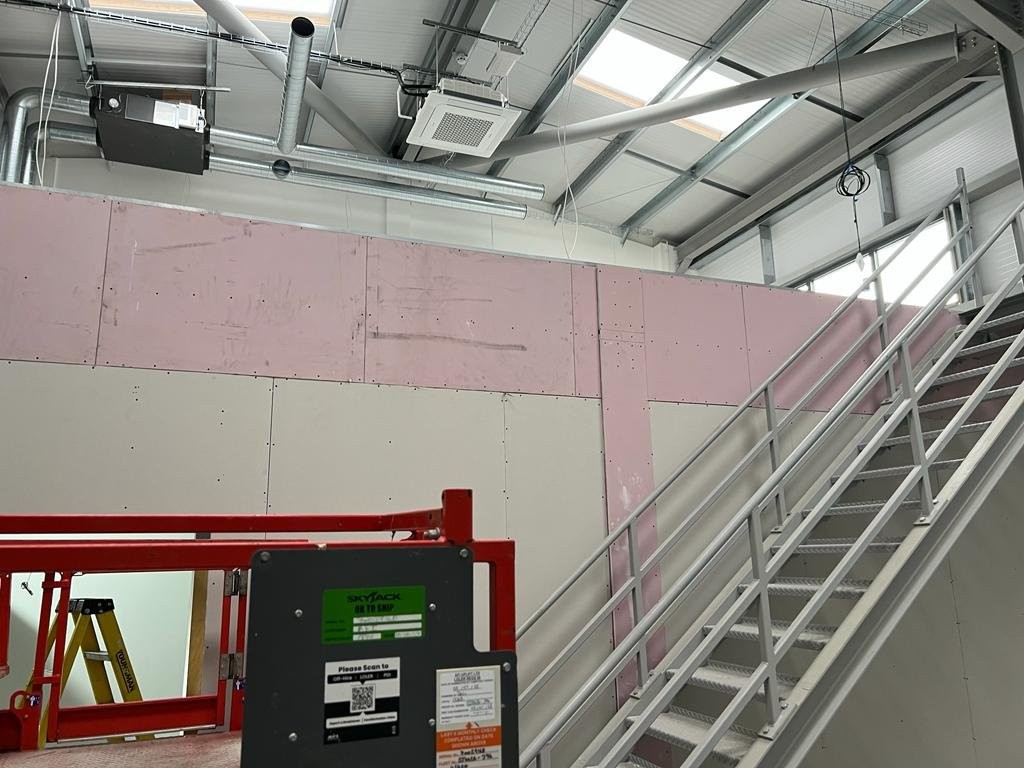
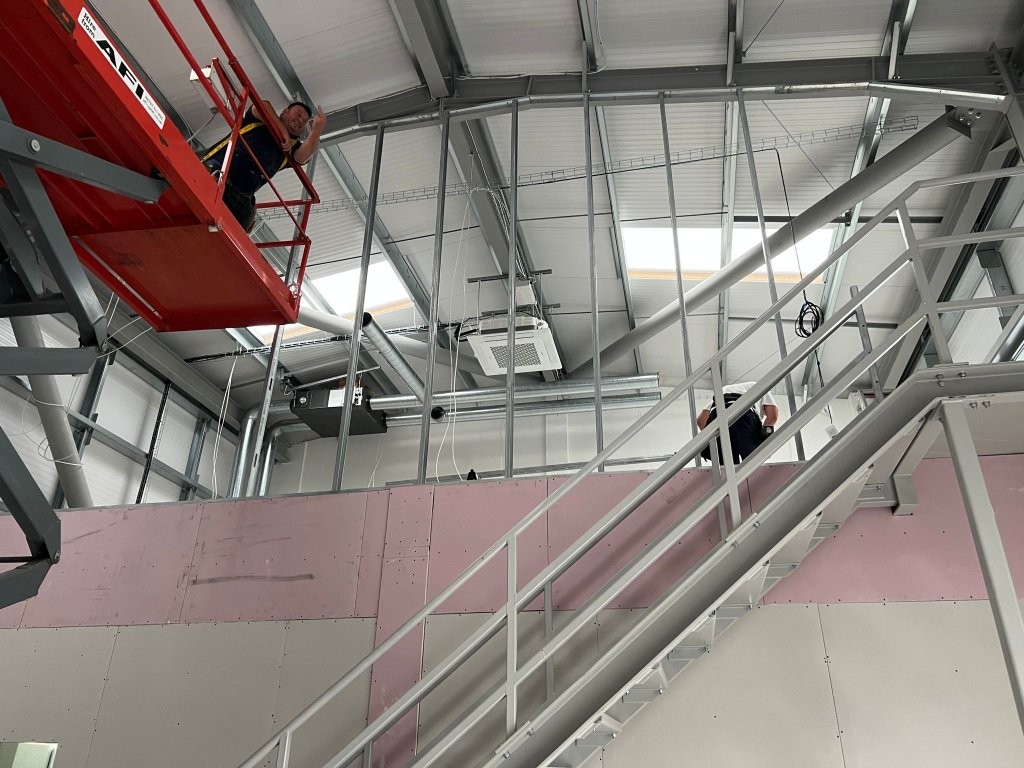
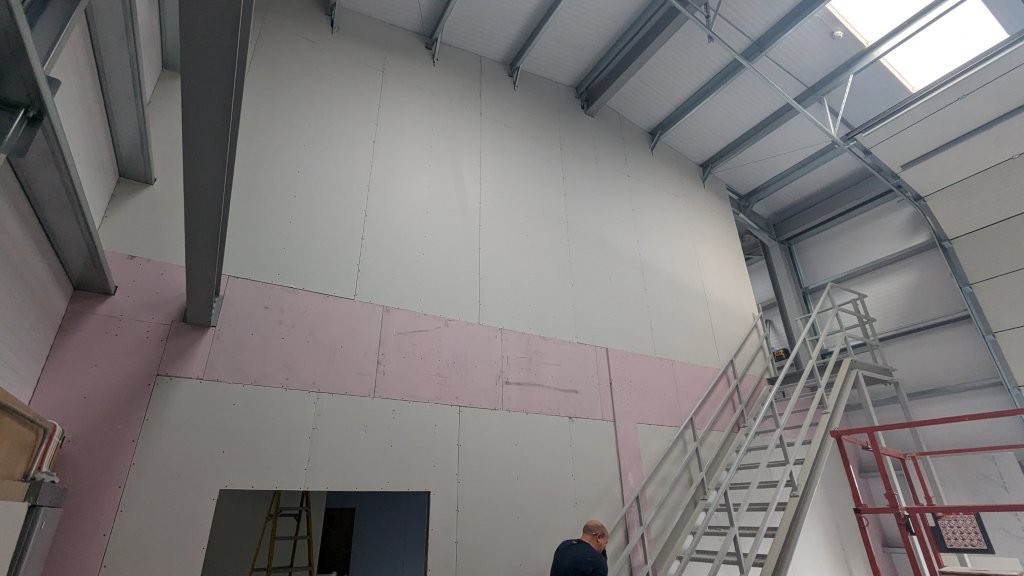
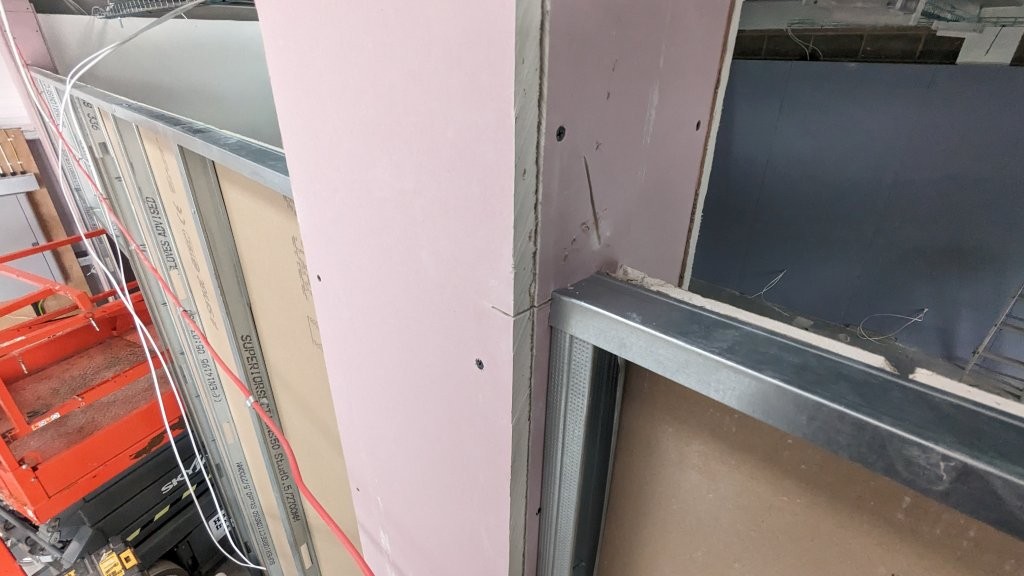
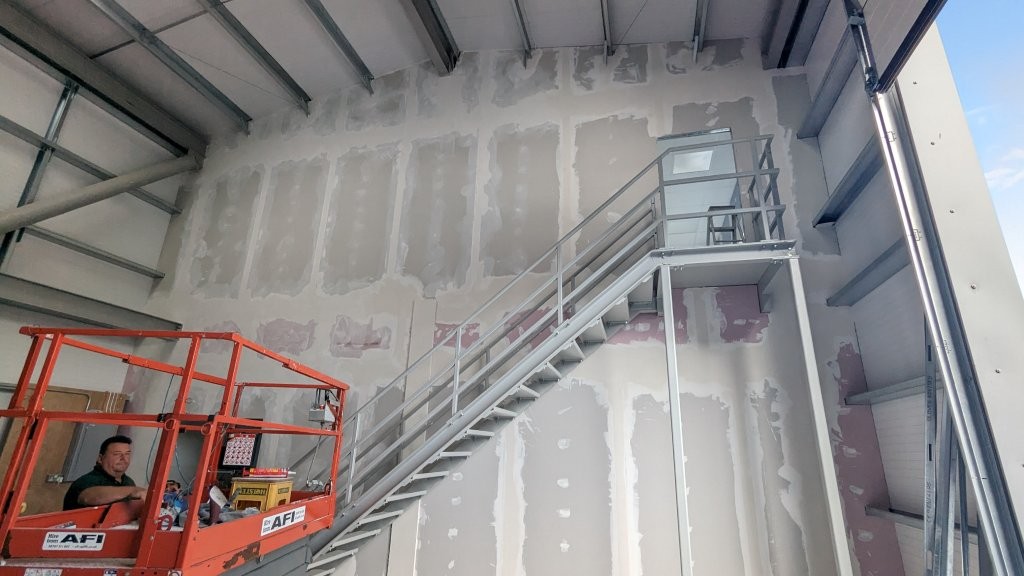
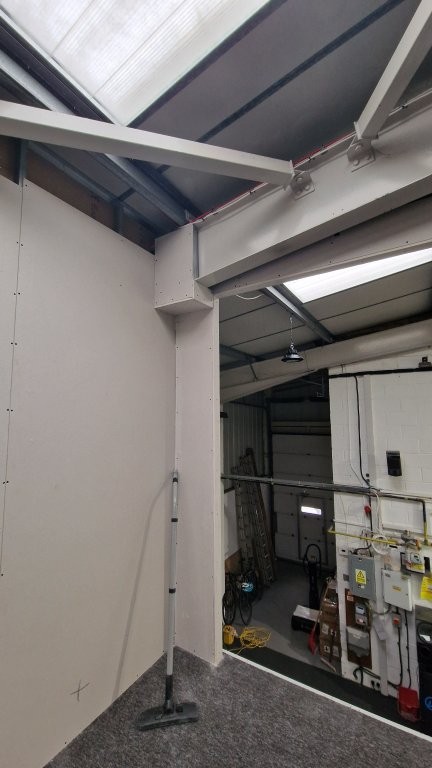
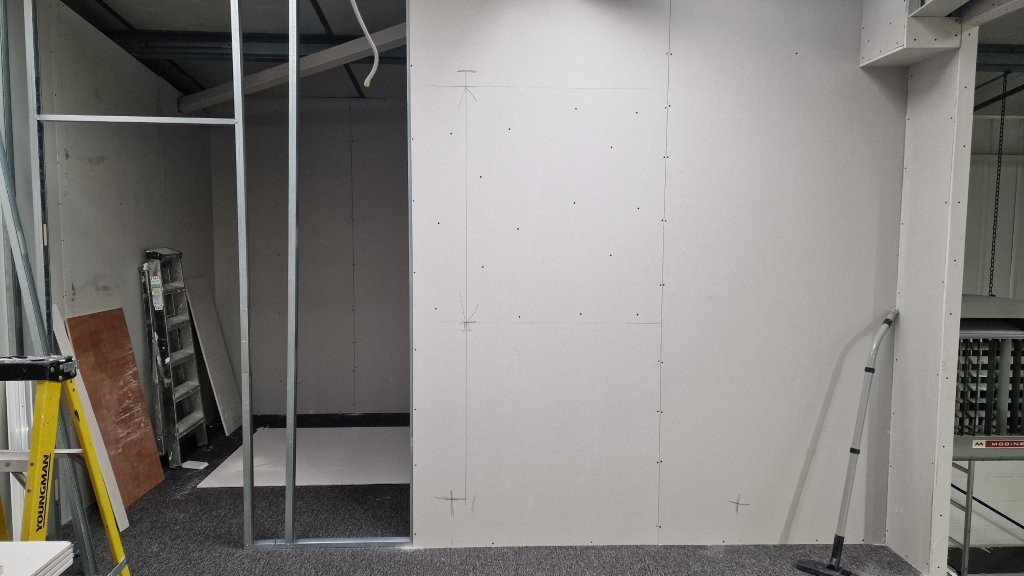
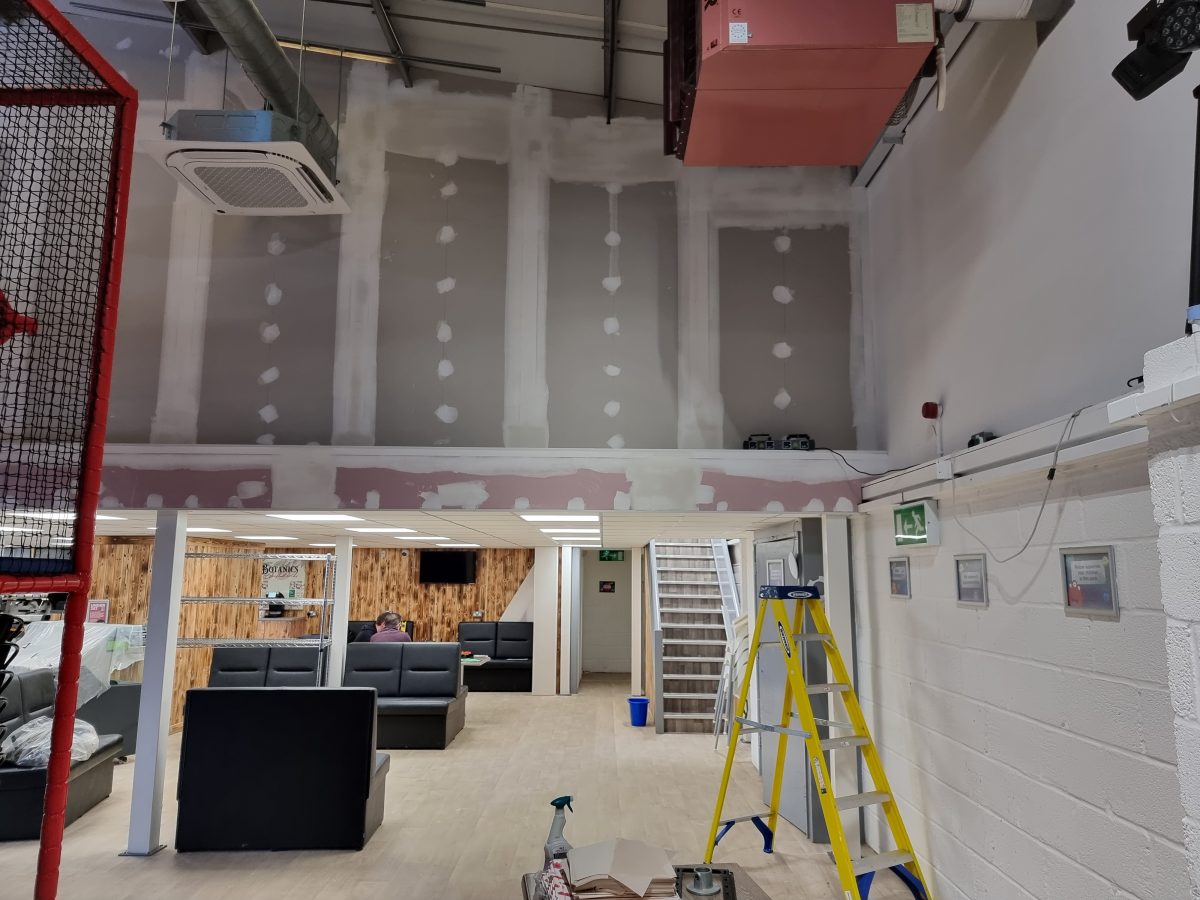
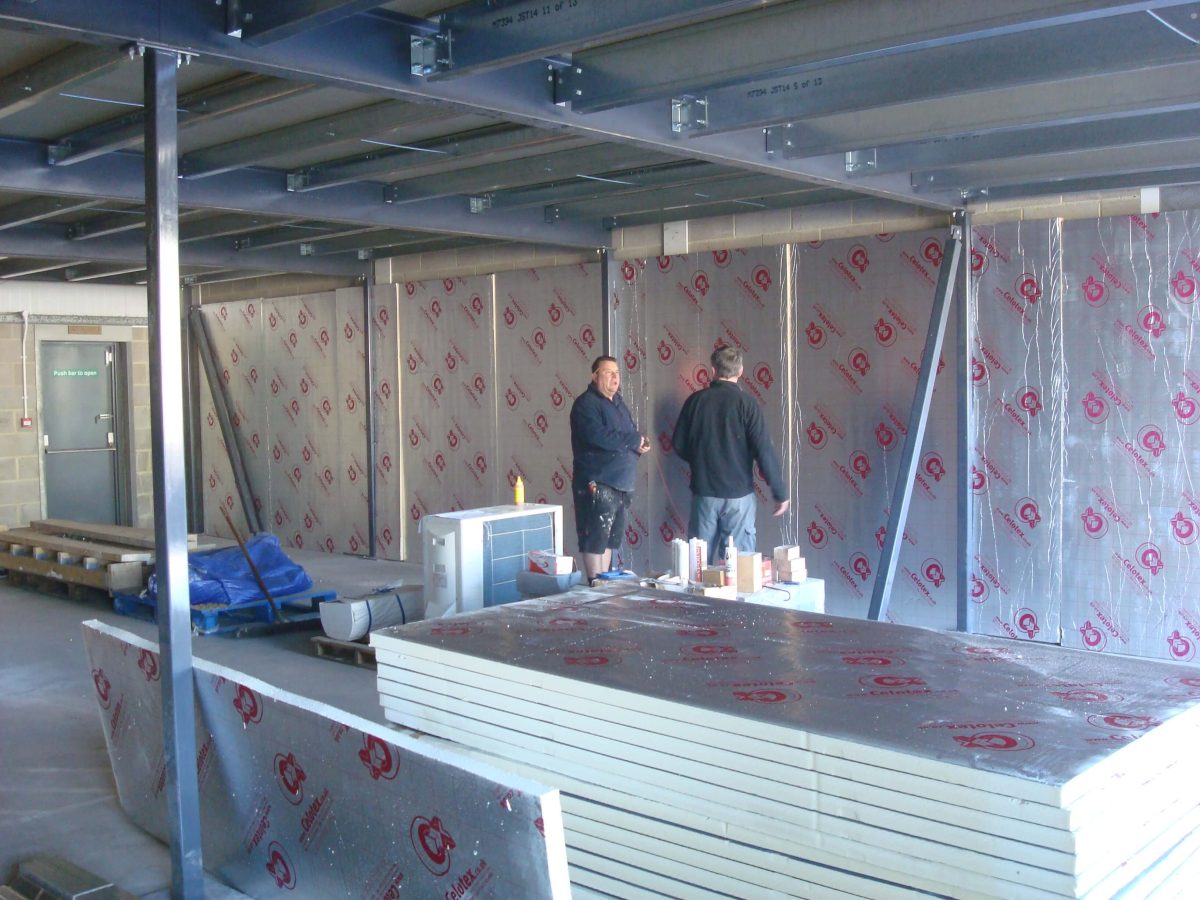
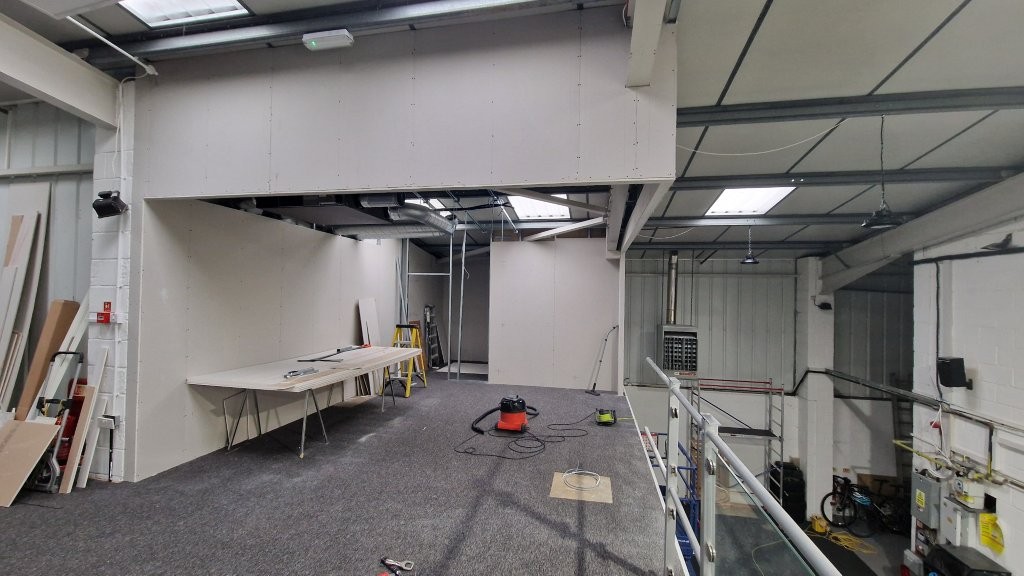
All of the steels therefore had to be boxed in 15mm fireline board, which is the pink board in the photographs below.

Building Regulation and Customer drawings and plans

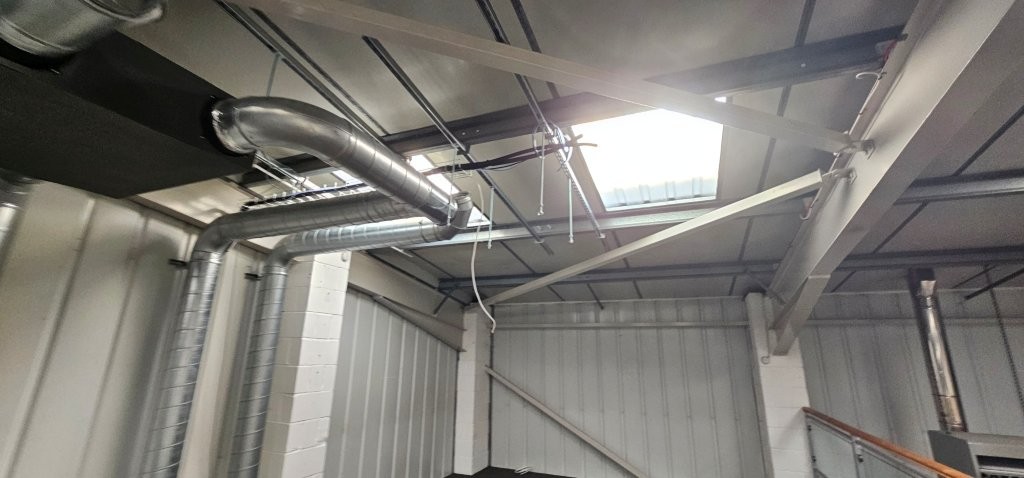
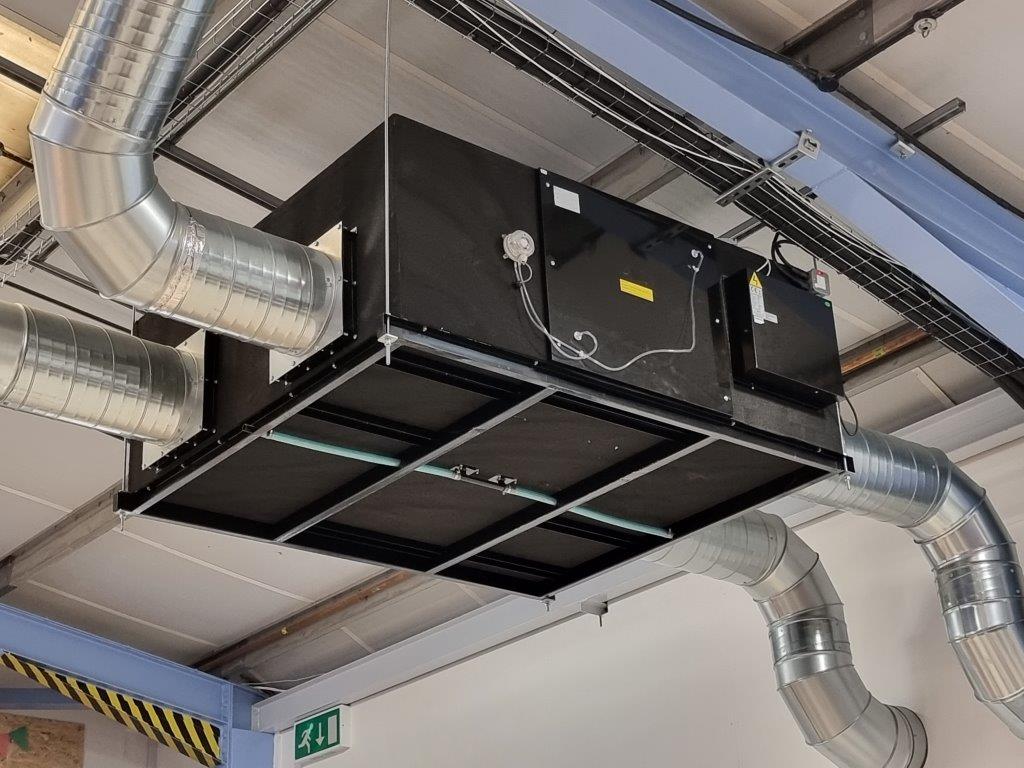
We always draw everything anyway, but these drawings needed a bit more detail for the Inspector to be clear about what was going on. The offices needed fresh air ventilation, and this is done with a VAM unit. They had air conditioning which provided heating and cooling, but in Building Regulations there is no requirement for air conditioning, just a means of heating the space, which an electric radiator would have been fine. There is a definite requirement for fresh air ventilation.
Sound Problems from Next door.

This was always going to be tricky. Even as we stood on the mezzanine floor before we did any work at all, you could hear everything. Part of the issue was the really bad design of the mezzanine floor. They had designed it so that the main floor ran through all of the units, right the way through, then plonked the dividing walls on top of the floor to split up the units. Any noise translating into vibration just carries on through any metalwork. There were also huge gaps between the edge of the floor and the outside of the building, any noise was going to go straight up through these gaps to the upper floors. Even though the noise next door was downstairs, in their unit it was going straight up and through the gaps.

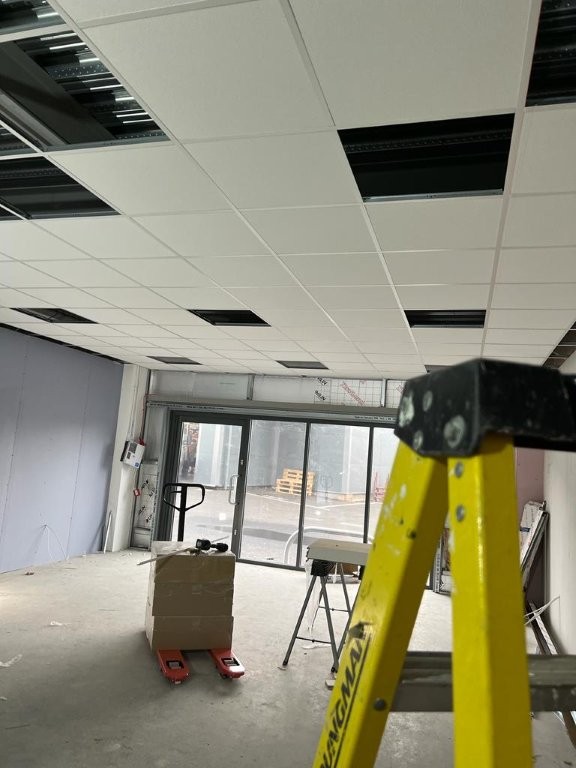
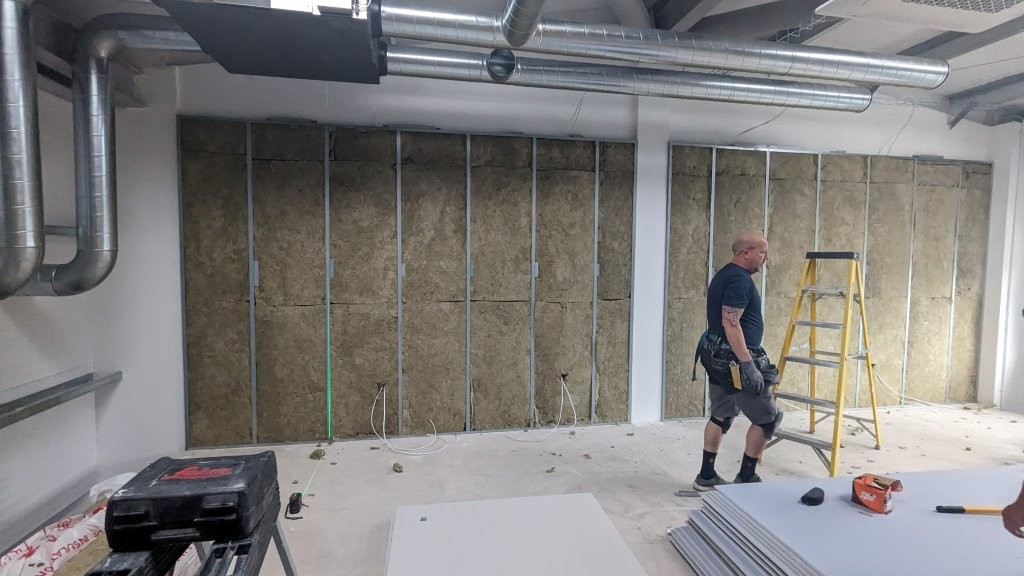
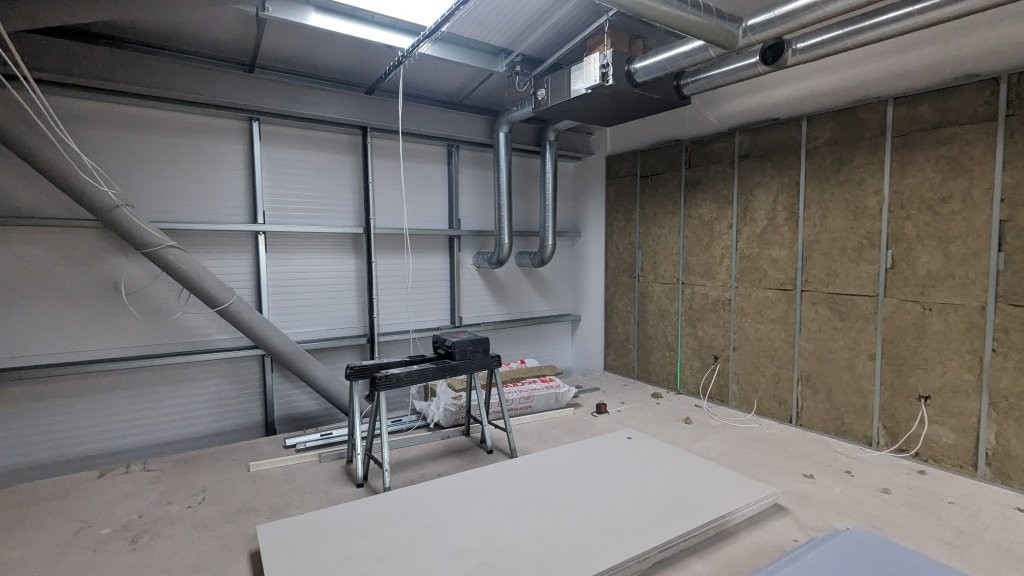
In our unit, we can deal with the gaps at the edges, but really it needed RWA45 acoustic slab in the walls, and sound block board to try and absorb noise coming through, and then block it coming into the potential new office upstairs. It also needed decent suspended ceilings with bagged 200mm insulation over the suspended ceiling grid and that was probably as much we could do.

Construction Photos

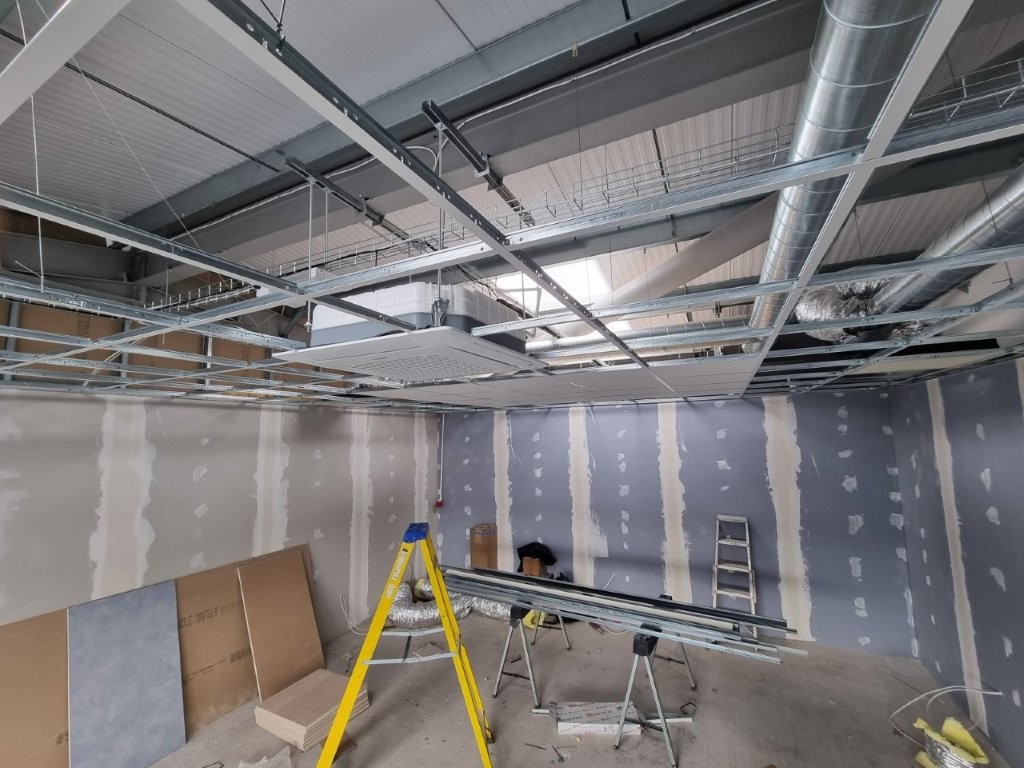
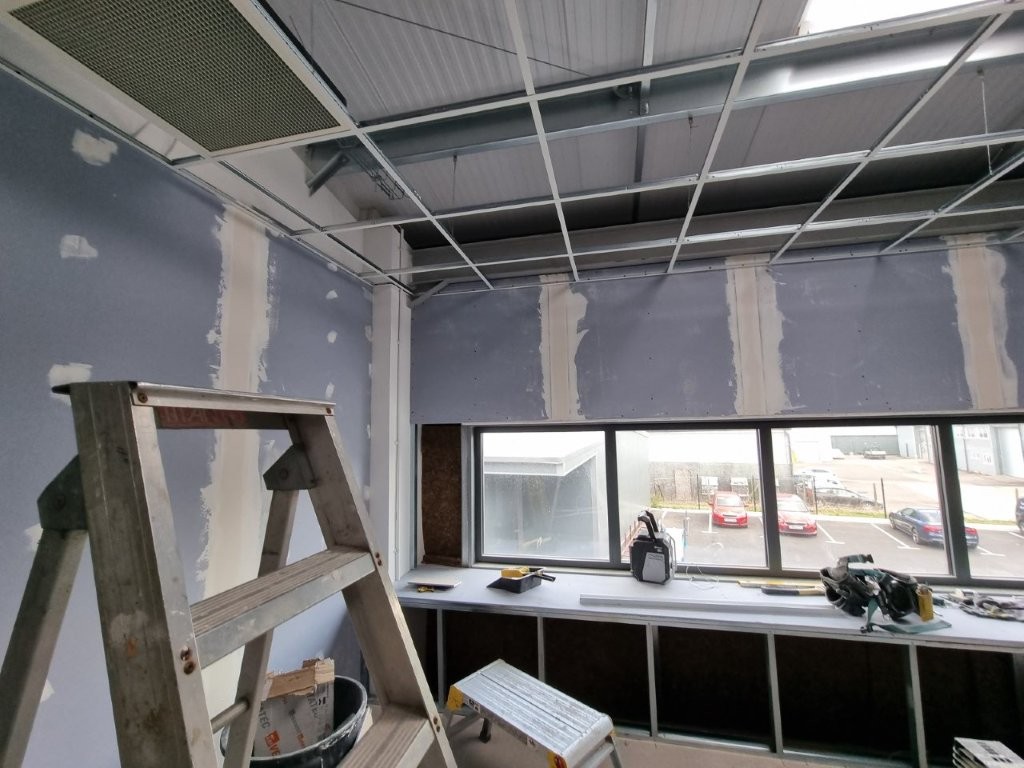
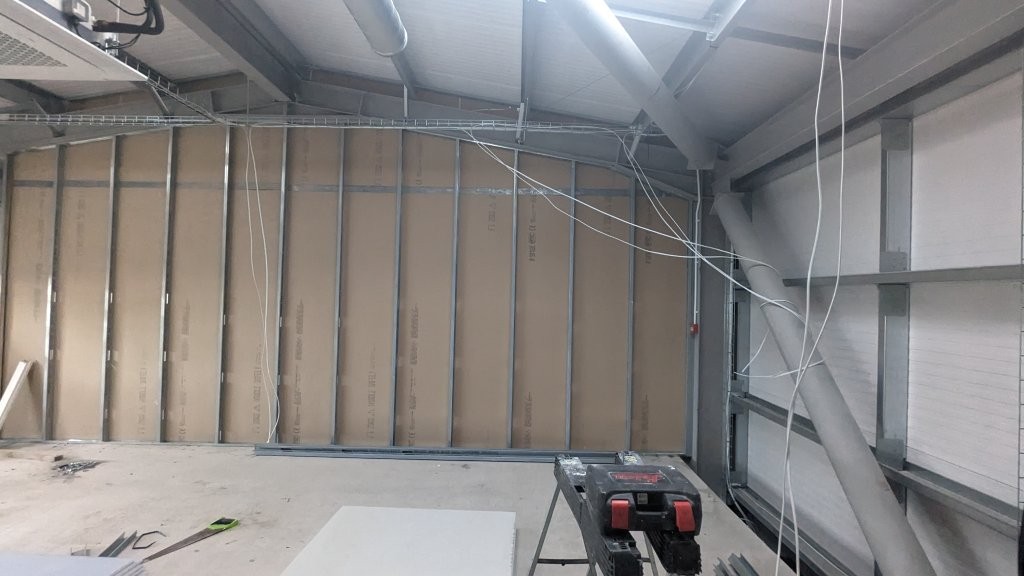
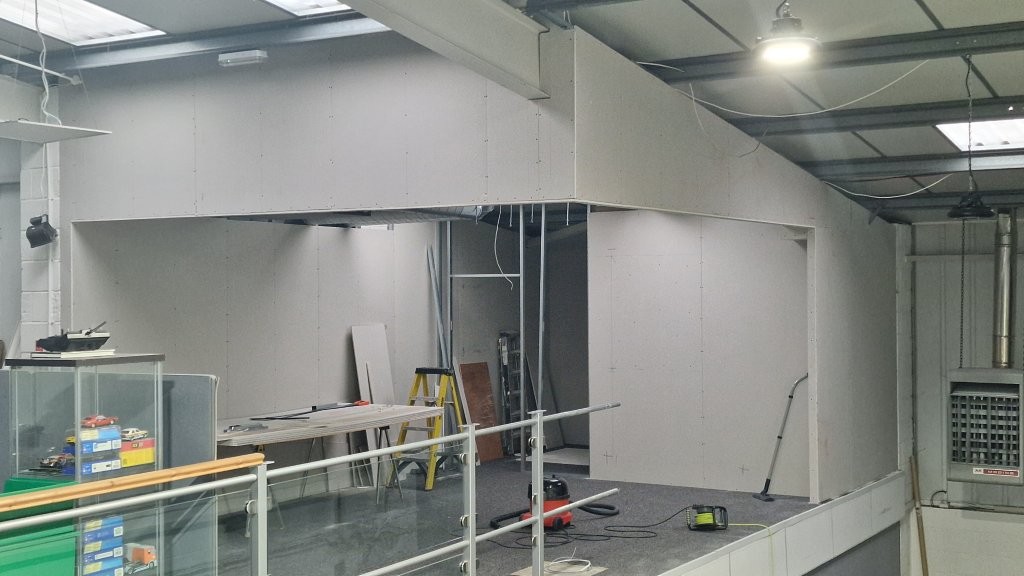
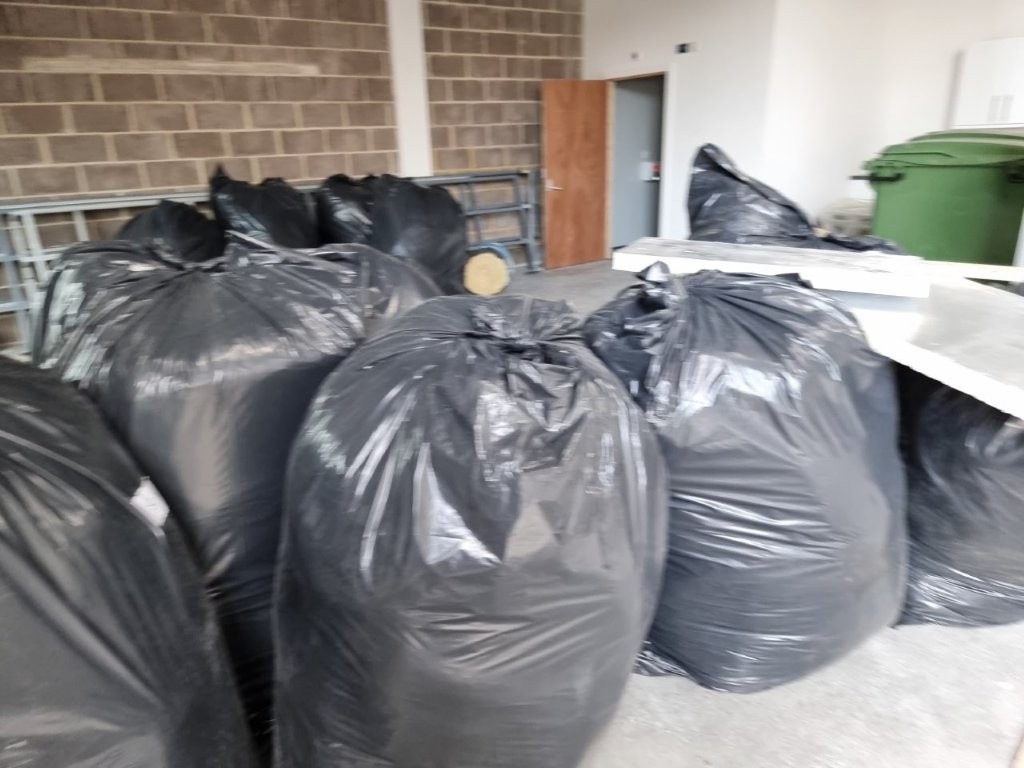
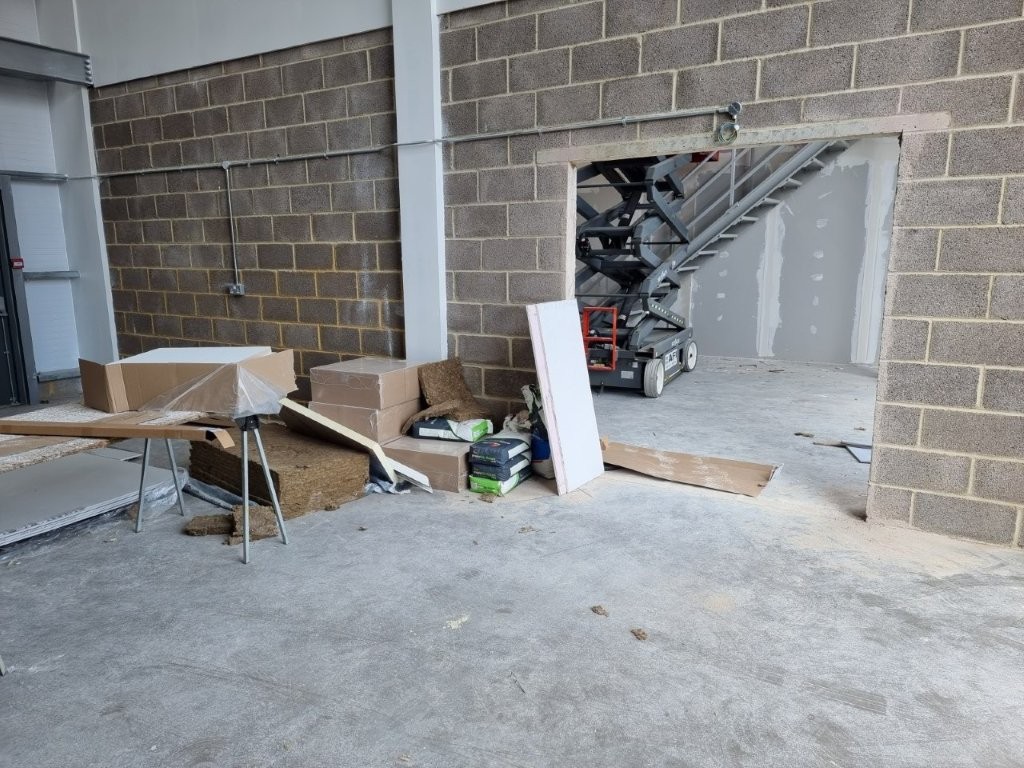
Please find below some construction photos. We needed to ensure that the mezzanine floor was 1 hour fire protected and as mentioned previously, we carried this out using 15mm fireline board, boxing all of the columns and the edges of the mezzanine floor.

We also had to build over the gaps at the edges of the mezzanine, to ensure any potential fire did not go up between the floors.
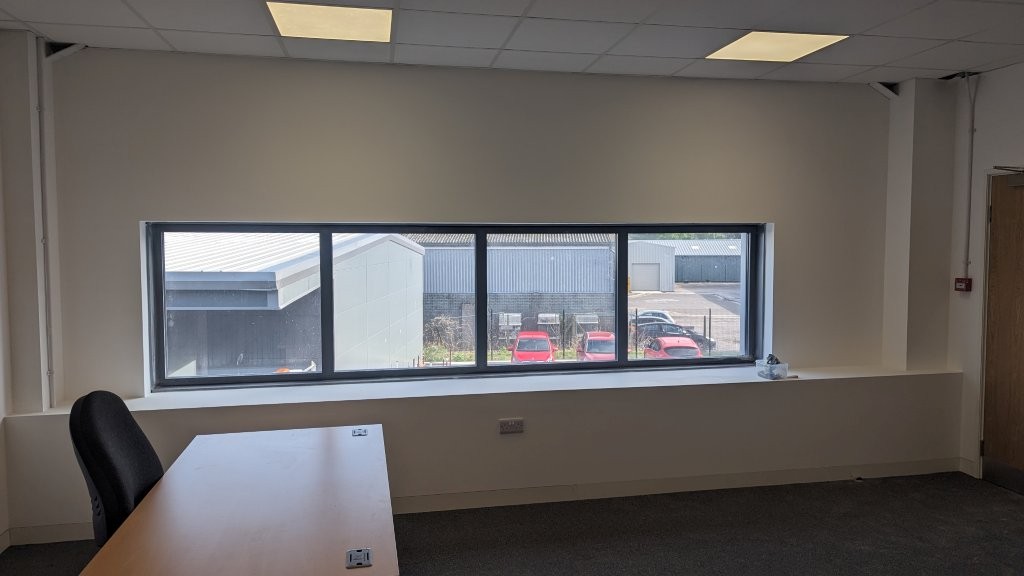
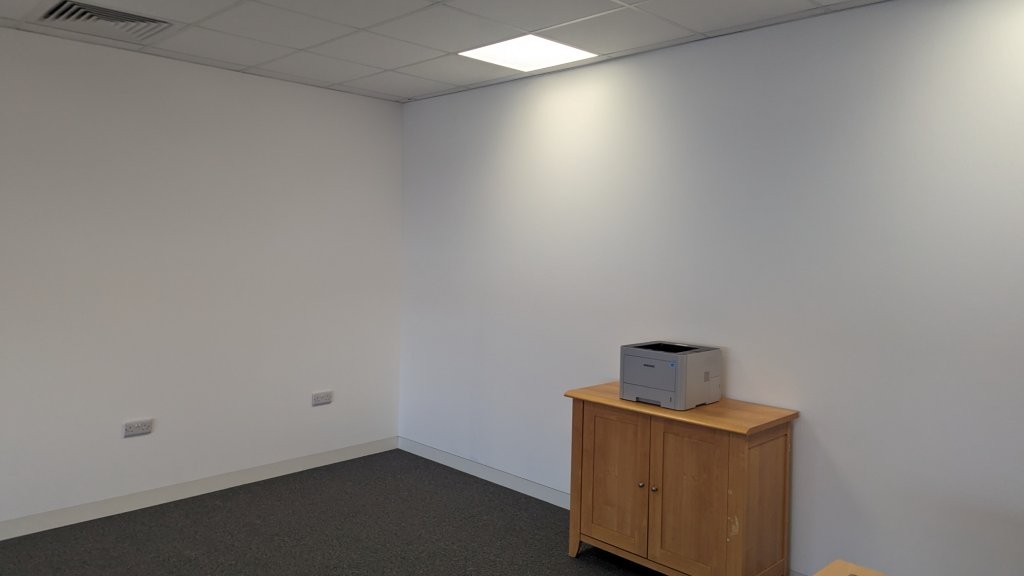
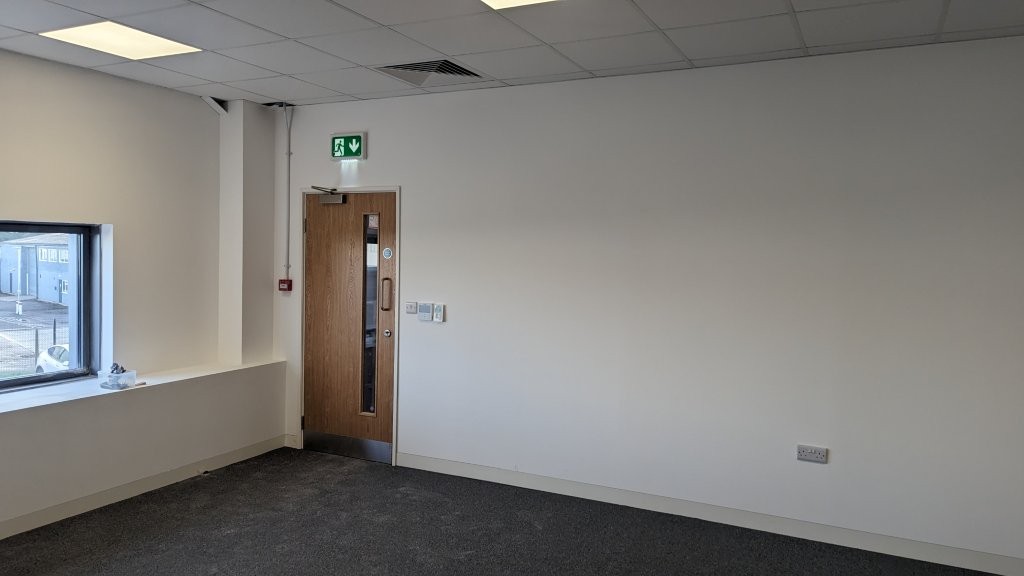
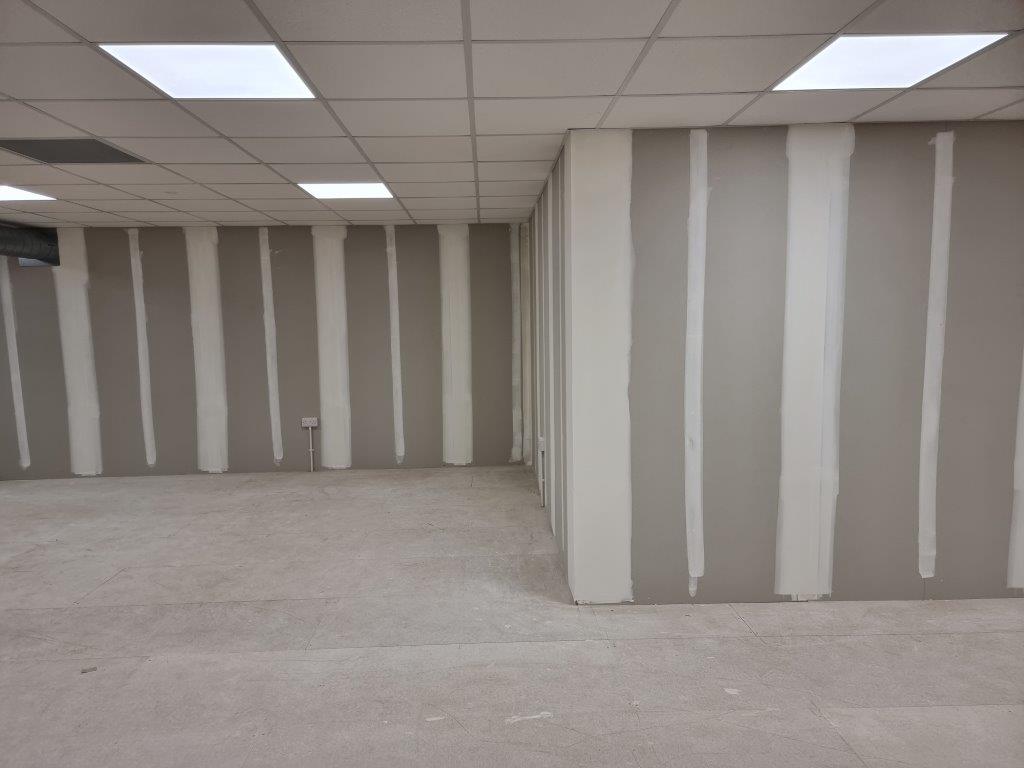
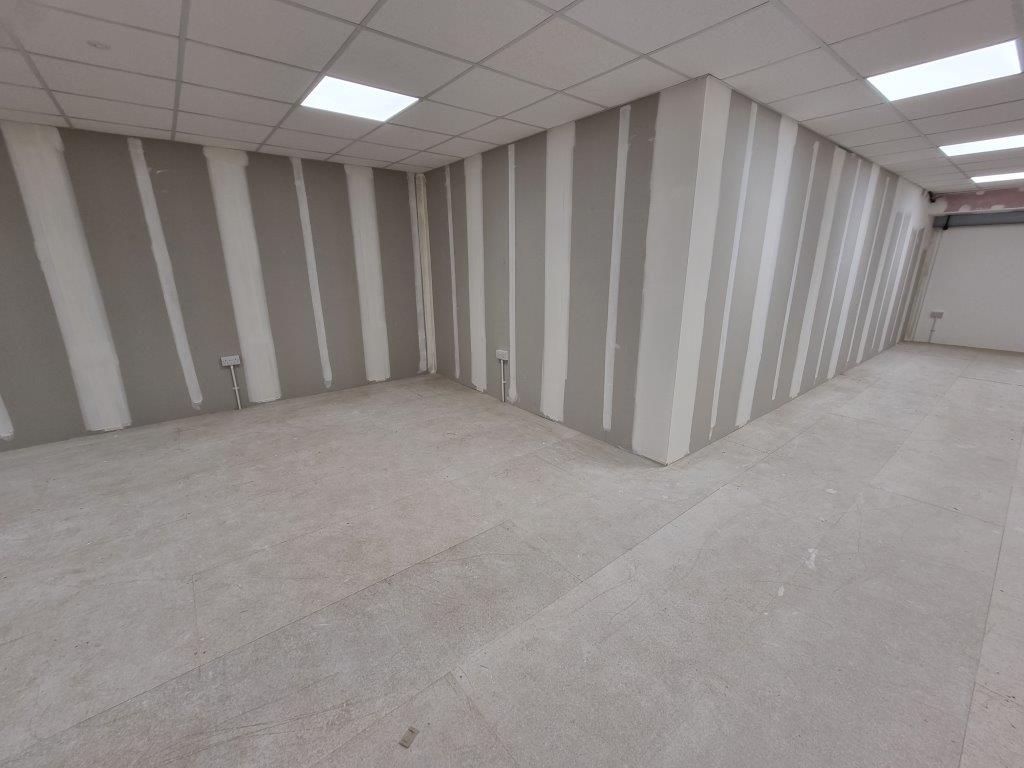
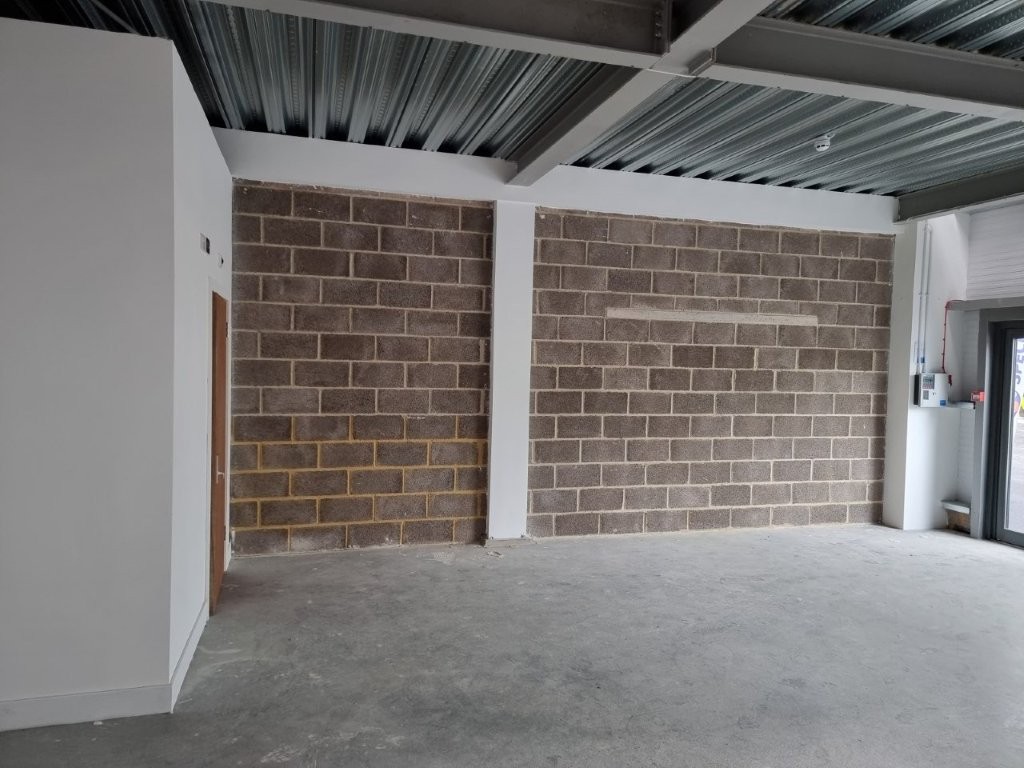
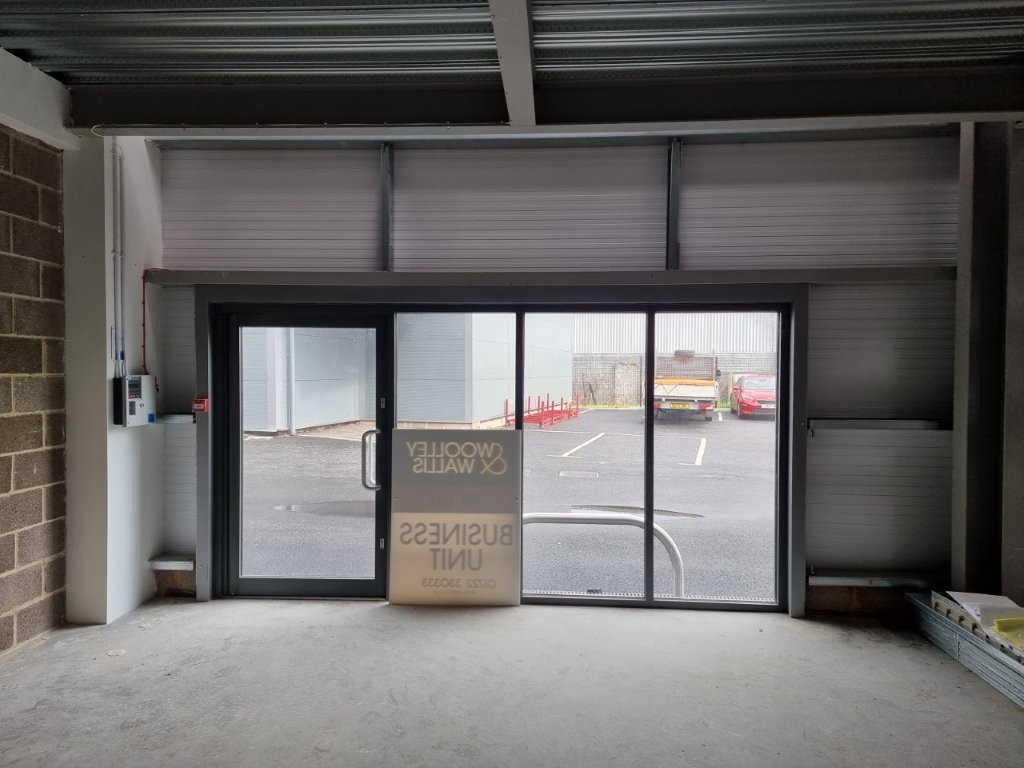
Some completed photos
If you are thinking of taking on a new unit, and have any questions, we would love to be involved in your project, the visit is always free and the advice is free as well. If you are not sure what is involved you are not sure on how things can be done, then we are sure we can help.

Please call 01380 73 8844 or email us via the contact form on this website, or at [email protected]

Categories
All Project Categories Office Refurbishments Partitioning Projects

Glass Meeting room on the edge of a Mezzanine floor.

Client: ProsysDev
Value: £67k

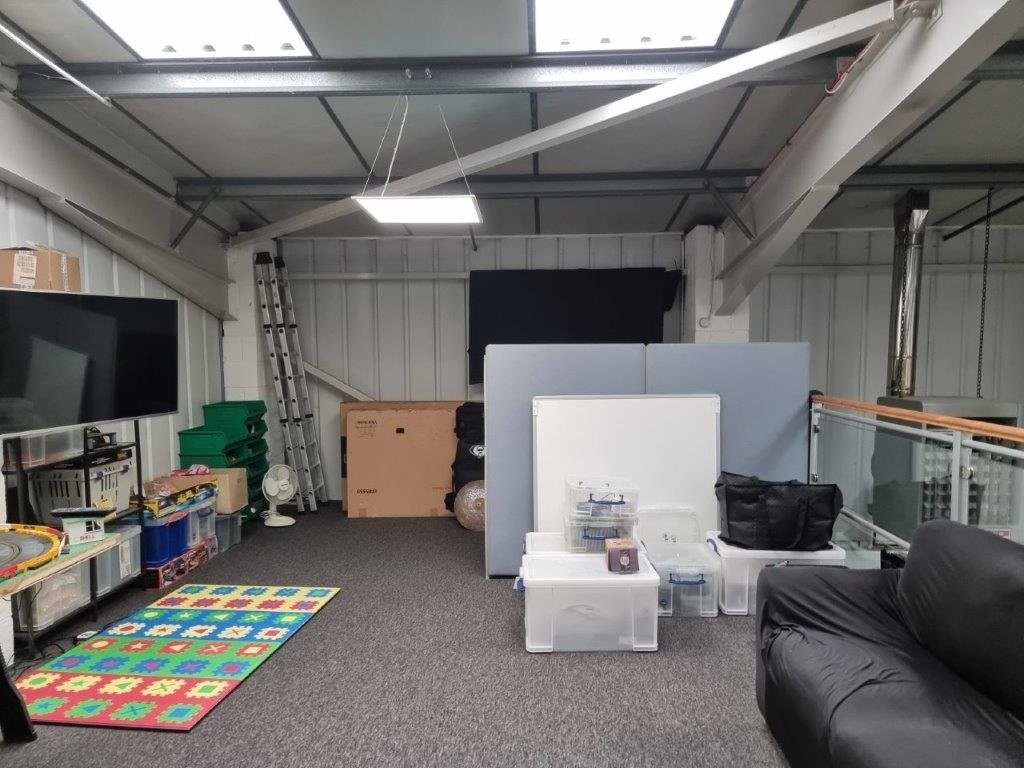
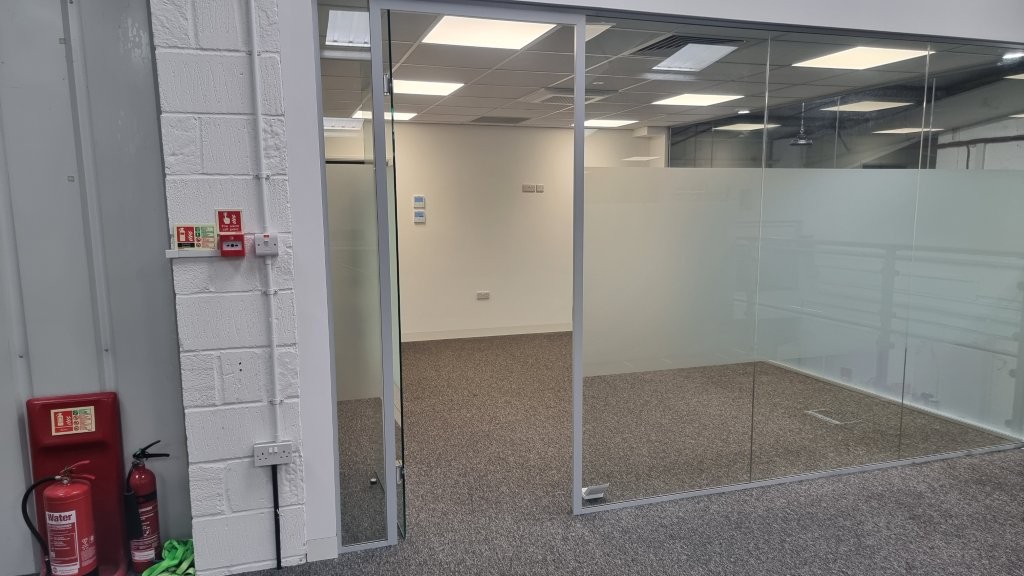
We were asked to look at this project via an enquiry from our website, the customer had looked around and felt we could help. When he contacted us, our first reaction was that it was around the M25, and miles away, surely someone closer could build a partition. The problem was that the customer wanted a bit more than a partition as the new room had to sit on the edge of a mezzanine floor and he was unsure about Building Regulations. The people he had contacted just wanted to give him a price for glass walls, without listening to what else he needed and gave no reassurance that it would actually comply with regulations.

For us, it was unusual to find a client that understood that there were Building Regulation issues to be addressed. The customer wanted a piece of paper at the end of the work to say that it complies and everything is fine as that was the right thing to do. When they took on the unit we think it helped that part of the specifications was a mezzanine floor that had been fire rated and was suitable for offices above, and that must have triggered a question.

All the other suppliers of partitioning just wanted to build a wall and that was it. Didn’t even want to visit.

The Next Step

After speaking with the client, we decided to just have a quick look for him if he could send over some details and see what we thought and give some budget costs. We just wanted to see how we could help, so let us have a quick look.

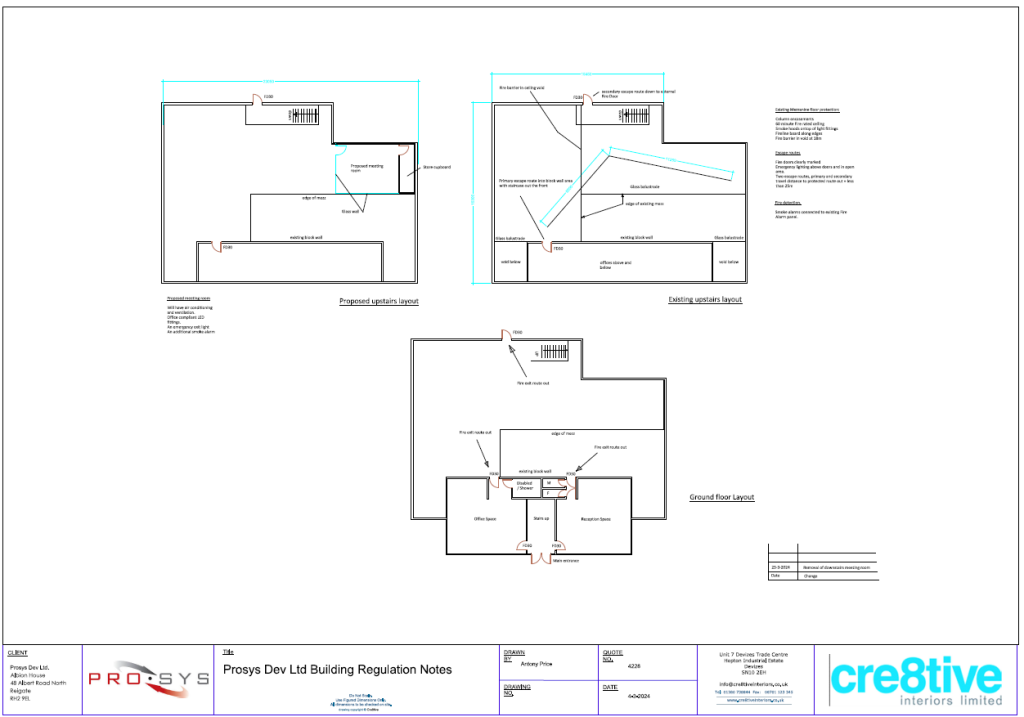
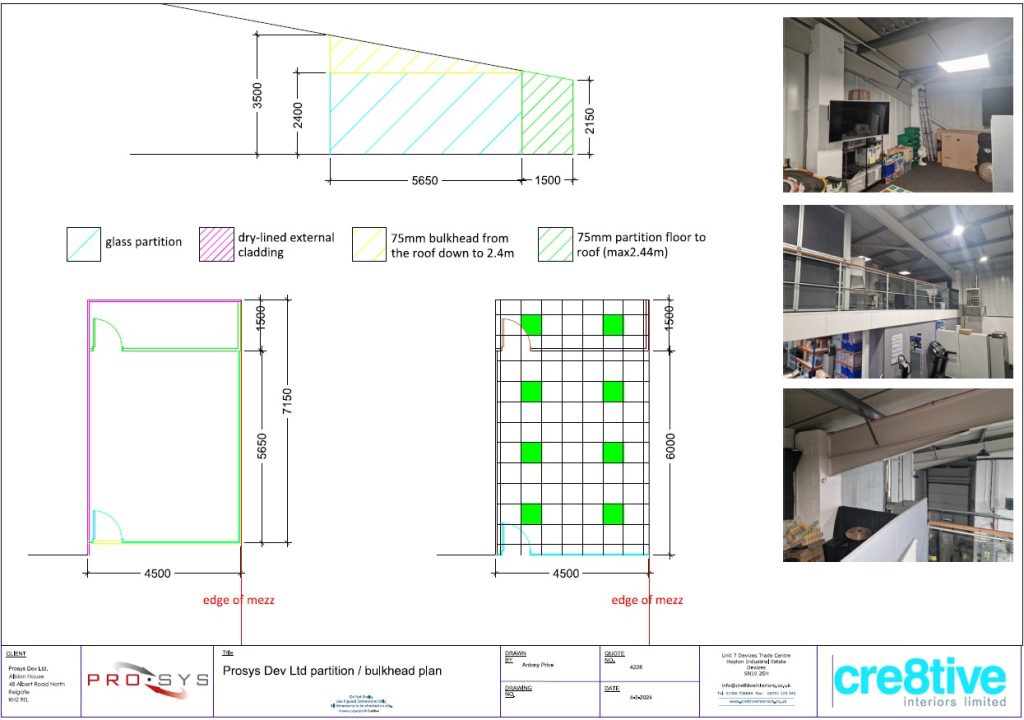
These are the details that were sent to us, pretty good actually.

Building Regulations

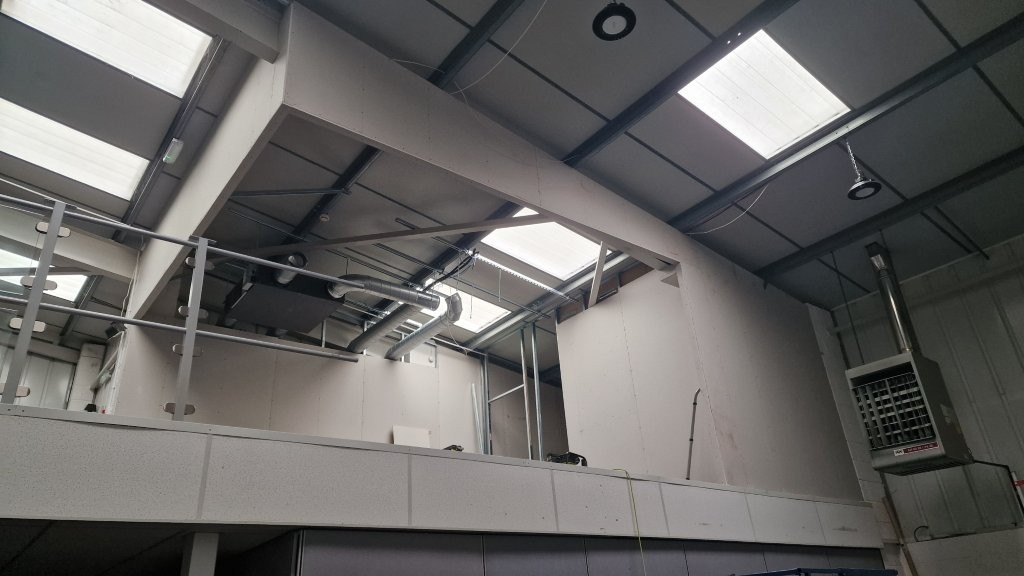
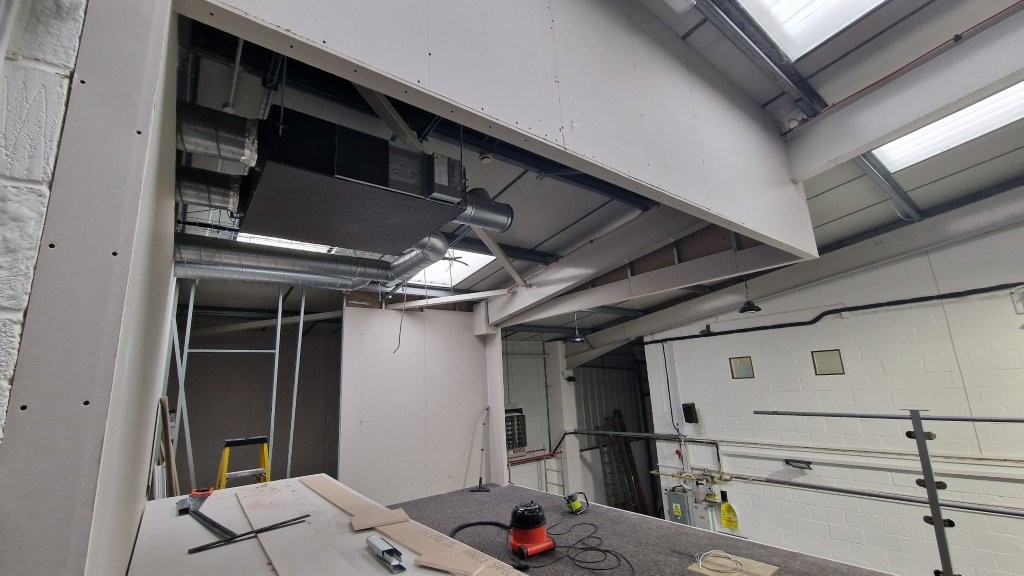
Looking at it initially, slightly tricky. The handrail would be in the way and we would have to remove it, and build the wall to the edge. The other bit that was quite hard was the sloping roof, we could have to build up to it and deal with the beams and make it look right. The customer was quite right, and we had to check with Building Regulations which is what we did, free of charge. The key things were that there were two means of escape with the 45 linear meters, so that was fine. The room needed fresh air ventilation, via a VAM unit, any glass to be fitted, which was our preferred options needed to be a special thickness as it is right on the edge at height. Again not a problem. We would also quickly need to check the mezzanine floor itself, to make sure it had the right fire protection. As it happened there was no cavity barrier inside the suspended ceiling underneath as the floor was long than 18 linear meters, and it needed one, so we put one in.

There are other things we did, but in essence, none of this was an issue.

We gave a budget cost, subject to a visit and that was ok, we visited and they also wanted their toilets refurbished. So we refurbished their toilets as well.

Design work, specifications

We always produce a drawing, initially we do this anyway so we can cost the project properly and not just guess everything which we know many people do.

The drawing needed to be tided a bit, although not to architectural standards, it is good enough to explain what needs to be done.

Construction, work in progress.

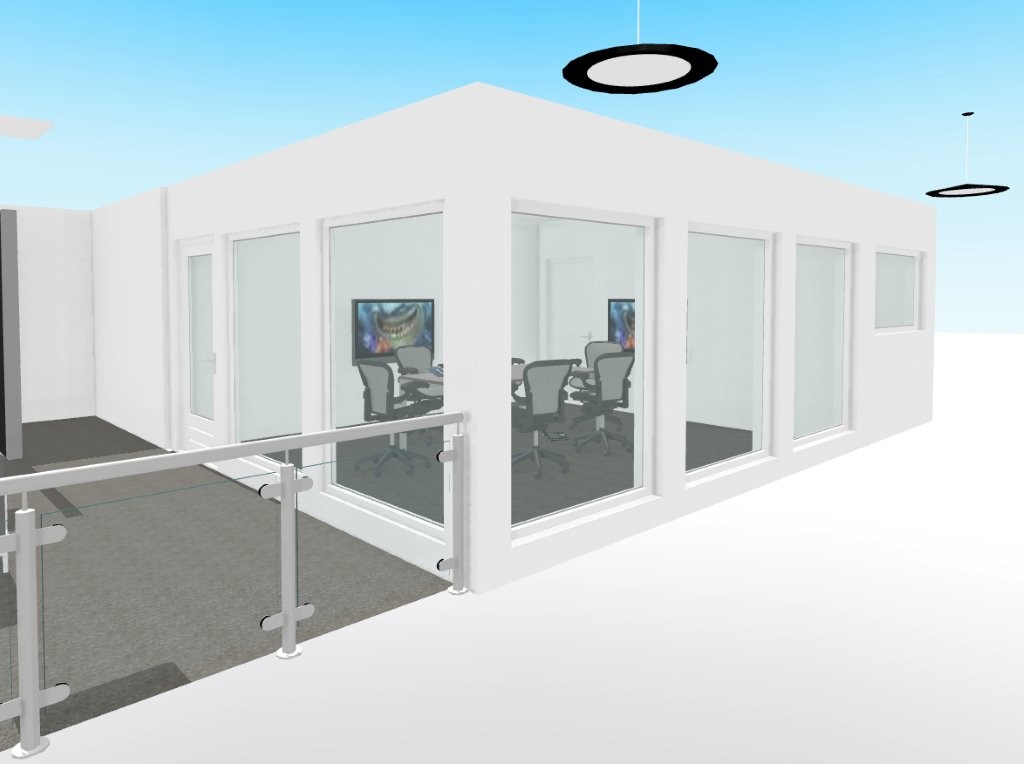
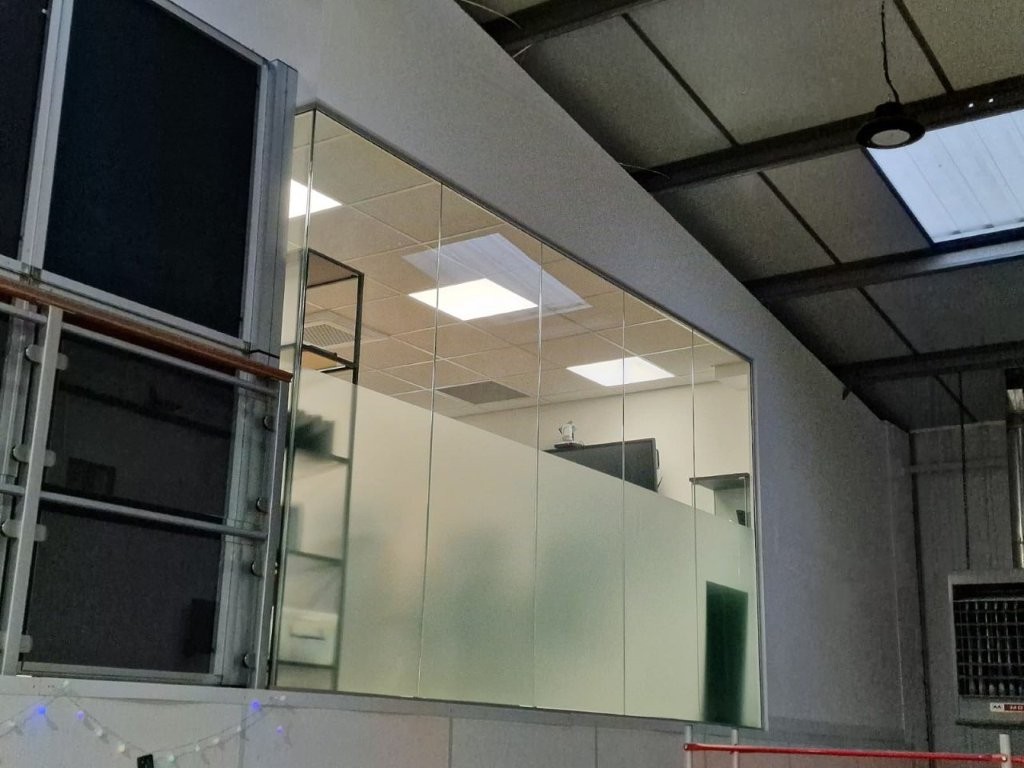
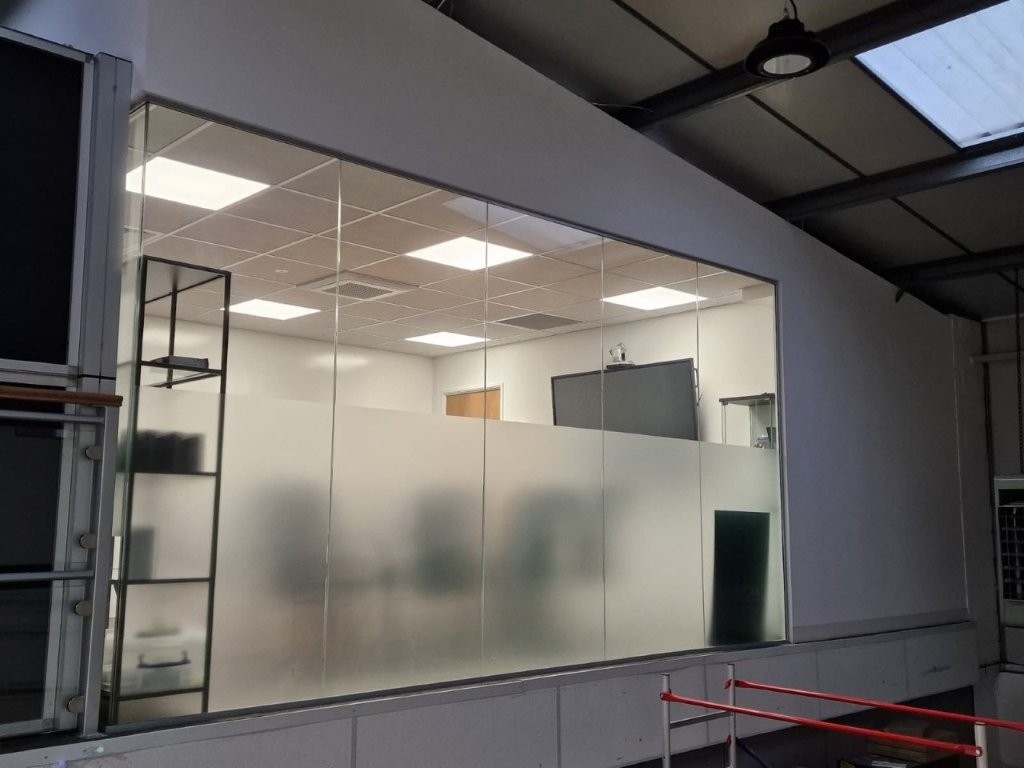
We liked the design of this project, the idea was to build a bulkhead suspended down from the roof which would form a rectangular opening to accommodate smart modern looking glass walls. Another tricky bit, as well as having to remove the handrail was to follow the shape of the roof and box the beams to make it look right. There were a couple of beams at different angles but we made it look right.

To build the walls around the meeting room out of tradition demountable partition systems, with plasterboard and double glazed windows would have actually been more expensive with what we were proposing, and certainly it would not look as good.

There was a small bit of detail in the construction that we quite liked. When we fitted the fresh air unit, the VAM unit, we prepared all of the ductwork which gets hidden by the suspended ceiling above, but also included extra ductwork to feed the potential downstairs office below the mezzanine.

The interior wall for the meeting room we built flush over the steel work, that give us a cavity where we could run the 200mm diameter ductwork down the walls, through the mezzanine floor and capped off ready for the room below. The ductwork needed fire dampers in them for fire protection purposes; preventing potential fire travelling from the upstairs to the downstairs through the pipework in the unlikely event of a fire. The dampers are also required to meet Building Regulations.

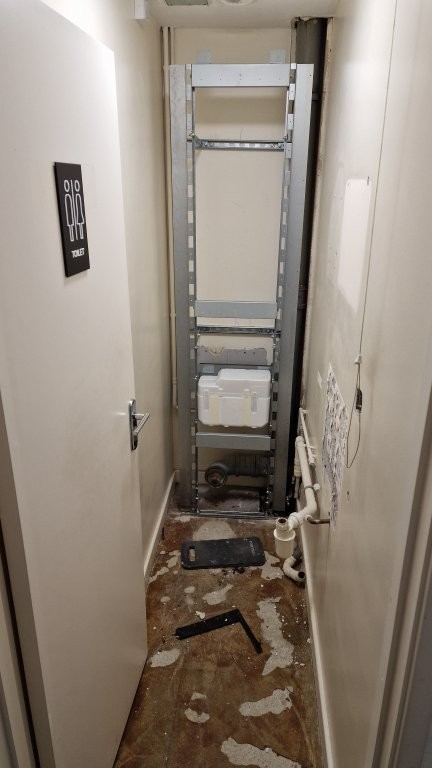
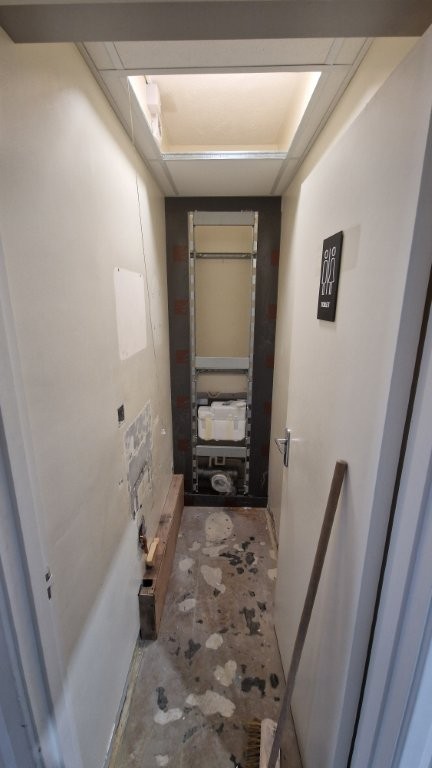
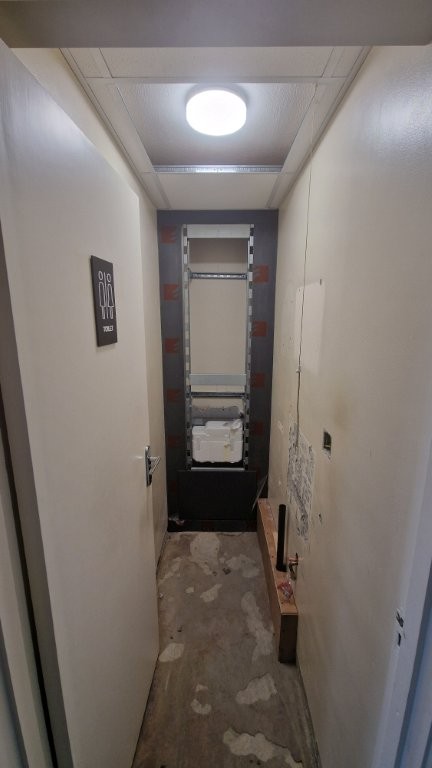
Toilet refurbishment

As mentioned previously in this post, the initial enquiry was not to refurbish the toilets but when we visited, we said what else we could do and they needed something doing to them.

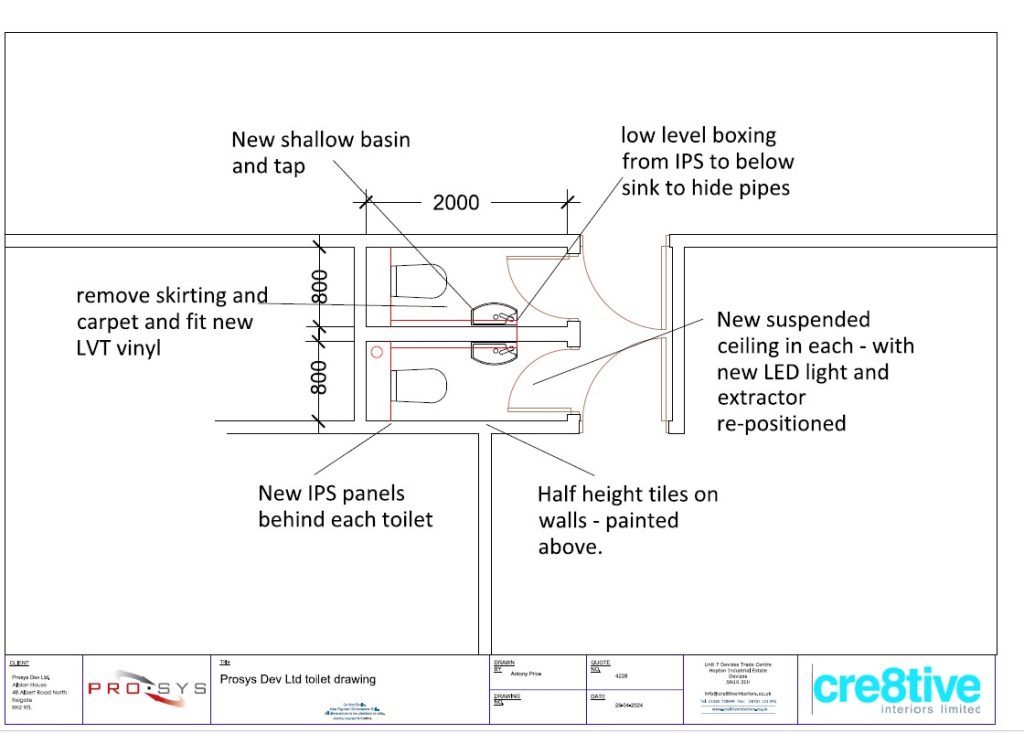
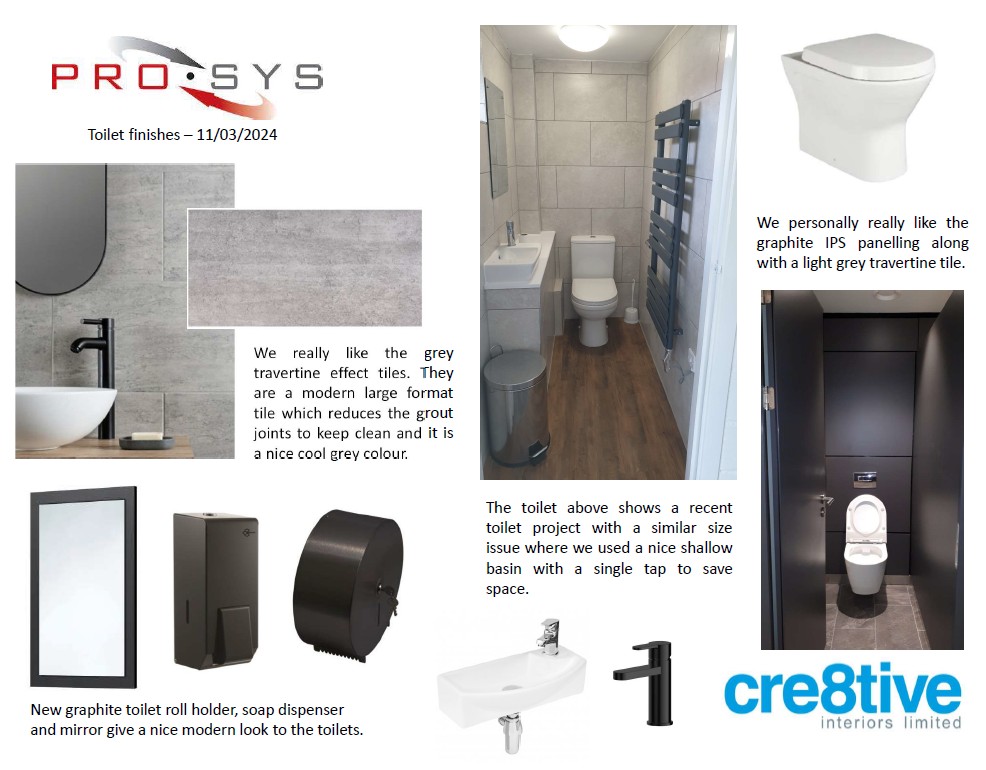
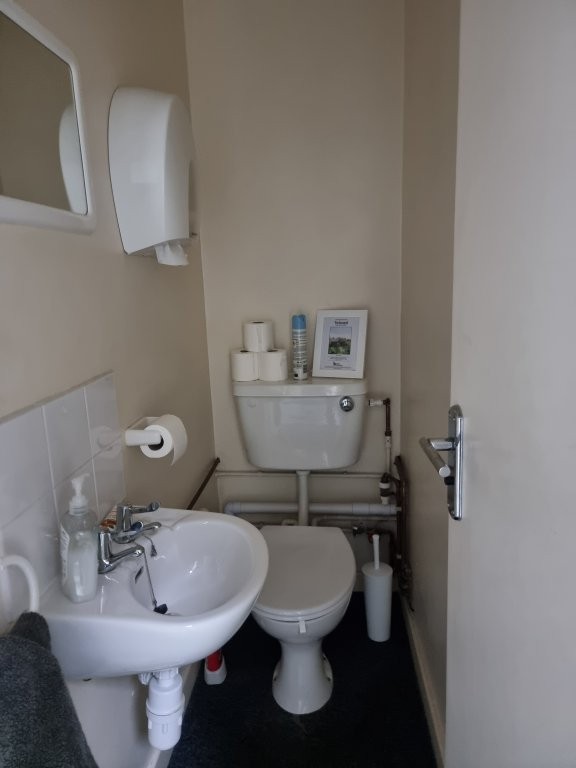
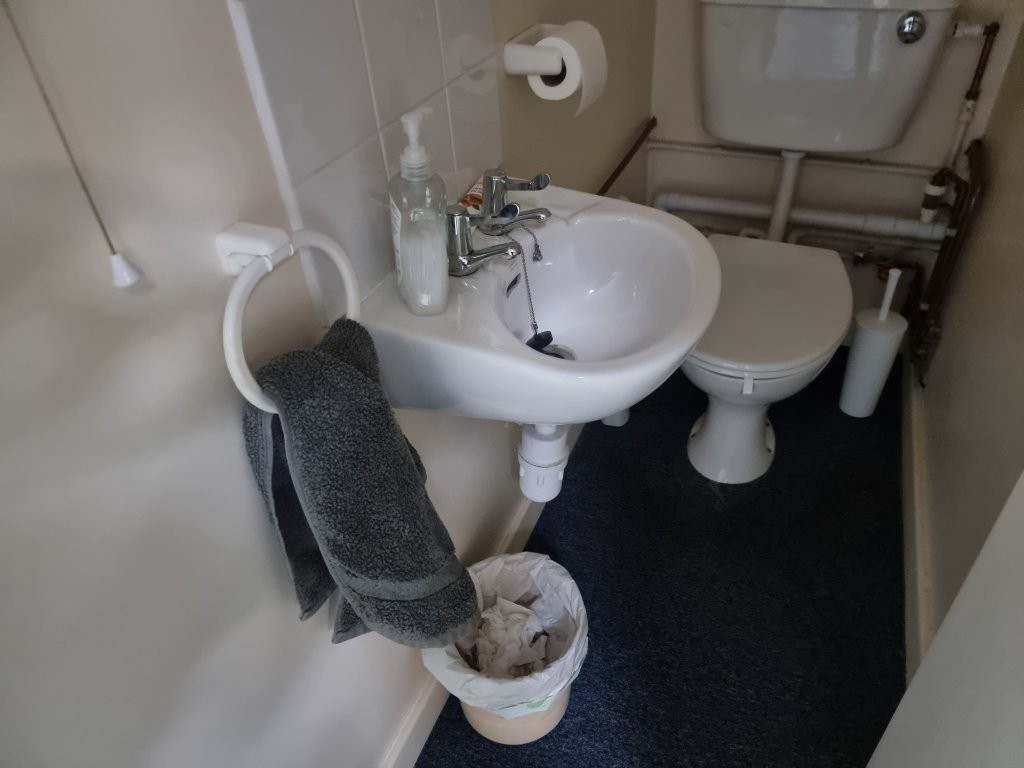
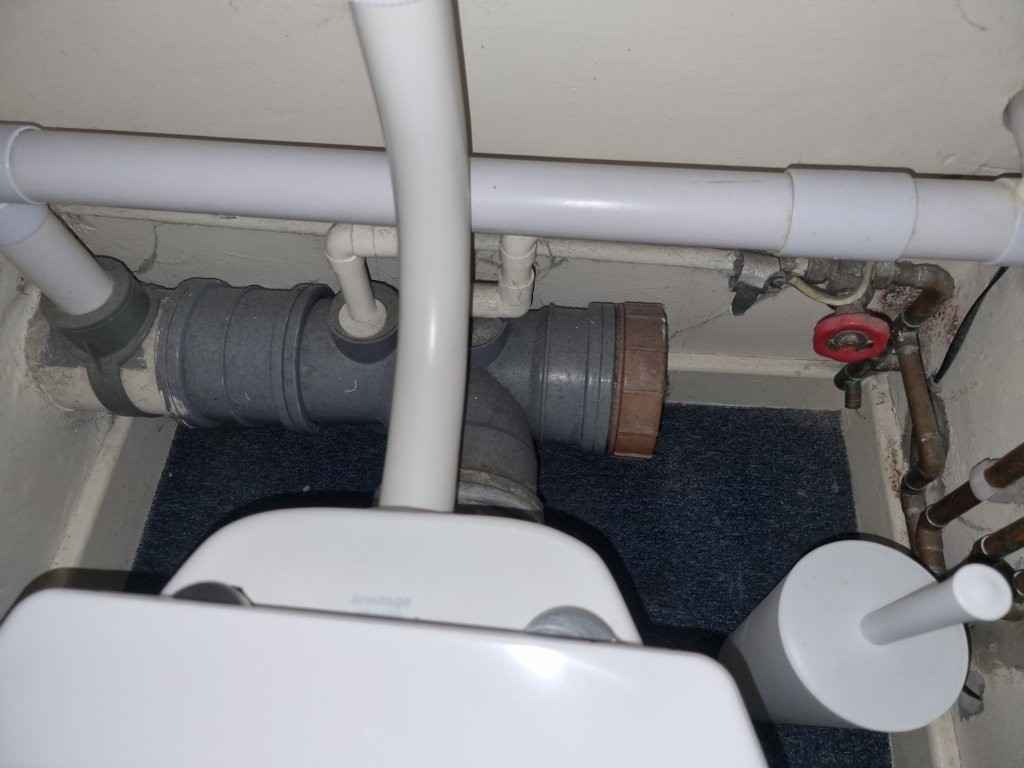
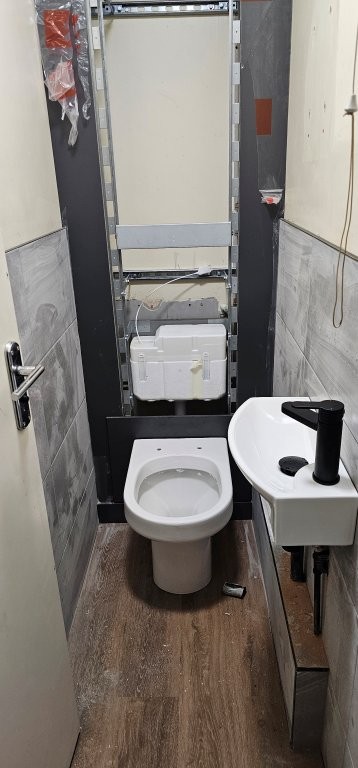
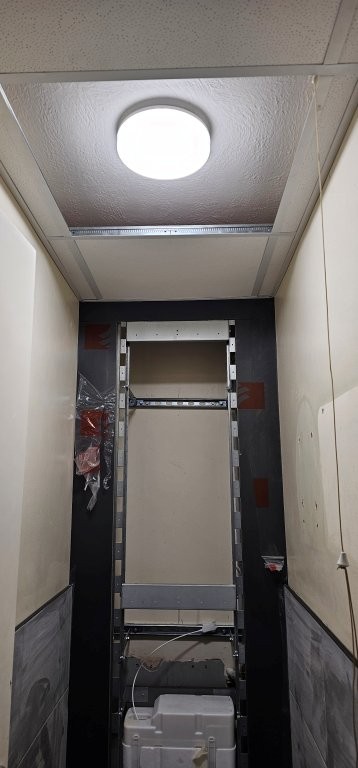
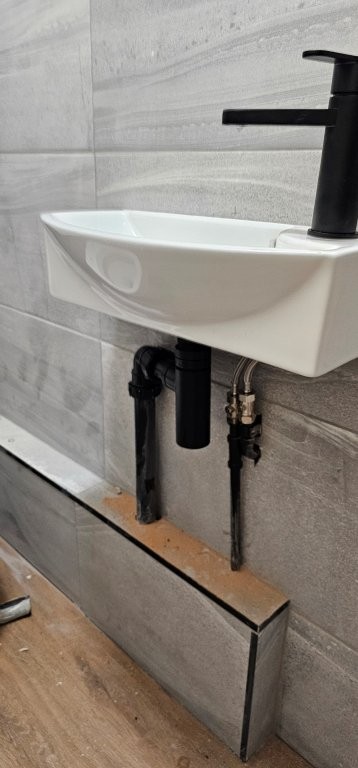
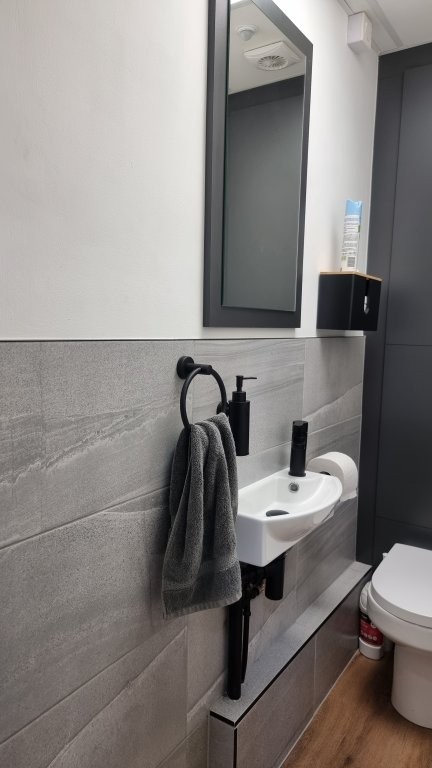
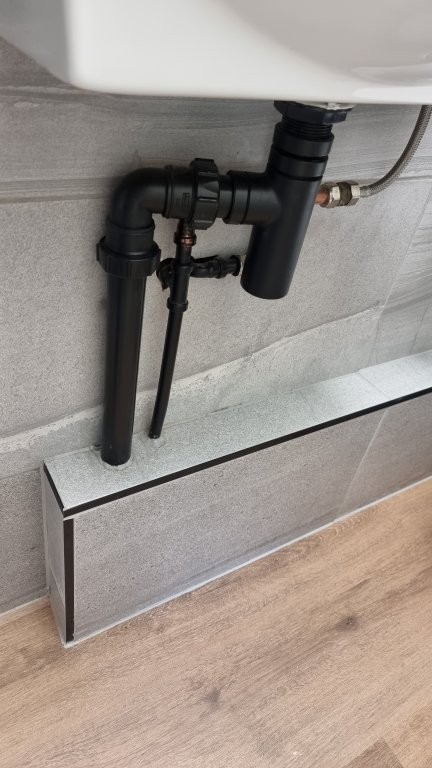
Although small, we could hide the plumbing by using IPS systems, which is a system of enclosing pipework and cisterns behind a closed panel. Often seen in commercial centers, like shopping centers, motorway  service centers.

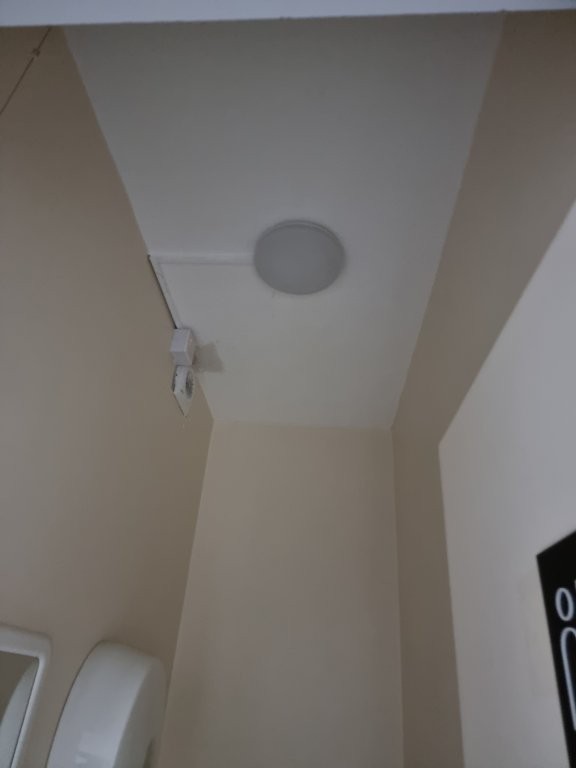
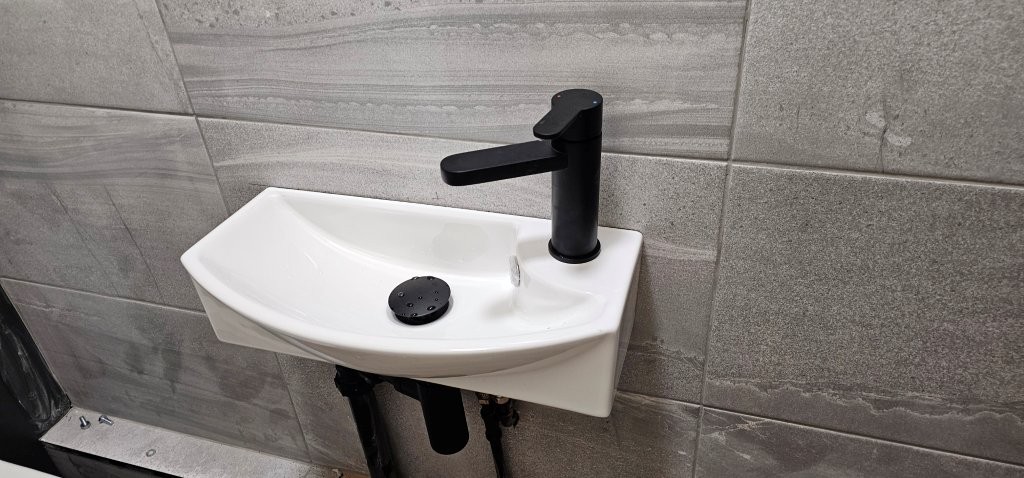
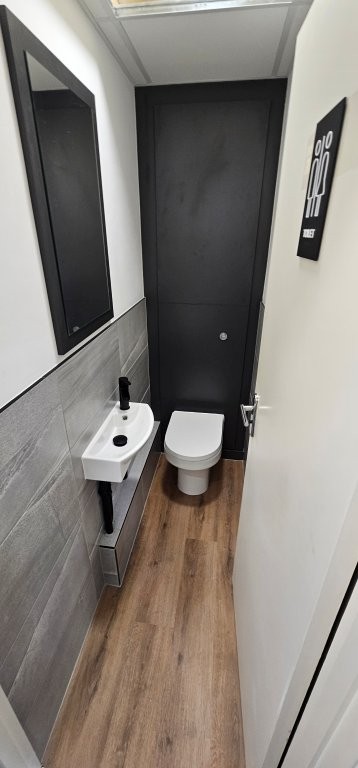
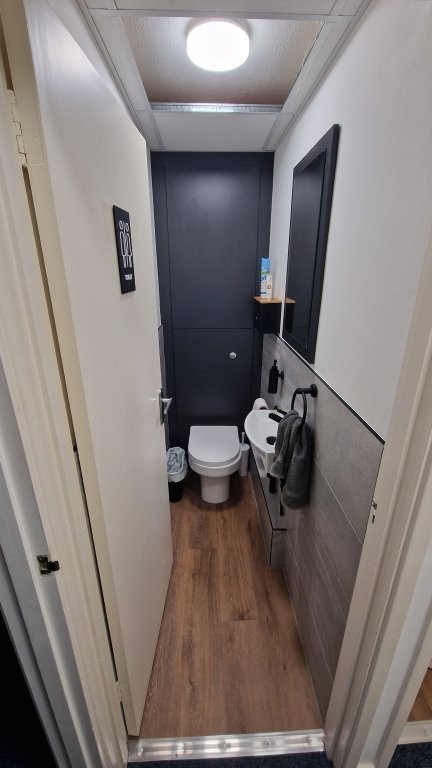
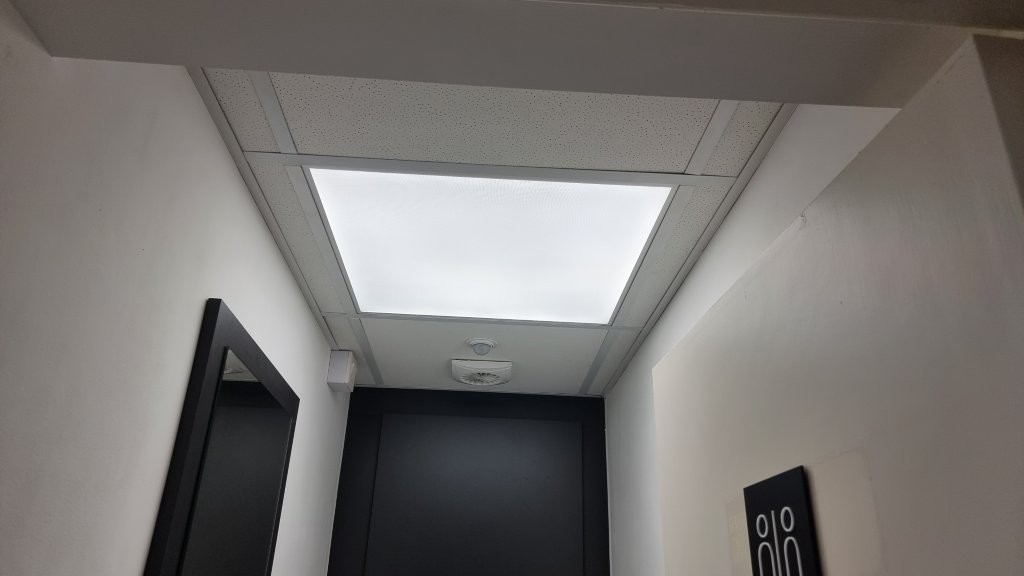
We could also box the pipework, tile the walls, paint it, change the flooring, fit a new suspended ceiling and lights.  Quite a bit really for such small spaces.

It is not possible to get lots of trades to do this type of work.

Toilet refurbishment progress photos

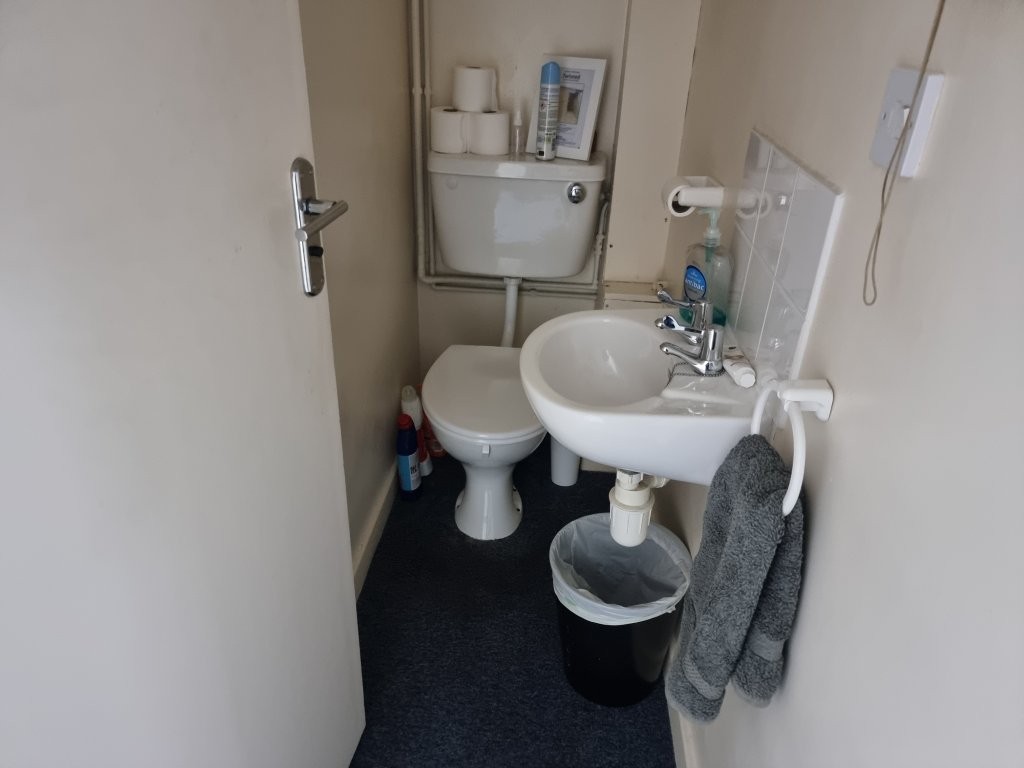
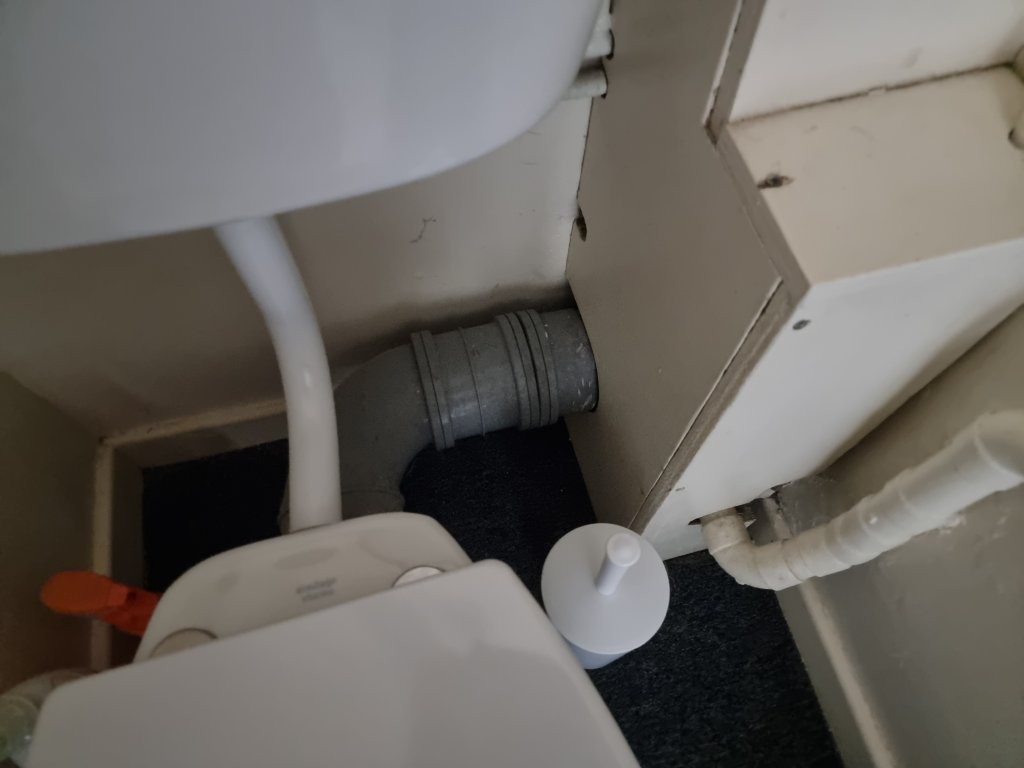
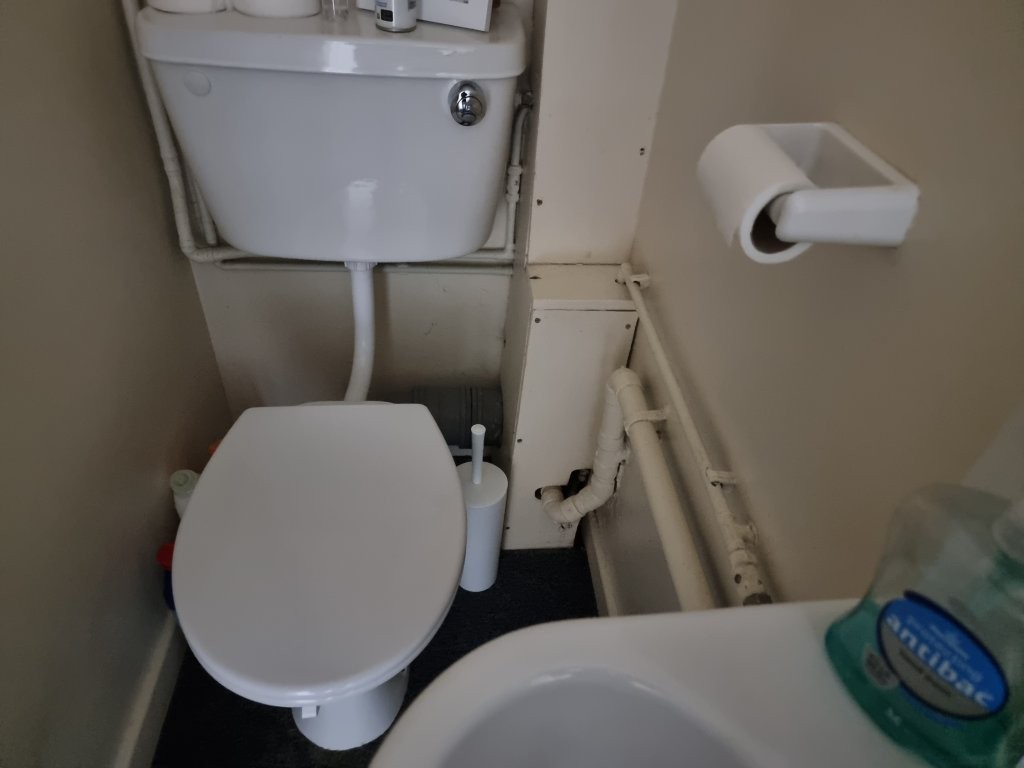
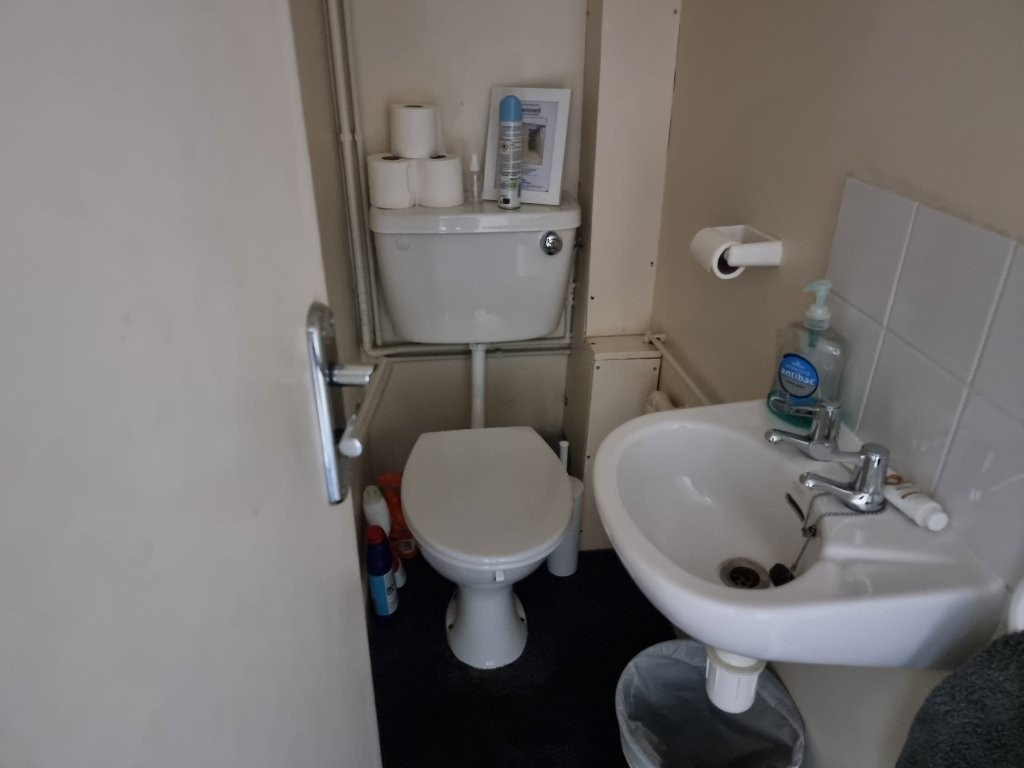
Some work in progress and completed photos

One of the problems in refurbishing small toilets is that they need lots of different trades, and there is not enough room in them to have lots of people doing different things.

For example, in these toilets we needed:

  • a plumber to disconnect / reconnect the existing and new.
  • Someone to build and fit the IPS panels, (needs a carpenter to cut the panels to size, sit them squarely)
  • a plumber to fit the sanitary wear to the IPS panel as it is being fitted.
  • A tiler to fit new wall tiles straight and flat.
  • A decorator to prepare the walls and paint them.
  • A suspended ceiling fitted to fit a new suspended ceiling
  • An electrician to disconnect the existing light and fit a new one, someone to fit a new toilet extraction system.
  • A flooring contractor to uplift the existing and supply and fit a new wood effect vinyl floor planks.
  • Someone to fit the new towel rail, toilet role dispenser, mirror, door signs.

Larger toilets are much easier as all of the activities can be scheduled and planned in as the elements usually take longer than a day. In this case there is not enough work to allow to bring in separate trades to do individual elements, planning and timing of those events would mean that doing the toilets would take months and cost a fortune. Luckily we have a fitter that can do all of the tasks, including the plumbing works. We were onsite anyway doing the electrics for the new offices, so it was easy for them to drop over onto the toilets to sort out the light fittings and extraction. Not so easy for anyone to do this type of work. Most plumbers would not know how to deal with the IPS system as there are commercial systems.

Some completed photos
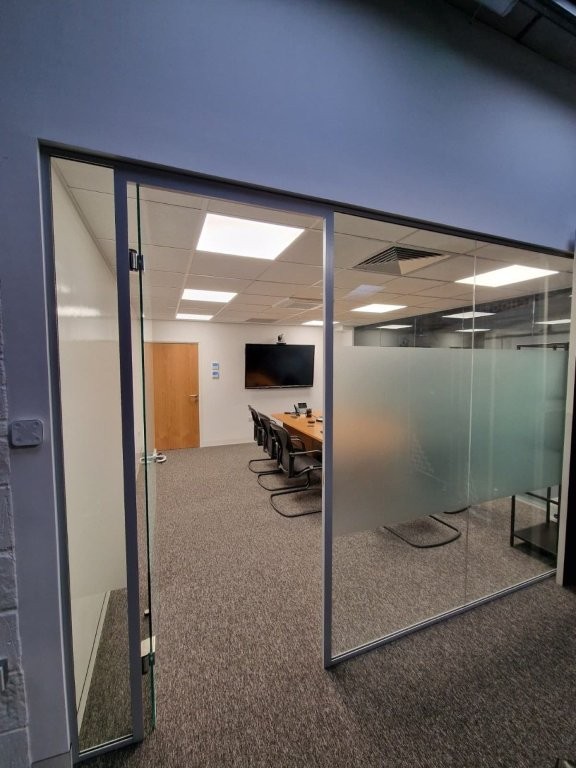
The following photos were supplied by the client after we had left site. They show the boardroom table and chairs, and the comments from the customer is that they are very pleased with the final result and use the ideas wall along the long wall to good effect.

If you have any partitioning requirements that are perhaps a bit complicated and you are not sure on how things can be done, then we are sure we can help.

Please call 01380 73 8844 or email us via the contact form on this website, or at [email protected]
Categories
All Project Categories Mezzanine Floors Mezzanine Floors Partitioning Suspended Ceilings

Mezzanine Floor Extension Project in Taunton

Client: Space Adventurers Soft Play
Value: £65k

The requirement

Our client runs a successful soft play centre in Taunton. Part of the centre is the nursey, which has grown in popularity and earned a great reputation. The client had ran out of space and could not take on any more children despite a full waiting list.

Our solution

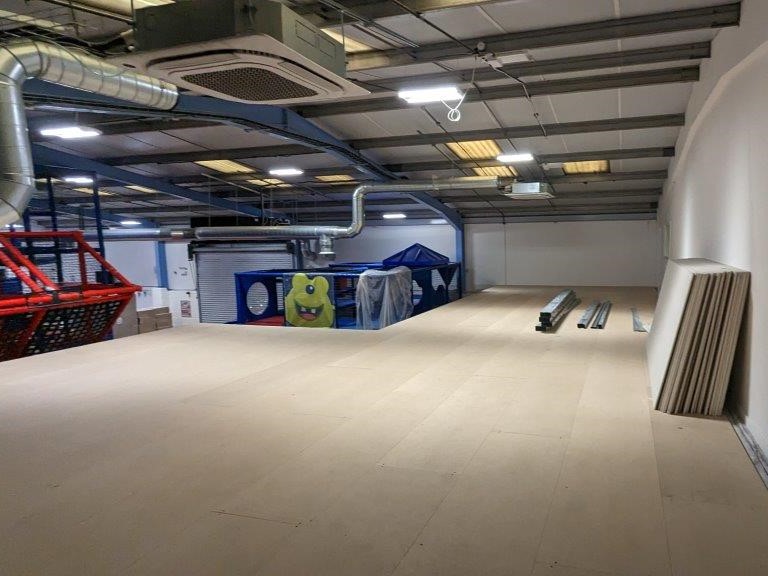
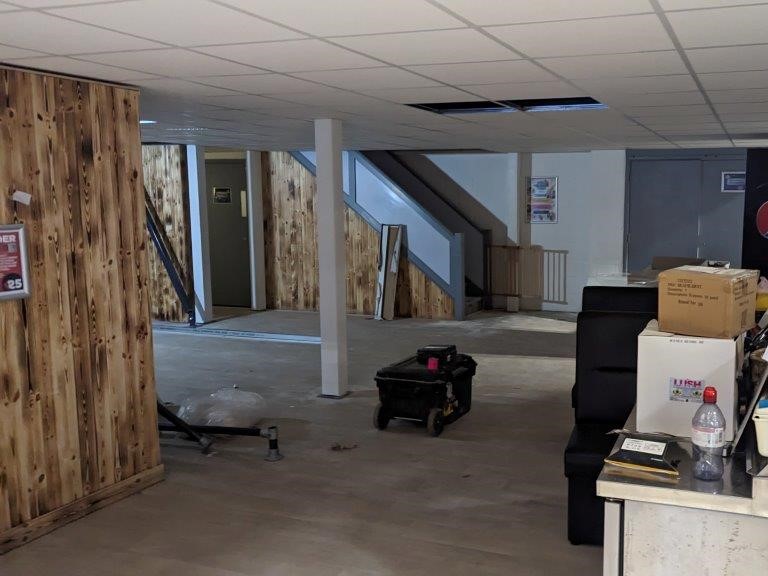
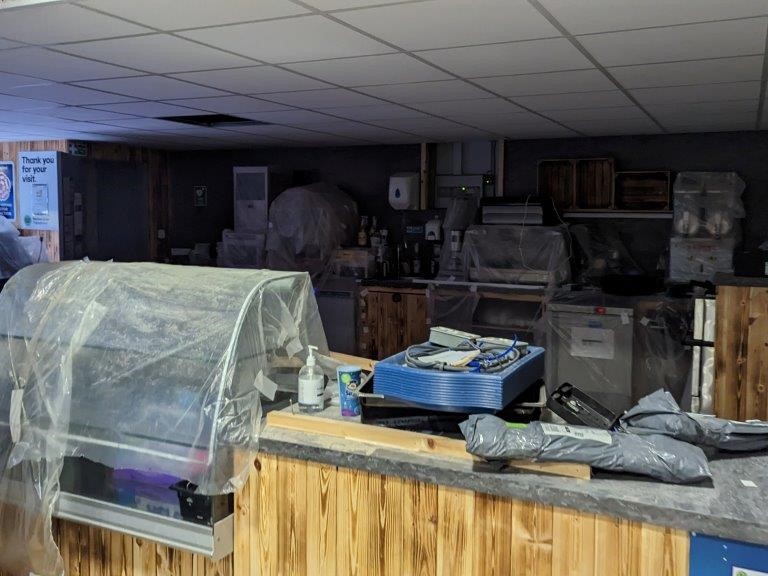
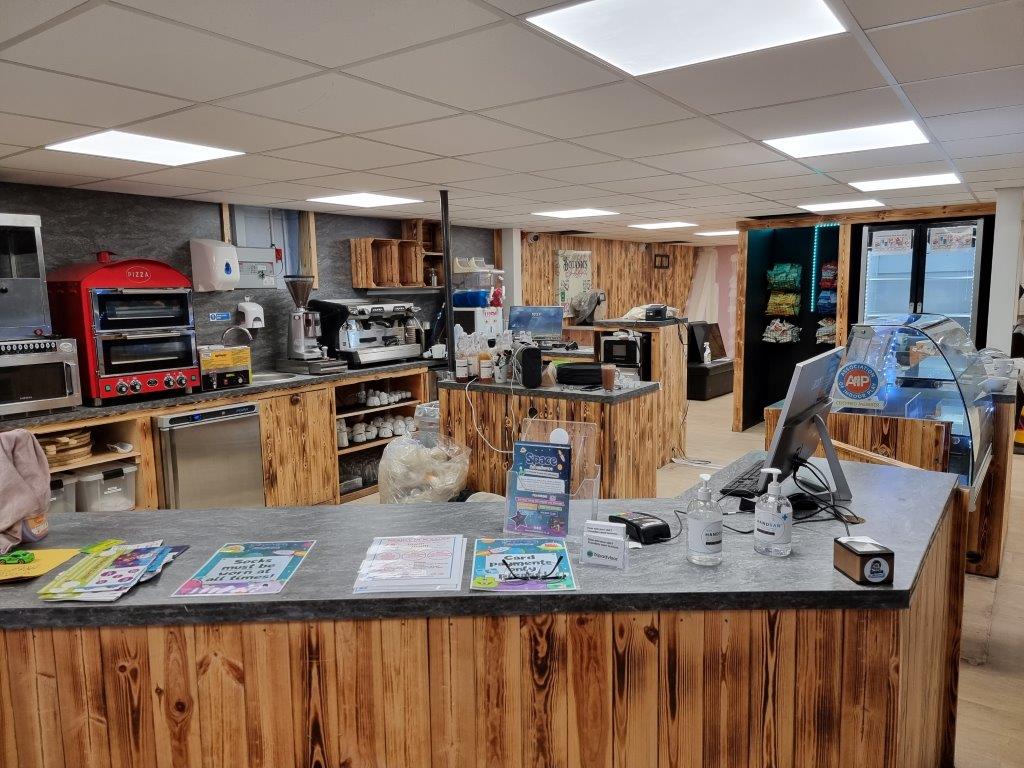
The café area in the soft play part of the building adjoins onto the nursery and is all on the ground floor. Our solution was to install a lightweight steel mezzanine floor over the café and seating area. This will maximize the height of the building and gain a whole new play room for the nursery.

The customer already had a staircase in place which was used as a staff entrance into the first floor nursery rooms. This was kept in place and the mezzanine floor was built level with the existing floor.

The mezzanine floor was built as an L-shape around the existing soft play equipment to maximize the square meterage of floor space for the nursery. Careful consideration was made on where the support pillars were to be located below so it did not interfere with the existing café counters.

Building Regulations

There are also other important factors that must be considered when designing a floor and we bring this expertise in our advice of what can and cannot be done. The floor must be submitted for Building Regulation Approval which we do, and this is a legal requirement by law. Steel behaves in strange ways when it gets hot, before melting the steel can twist and as the floor is a fully stressed structure it can collapse and so there are all kinds of rules relating to travel distances and fire protection that must be adhered to.

There is more information about Building Regulations here.

Building the Mezzanine Floor.

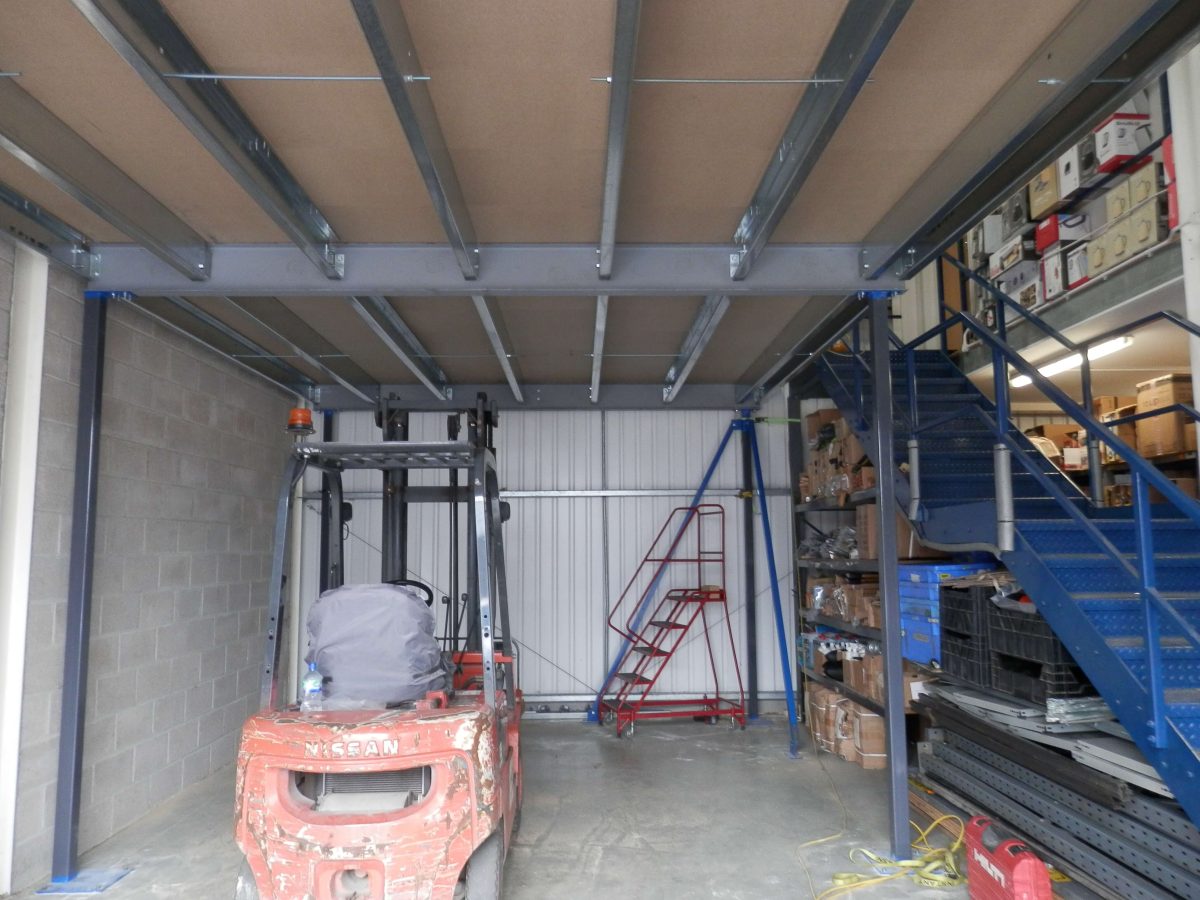
A fork lift was used for the installation process as the main beams were extremely heavy. The fork lift allows the main beams to be lifted to the height required whilst the upright support posts are installed.

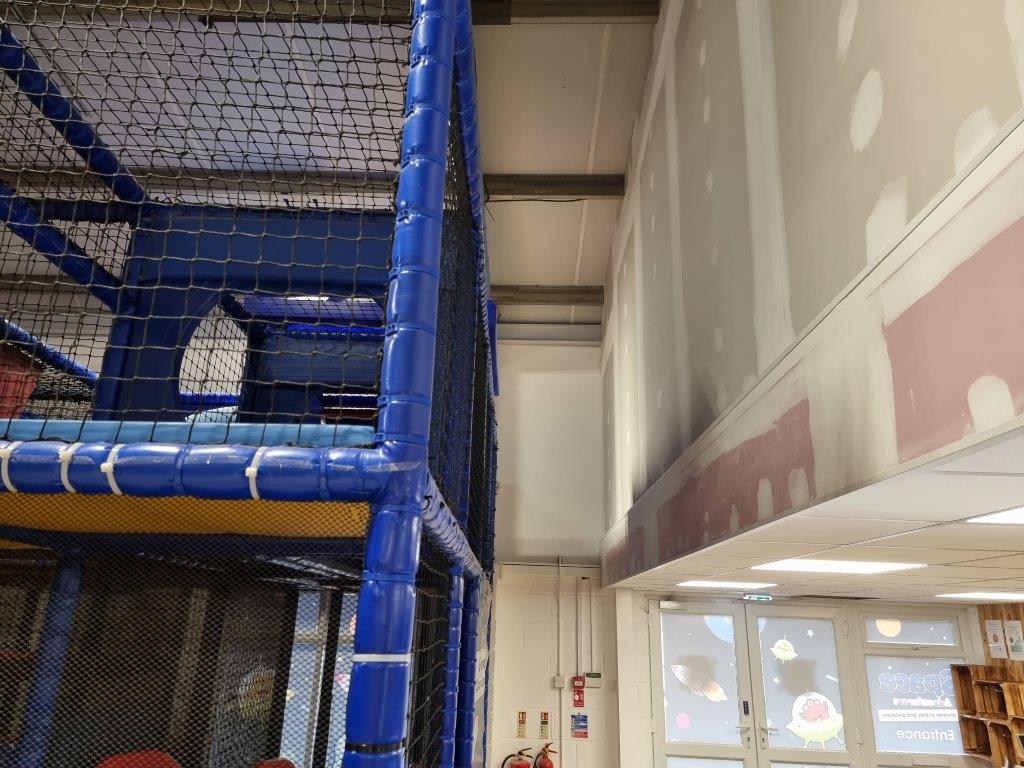
Once the mezzanine floor was in place a new fire rated partition was built along the leading edge of the mezzanine up to the roof level. This was almost 6m high which meant the installation was completed using a scissor lift and the space was very narrow between the soft play and the partition in some parts.

A 1-hour fire rated suspended ceiling was installed below the mezzanine floor with 1-hour fire rated column encasements fitted and a 1-hour fire rated bulkhead along the exposed front edge and stairwell.

Above the mezzanine floor we installed a new suspended ceiling with new LED lighting on both floors.

Do you want extra space?

Please give us a call or contact us and we can help with any aspect of interior office fit out, along with space planning and design work.

01380 73 88 44

Categories
News

What is a Mezzanine Floor?

The photograph to the right shows a mezzanine floor we fitted for a customer in Devizes.

Mezzanine Floor: There are several definitions if you look up the word on google. The wikipedia definition is, “ an intermediate floor in a building which is partly open to the double-height ceiling floor below.”

Perhaps a more useful definition is a Mezzanine is a “second floor“. Although usually the mezzanine level of a building is a partial floor, located between the ground floor and first floor. Another meaning of mezzanine is the lowest of a row of balconies in a theatre or symphony hall.”

Mezzanine floor in Offices

How does this all relate to offices and warehouses? When someone talks about a mezzanine in an office, what does that mean? If the main building is quite high, then you can introduce another intermediate floor level to split up the height of the building and increase the usuable floor space. Often this means not having to move premises and using the height of the building to maximise either the storage capacity or increase office space.

We define a mezzanine floor as an interdependently supported steel structure that forms a floor which can be used for storage or offices.

Safety in the event of a fire

There are some strict laws on the design and construction of these types of floors which are covered by Building Regulations. If you think about it, people will be potentially working above or below the steel structure and the Building Regulations are designed to protect people. Most mezzanine floors are made from stressed steel sections that are formed and cut to size. When heat is applied in a fire for example, the steel becomes soft, de-stressing the steel and the whole structure can collapse very quickly. The steel would not melt (unless really hot), but would bend and distort. We have several other blog posts in relation to fire performance:

Building Regulations.

Other articles or blog posts can be seen here, as well looking at the projects that we have carried out on the main project page.

  1. Is my existing mezzanine floor fire rated (it should be)
  2. Mezzanine floor protection.
  3. Why do I need Building Regulations
  4. Can I alter my existing Mezzanine Floor?
  5. How do I create more office space?

Projects

If you would like to have a look at some of our projects, please click the link to take you to the mezzanine floor page on this website. Below the main text will be some filtered projects with photographs of building.

Need to know more? Please contact us on 01380 7388 44 or email us at [email protected]
Categories
News

Is my existing Mezzanine floor fire rated?

Is my existing Mezzanine Floor Fire rated? We come across this question quite a bit, and to the untrained eye it can be difficult to tell. Only an expert like Cre8tive Interiors can really delve into the detail. What should happen of course, is once a mezzanine floor has been installed, the company installing must provide a Building Regulation approval document to demonstrate the structure has been inspected, from initial design through to construction. The design of the floor depends on the function required and the areas involved.

Office or Storage?

Small floors that are purely used for storage, dependant on the floor area and means of escape may not need fire protection. If the design has been checked prior to construction, there are certain things like the composition of the floor slab, that need to be considered in the initial design. Depending on the height of the floor, the spans of the beams and what the floor is going to be used for depends on the amount of loading that travels down the pillars. Often assumption have to be made, and the bottom of the posts can have large floor plates in order to spread the loading onto the base floor that the mezzanine structure is going to sit on. So it is not usually an issue.

Fire Protection

Another consideration if whether offices, or people are going to be working on the raised floor area. If offices are built, then there is an extra level of fire protection needed, which is usually where suppliers fall down. Many ceiling fitters for example, will just fix a cheap basic ceiling and no-one will know the difference. However ceiling tiles and grid may not necessarily be fire rated, so in effect you do not have any fire protection for the underside of the floor. You may think so what? As mentioned in our previous posts, the problem with a steel floor is that in the event of a fire, the whole structure bends and softens. The steel will not melt, but the steel beams are stressed formed, rolled sections, so the heat anneals the steel releasing the stresses that are creating in formation of the shapes, so in effect go soft. What happens is that the whole structure twiists and if people are working on it, they have no chance of getting out, and this softening can happen really quickly.

Getting back to the main question, well how do you know? Most people will not. Fore example you be provided a test certificate on a ceiling tile, which may say it has been tested for 60 minutes, and you may get another test report for a different grid also showing 60 minutes, but unless they have been tested together, and in the situation needed, so under a steel mezzanine. then the certification is useless.

Suspended Ceilings - are they important?

On a new mezzanine floor the supplier should provide a test report for the tile and grid, tested to 60 minutes if office are required above, under a steel mezzanine floor. To our knowledge so far there are only a couple of combinations that comply. Just looking at the grid and tile to see is pretty hard if there is no identification on it, however various website are available online to look at the profiles and sections of ceiling grid in order to determine this. The same with the tile, you can look online, and then if you do not have the certification you can contact the support desks from the major suppliers of components.

Unfortunately the distributors of tile and grid still get it wrong, only this week we contacted a supplier, and they gave us the wrong information. Only the manufactures can supply the correct details.

As well as the suspended ceiling, there are other aspects to look at as well. The floor loading, edge protections, escape routes and protection of office / warehouse all have rules. Other things that need to be considered include heating and ventilation, all legal requirements with Building Regulations.

Other links and articles about Mezzanine Floors

Other articles or blog posts can be seen here, as well looking at the projects that we have carried out on the main project page.

  1. Mezzanine floor protection.
  2. Why do I need Building Regulations
  3. Can I alter my existing Mezzanine Floor?
  4. How do I create more office space?

If you would like to have a look at some of our projects, please click the link to take you to the mezzanine floor page on this website. Below the main text will be some filtered projects with photographs of building.

Need to know more? Please contact us on 01380 7388 44 or email us at [email protected]
.

Categories
News

Mezzanine Floor Fire Protection

Mezzanine floor fire protection is the most important task to determine correctly when considering a mezzanine floor, old or new. When a new mezzanine floor is installed by us we always liaise with Building Control to ensure that the correct level of fire protection is carried out on the steel structure. You may think that steel is pretty strong which it is, but in a fire the steel will tend to twist and deform at not very high temperatures and there are several reasons for this.

The effects of fire on a steel mezzanine floor structure

The steel sections that are used in the construction are in themselves very strong but will have been formed from flat sheet steel and either rolled or welded to form the sizes required. Heat on steel anneals or softens the steel which wants to convert to its pre-stressed state. The effect of this is that the whole floor structure twists and due to the weight of the floor, what is on the floor and the steel the whole lot can come crashing down quickly.

All of our steel structures are calculated, and often have triangulation steels in the corners of the floor to prevent twisting in just loading conditions, so the design needs to be calculated properly.

Mezzanine floor fire protection – Suspended Ceilings

Contrary to popular belief and pure incompetence by many of our competitors there are actually very few suspended ceiling types that are fully tested with a specific suspended ceiling tile to give the 1 hour fire protection required by Building Regulations. Some mezzanine floors which are small in proportion to a building and maybe are just used for occasional light storage may not actually require any protection as there is actually no perceived danger to employees and staff. 99% of floors will need mezzanine floor fire protection.

There are a few advantages of using a suspended ceiling over a plasterboard one, the main one is you can hide the services inside it. It is also a finished product without the need for skimming or painting. It can also provide sound performance preventing noise from the ground floor going through the floor. It is also quick to install.

We visit many installations carried out by others where the cheapest ceiling tile has been used, and the cheapest grid, and there is absolutely no way that the suspended ceiling is fire rated and we have to advise the customer of this fact.

Mezzanine floor fire protection other items.

There are many other things that need to be considered but that is perhaps for another article, if you are in any doubt please give us a call and we can check.

What else needs to be done to a Mezzanine Floor once built?

Cre8tive Interiors can carry out all of the work required so that the client can just use the space straight away. This will include the following:

  1. Initial design and layouts for the new space along with costs
  2. Building Regulation Approval
  3. Planning for the work to be done, understanding what needs to be carried out prior to the install date.
  4. Supply and Installation of the mezzanine floor, including relevant fire protection
  5. Electrical work
  6. Partitioning and suspended ceiling work
  7. All lighting, emergency lighting, air conditioning and ventilation
  8. Construction of any toilet areas, canteen or warehouse areas
  9. All types of flooring and decoration.
  10. Office furniture if the extension is for offices.

What Mezzanine floor projects has Cre8tive carried out?

  1. Mezzanine floor in Devizes (light storage)
  2. Fire rating of a Mezzanine Floor in Warminster for Offices
  3. Fire rating of a Mezzanine Floor in Milton Keynes for Offices
  4. Converting / Fire rating an existing storage mezzanine in Corsham for use into Offices
  5. Installation of a new mezzanine floor into an existing warehouse to create offices in Gloucester
  6. Installation of a new mezzanine floor to extend existing offices at first floor level and below in Salisbury
  7. Construction of Fire rated partitions on top of an existing mezzanine floor to meet Building Regulation in Corsham
Categories
All Project Categories Mezzanine Floors Mezzanine Floors Office Refurbishments Partitioning Suspended Ceilings

Offices and Fire Rating on a Mezzanine Floor

Client: H J Knees of Trowbridge
Value: £45k

We are asked to look at making some office alterations to a new office for HJKnees in Whitehorse Business Park. The customer wanted to fit some new offices on a Mezzanine Floor. At first glance we could see straight away that the work would need extra work to make the project comply with Building Regulations as none of the existing mezzanine floor had any fire protection on it at all.

Mezzanine Floors and Building Regulations.

Our first consideration when considering an office project is Building Regulations, does the existing structure comply?, and whatever we do as far as changing things also has to comply. In each case we consider the Regulations and obtain approval before the work starts, during the work we usually have an inspection carried out before the walls all get closed in, and then a post project inspection.

We can then give the client a proper certificate from a Building Regulations Inspector that certifies the design and our work to confirm that all legal requirements have been met.

Please see our articles on Mezzanine floors and what you need to do with Building Regulations on the News section of this website. Unfortunately the customer has never been aware that their existing floor does not comply, and we do come across this quite a lot, so we are always on the back foot before we even start talking about what they want as the whatever work is done, adequate fire protection, escape routes and distances need to be considered to comply with the law.

The additional problem in this situation is that it is a legal requirement to have a 1 hour fire rated separation between offices and warehouse. The construction of a 1 hour wall is not an issue, often it is the height that is the problem as you have to construct the wall to meet the plasterboard and metal stud work manufactures specifications.

The most expensive parts are the doors and windows, so the plan is always to keep these to a minimum.

Initial site Photographs.

Original upstairs rooms not meeting fire regulations

Another view of old offices

Another view of old offices

Another view of old offices

They stored things next to the offices

They stored things next to the offices

Underneath the mezzanine, hardboard used a potential fire hazard!

Toilets needed doing

None of the mezzanine floor steels protected.

Edge of mezzanine not protected.

As you can see from the above photographs, a general builder has built the offices ontop of a steel mezzanine floor with no fire protection using timber windows and non fire rated materials. The offices look ok but does not comply at all. The whole lot needed to be stripped out and started again. All of the mezzanine floor underneath needed a 1 hour fire rated suspended ceiling, along with column encasement protection (1 hour) and some re-organisation of the access routes with toilets, a small office and warehouse access with some basic security.

Construction Photographs

The other constraint that we had is the whole job had to be completed in 3 weeks as a new machine was due to arrive in the unit. The reason why the toilet block had to be halved, was that the new machine was 26 meters long and so it would not quite fit.

Staircase needed to be scaffolded

Main fire wall plastered ready for decoration

First fix electrics underneath mezzanine

Demolition of existing offices

Timber frame exposed to be removed

Timber frame exposed to be removed

Start of dry lining the walls

Boarding of the main fire wall between the offices and warehouse

Building the frame under the angles steels of the building

Suspended ceiling grid is quite quick to go in.

Construction of the new offices started

Outside walls plaster drying out

Ceiling tile just starting to go in.

Fire rated ceiling going in under mezzanine floor

Underneath of stairs

Windows dry lined around and window boards fitted

Offices starting to take shape

LED panels fitted

More office walls going in

Column encasement system fitted to steel uprights

Offices starting to take shape

Offices starting to take shape

Window boards fitted, insulation for ceiling arrived

Completed column encasement and ceiling tiles fitted.

More fire rated walls downstairs

Mezzanine floor edge protection

You can see the back of the light fitting has a 1 hour smoke hood fitted.

Downstairs work nearly finished

Offices nearly done

Offices nearly done

Offices virtually done

Final Result

We do not have any finished photographs as the customer needed to move in straight away. We kept to the dates that we advised the customer and we did have a couple of snag items to deal with which was not a problem once they were in. The project was inspected by Building Control and a passed certificate was issued to the client, as well as the Health and Safety file. The Health and Safety file included all of the as built drawings, certificates and evidence of emergency lighting and fire detection equipment that acts as a reference binder for the client to use in the future.

We chose demountable partition for the main office upstairs due to the speed of construction and the final finish looking much more modern and professional that a traditional stud and plasterboard wall.

Summary on Demountable Partitioning

  1. Using Demountable Partitioning is very tax efficient as they are seen as movable items and so can be treated differently in writing down allowances in the accounts.
  2. We can also lease Demountable Partitioning as they are movable, this spreads the costs of having the work done as Demountable Partitions always cost more than customers think.
  3. Leasing of demountable partitioning is very tax efficient and Cre8tive can provide illustrations, please contact us for further information.
  4. Most landlords insist on Demountable Partitions being used for offices as it is much easier to take them out should the tenant renting the space leave for any reason. The benefit is that is saves making a huge amount of mess and destruction that would be need with a conventional stud and plasterboard constructed wall.

Questions on Demountable Partitioning?

If you are not sure about anything as well as taking about all kinds of partitioning including Demountable we love to talk about projects and sort out problems and issues with space, please give us a call on 01380 738844

Categories
Mezzanine Floors News

Can I Alter my Existing Mezzanine Floor?

The short answer is yes, but you will need to take some specialist advice from someone like Cre8tive Interiors. The above photo shows a problem mezzanine that is none compliant with Building Regulations. Hence the question Can I alter my Existing Mezzanine Floor?

Just give us a call or email. The main question that we will ask is what is the purpose of extending, for example offices or storage. We will need to assess the existing structure to ensure that anything we do to it in terms of changing it will comply with current Building Regulations.

My existing Structure was built a few years ago, will it still comply?

The regulations have not really changed over the years as the main aim of the Building Regulations for Mezzanine Floors is to ensure that the floor is adequately fire protected for people that may be under them or on top of the floor. If the existing structure has no fire protection and the upstairs is used as offices, the fact that it was built a few years ago does not mean that people will be safe in a fire, so our advice is for us to examine the overall layout of any alteration, including the existing structure, to ensure that people can exit the building safely.

We will look at exit routes as well as look at fire protection for the overall situation with the extension.

We regularly see structures which have been built by general builders and there are no design calculations to determine what weight can be put on the floor and no evidence that the floor has been submitted for Building Regulation Approval. I am sure in some cases that the structure will be strong enough but often there is no approval to say it is ok. The problem with this is that the owner of the building probably has never been aware that the structure is not safe, and of course to fire protect it will cost money. If nothing is done, there is a high chance that there will never be a problem, but there is a very slim chance that if there is a fire in the building and the owner has not taken adequate steps to look after the safety of the tenant or staff then the owner of the building is in big trouble.

My existing Structure was built by a Builder and is not a designed Structure. What can I do?

Always pretty difficult, and the easiest answer is if you are not sure, strip it out and Cre8tive Interiors can put in a properly designed and calculated structural mezzanine floor that will meet Building Regulation approval. Often it will be cheaper. The above photo shows a problematic structure. The main cross beam as well as not being fire rated just sits on the pillar that supports the outside frame of the building. The building is a portal frame construction and so will have been designed to be a free standing structure without having a massive great steel sitting on one of the pillars taking lots of weight.

We can get around this problem though. If you are unsure about your existing mezzanine floor structure please give us a call.

What else needs to be done to a Mezzanine Floor once built?

Cre8tive Interiors can carry out all of the work required so that the client can just use the space straight away. This will include the following:

  1. Initial design and layouts for the new space along with costs
  2. Building Regulation Approval
  3. Planning for the work to be done, understanding what needs to be carried out prior to the install date.
  4. Supply and Installation of the mezzanine floor, including relevant fire protection
  5. Electrical work
  6. Partitioning and suspended ceiling work
  7. All lighting, emergency lighting, air conditioning and ventilation
  8. Construction of any toilet areas, canteen or warehouse areas
  9. All types of flooring and decoration.
  10. Office furniture if the extension is for offices.

Can I alter my existing mezzanine floor?

What Mezzanine floor projects has Cre8tive carried out?

Categories
News

How do I create more office space?

How do I create more office space?

How do I create more office space? Is a question we get asked regularly. There are many things you can do inside an office and the requirements maybe to fit more people, to open out the space as it is too cramped. If the building has height that can be used then the introduction of a mezzanine floor is very cost effective if the customer has the space.

What is a mezzanine floor?

Many shops, offices and warehouses make use of the height of a building to increase the floor area without the need to extend the building. The simplest way to do this is by building a false floor across any void.

Focusing on offices and warehouses there are stringent rules and legal regulations that apply to the construction and fire protection of mezzanine floors, the aim of the rules is to ensure that people in the offices working above or below can get out safely in the event of a problem, usually a fire. We do come across structures that have been built by general builders and there is no way that anyone would survive a fire if one took hold and the floor would collapse.

What are Building Regulations for a mezzanine floor?

It is very important for any Business Owner to get a floor installed properly, and one that meets the Building regulations as the Business Owner would ultimately be responsible if the worst happened and people lost their lives. Lack of knowledge is no defence. If the construction work does not comply with Building Regulations and the floor has not been signed off by an Inspector then the Law has being broken, quite simple really.

The design of the floor is crucial, as well as taking into consideration the use of the floor, travel distances are really important to fire exits, if over a certain distance then the exit routes need to be protected out of the building. The actual floor itself is made from steel. The steel is stressed steel in rolled formed sections or beams, with timber floors. The whole structure is stressed with triangular support pillars usually at the corner to ensure the floor does not twist. You may think steel is fine in a fire, steel does not catch fire until extremely high temperatures, but it is not the catching fire that causes the problem. If a fire gets hold even in a small area at one end of a floor the steel will start to bend, it’s structural properties start to change and as the mezzanine floor is stressed it will twist and collapse very quickly. Fir protection to the columns and floor is therefore important particularly if there are offices or people up on the mezzanine floor level.

How much weight can a Mezzanine Floor take?

It is actually quite important to understand the purpose of the floor as the structure will be designed to take certain weights. General light storage and offices mean that the beams can be thinner and therefore cheaper. If you storing a bit of weight on the floor then we need to know. We have two grades that will be fine on a normal floor but if there is considerable weight needed to be supported the beams get alot bigger reducing the head room below and the structural slab of the floor will need to be assessed and taking into consideration in the design to ensure that the support pillars can take the weight and do not disappear into the ground.

What Mezzanine Floor projects has Cre8tive Interiors carried out?

Some of the projects we do are just purely floors, so maybe for storage or for sorting out the fire protection. Other projects are wider in scope and the floor is only one aspect of what the customer wants to achieve overall. There are some links below.

  1. Mezzanine floor in Devizes (light storage)
  2. Fire rating of a Mezzanine Floor in Warminster for Offices
  3. Fire rating of a Mezzanine Floor in Milton Keynes for Offices
  4. Converting / Fire rating an existing storage mezzanine in Corsham for use into Offices
  5. Installation of a new mezzanine floor into an existing warehouse to create offices in Gloucester
  6. Installation of a new mezzanine floor to extend existing offices at first floor level and below in Salisbury
  7. Construction of Fire rated partitions on top of an existing mezzanine floor to meet Building Regulation in Corsham

How do I create more office space?

How do I create more office space?

Any questions on floors?

Every project is different, so the easiest thing to do is to just give us a call or email us for further details and someone can visit to discuss any requirements.

01380 73 88 44 or email us at [email protected]
Categories
All Project Categories Mezzanine Floors

Maximising Warehouse Space with a Storage Mezzanine

Client: Henrich Hardware
Value: £6k

A lightweight steel mezzanine floor installation is often the cheapest way to provide additional storage space in a warehouse where you can use the height of the building to create the additional space. The customer in this case had an existing mezzanine floor installation which covered half the industrial unit. This design is not uncommon, and usually the existing mezzanine floor has been built as part of the integral structure of the framework of the unit. You cannot simply bolt on to the existing structure without effecting the loadings and stress designed into the original building so the easiest way to do this is to build an independent structure which is fully designed properly that can slot in the hole that needs to be filled. This is the type of floor we fit, in effect you could pick it up and build it in a carpark and it would be fully stressed and supported.

Building Regulations

There are also other important factors that must be considered when designing a floor and we bring this expertise in our advice of what can and cannot be done. The floor must be submitted for Building Regulation Approval which we do, and this is a legal requirement by law. Steel behaves in strange ways when it gets hot, before melting the steel can twist and as the floor is a fully stressed structure it can collapse and so there are all kinds of rules relating to travel distances and fire protection that must be adhered to.

There is more information about Building Regulations here.

Existing open space.

The primary requirement was to increase the stock storage space. The central staircase would remain, and the new independent floor would sit the other side of the staircase. Access onto the floor would be from the top of the existing staircase. If you look at the photographs the customer had the height of the unit, but not the floor space. So adding a mezzanine floor allows you to increase the floor space and maximize the height of the unit. We had a few issues to sort out as the existing light fittings had to be shortened. We also had to fit some new lights underneath the floor for obvious reasons.

Consideration also had to be taken to make sure there was enough space for the security grills at the front of the building did not interfere with the new floor.

Building the Mezzanine Floor.

As you can see from the photographs below, it is essential a fork lift is used. It allows the main beams to be lifted to the height required fully supported whilst the upright support posts are installed. We also use the forklift to lift up the 38mm thick particle board onto the floor which saves time. Each board panel is then cut to fit and is secured from the underneath of the floor.

Find out more about Mezzanine Floors on our news page.

We have written several articles about Mezzanine Floors, if you click the news / blog tab on the main menu of the website.  Mezzanine Floor installations are also governed by Building Regulations and so approval is needed which we obtained for the client in this project, but every project needs Building Regulation Approval. Sometimes if the floor is small, then fire protection is not required, particularly if the floor is used for storage only. In this project fire protection was not required. However if the customer wants to expand their office space upstairs in the future then the Building Regulation approval would not apply, and the floor would need to be protected as you have people working on the floor and different rules apply. There are also complications with the fire exit as at the moment it empties out into the warehouse. This may have to be enclosed and have direct access outside, so not quite straightforward. If you have any questions about this then please give us a call.

Do you want extra storage space?

Please give us a call and we can help with any aspect of interior office fit out, along with space planning and design work.

01380 73 88 44